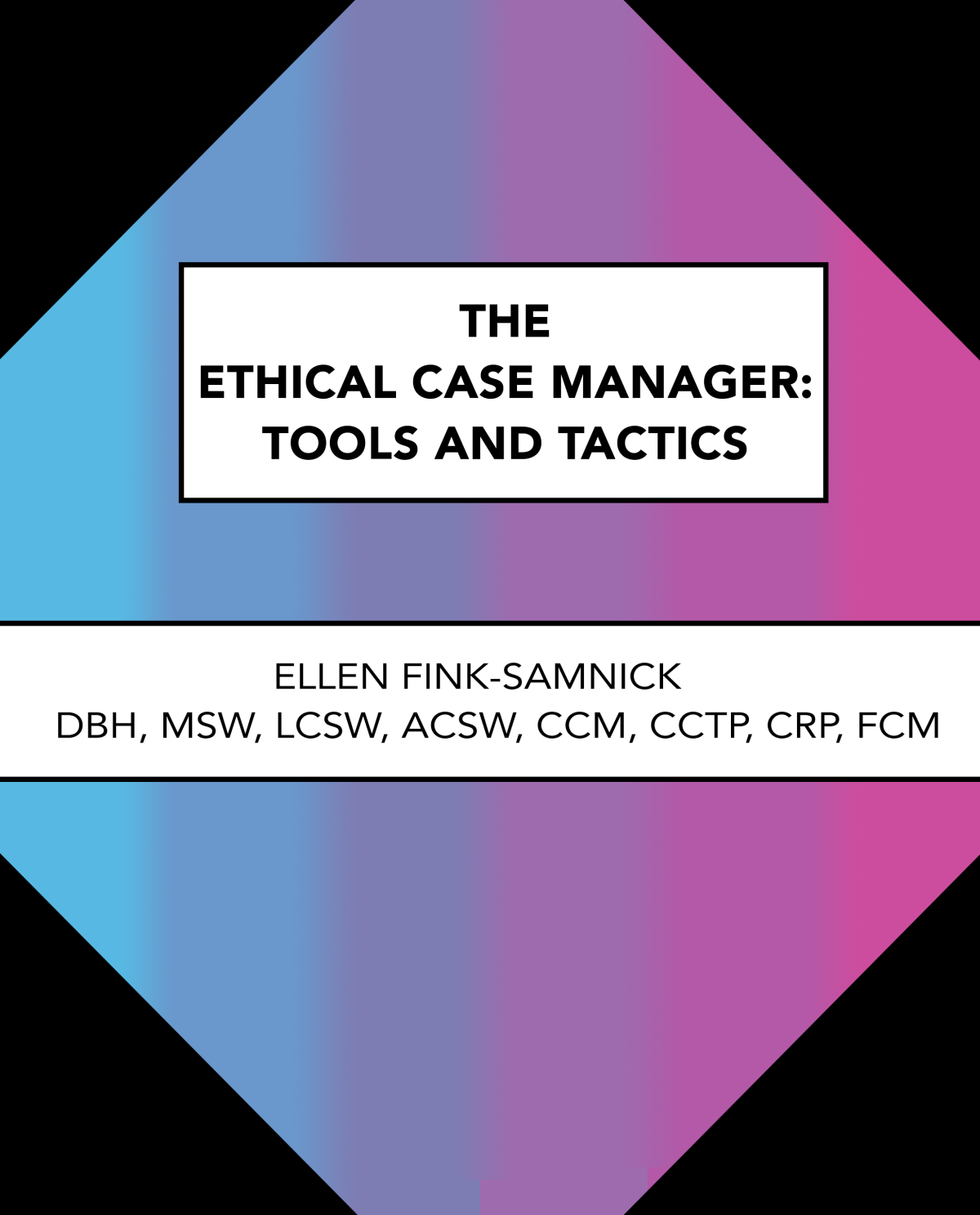
Ethics Book for Case Management Frames a Vivid Ethics Spectrum

Ethics book aligns ethical, legal, and regulatory practice for Case Management

Ethics has long been viewed as not simple black and white, but varied shades of gray. Oh, how the times have changed! Ethics now comprise a spectrum of vivid colors that reflect its fierce disruptions to practice. This reality spans every health and behavioral health professional across every setting. Yet, those in case management face unique struggles. My latest book, The Ethical Case Manager: Tools and Tactics, offers clear guidance.

Unique Workforce Challenges

Case management’s workforce faces challenges not experienced by other professions. First, case management is an umbrella profession comprised of varied professions (e.g., counseling, nursing, occupational therapy, and social work). Each discipline has a distinct code of ethics or professional conduct, as well as dedicated standards of practice. Let’s add another layer of complexity that includes over 25 case management-related credentials for individuals (e.g., ACM, CCM, CDMS, CMGT-BCTM, CRC), organizations (e.g., NCQA, URAC) and their unique requirements. There are assorted professional associations across the industry, which each possess their own standards of practice. The landscape gets more confusing when we include the industry’s hierarchy of case management roles: community health workers, case management assistants, community-based case managers, board-certified case managers, and those in leadership positions. 

The question beckons: Where should your ethical compass point? The range of established resources of guidance defined by each of the above entities makes the answer to this question challenging to answer. It also yields two more confusing conundrums for the workforce:

  1. Defining the ethical and legal parameters for case management practice, and 
  2. Reconciling these parameters with employer policies and procedures across the industry.

The Ethical Case Manager to the Rescue

Here’s where, The Ethical Case Manager: Tools and Tactics comes to the rescueThe book’s content is written for an interprofessional audience that spans the spectrum of degrees held by case managers. This approach provides a context for accountability, while addressing the most complex ethical dilemmas to date.

Focus is on case management job descriptions, outcomes measurement, discharge planning, and care coordination. There’s content on digital healthcare innovation and patient assessment, addressing implicit biases, microaggressions, and health disparities. Promoting the latest domain of health equity, inclusion and belonging is covered, as is workplace bullying, licensure compacts and interstate practice.

Practical facts are blended with Federal and state regulations, tables, templates, and dedicated resources. Each chapter includes case scenarios and critical-thinking review questions for learners to apply the content. 20 Ethical Tactics provide touchpoints for learning. Every reader will reap their own reward, from students, to new and more seasoned case managers, consultants, as well as those in leadership roles.

The Ethical Case Manager’s 318 pages encompass the most vital areas for case managers:

  • Forward by Dr. Colleen Morley
  • Section 1: Essentials of Ethics
  • Chapter 1: Terms and Definitions
  • Chapter 2: Established Resources of Guidance
  • Chapter 3: The Value Proposition
  • Section 2: Realities of Practice
  • Chapter 4: Population-based Practice
  • Chapter 5: Diversity, Equity, Inclusion, and Justice (co-authored with Michael Garrett)
  • Chapter 6: Workplace Bullying
  • Chapter 7: Health Information Technology
  • Chapter 8: Interstate Practice
  • Section 3: Activation of Ethical Decision-Making
  • Chapter 9: Ethical Decision-Making Models
  • Chapter 10: Case Scenarios
  • Epilogue

The Ethical Case Manager: Tools & Tactics will be your primary resource, whether you wish to:

  • Educate students
  • Onboard new staff
  • Benchmark ethical practices
  • Resolve ethical dilemmas
  • Possess timely compliance knowledge
  • Ensure successful fiscal, clinical, and operational outcomes 
  • Use ethical decision-making models
  • Leverage interprofessional teams
  • Inform individual practices

No wonder the book is now on ANCC’s formal list of study references for their Nursing Case Management Exam (CMGT-BCTM)

*************************************************

The Ethical Case Manager: Tools and Tactics is only available on Amazon

Attending these conferences? Special access for attendees to book signing events and giveaways: 

Federal HHS Equity Action Plan Advances Amid New Data on Discrimination by the Health Care Workforce

There’s much to follow on the current health equity radar, from advancement of the HHS’s Equity Action Plan to concerning data validating the high incidence of discrimination by the health workforce toward patients. The onset of stress and vicarious trauma for staff witnessing these events was also identified. Each of these actions will provide pause to even the most seasoned health equity warrior.

The title of this blog article reflects one jam-packed week in our health equity space! There’s much to follow on the health equity radar, from advancement of the Federal Equity Action Plan to concerning data validating the high incidence of discrimination by the health workforce toward patients. The onset of stress and vicarious trauma for staff witnessing these events was also identified. Each of these actions will provide pause to even the most seasoned health equity warrior.

An Equity Action Plan Amplified

The U.S. Department of Health and Human Services (HHS) released a 2023 update to its Federal Equity Action Plan! The plan amplified the commitment of the Biden-Harris Administration to employ its whole-of-government equity agenda that empowers inclusive access to care for all. Many of this blog’s readership are aware of my affinity for wholistic health approaches that encompass physical, behavioral and psychosocial health. Research affirms the validity of these models to ensure successful outcomes for those populations living amid the wholistic health determinants encompassing social determinants of health and mental health, political determinants health, and the systemic racism that perpetuates them.

The HHS Plan outlines five key areas to advance health equity at the macro, meso, and micro practice levels:

  1. Prevent neglect and improve care to help children thrive in their families and communities. 
  2. Promote accessible and welcoming health care for all. 
  3. Improve maternal health outcomes for rural, racial, and ethnic minority communities. 
  4. Prioritize the behavioral health of underserved populations. 
  5. Increase clinical research and trial diversity to support innovation. 

Each of these actions has been the focus of legislation and funding targeting minoritized and marginalized communities. At the Federal level Aligning for Health is a membership association that uses a team of federal and state administration experts to address the mandate for efficient, integrated and coordinated programs that enhance health outcomes for Americans. Their website has an in-time and interactive tracking tool for legislation on health equity and the SDoH. The current 118th Congress is reviewing the following legislation in this space. The current bill count tally is:

  • SDoH Bills; 118
  • Health Equity/Disparity Bills: 36 
  • Maternal and Infant Bills: 0

Since the Equity Action Plan was released in 2022, some progress to address health equity and racial justice has advanced:

  • Proposed rules on language access in all health programs and activities funded by HHS and guidance to states on how to comply with language access and effective communication obligations during and after public health emergencies. 
  • Approved 42 states, DC, and the Virgin Islands to provide 12 months of continuous postpartum coverage through the Centers for Medicare and Medicaid Services (CMS) so that women with low-incomes have stability in coverage.
  • Proposed rules that prohibit discrimination on the basis of disability by updating critical provisions that help persons with disabilities access health and human services under section 504 of the Rehabilitation Act of 1973.
  • Provided practical guidance to HHS offices on identifying actions to ensure opportunity for all.

In addition, The Kaiser Family Foundation (KFF) Medicaid Waiver Tracker shows 63 approved and 37 pending 1115 Waivers in process across the states. For those who haven’t accessed this informative tool, it is a must read. You can also access a current view of the 1115 Waiver landscape by state through the KFF Tracker.

Discrimination by the Workforce: More Norm Than Exception

This action by HHS is especially timely in light of this week’s compelling and concerning research by the Commonwealth Fund on Health Care Workers Observations of Discrimination Against Patients. The report details the perspectives of >3000 members of the interprofessional care team. Discrimination against patients due to race, ethnicity, language and other cultural areas remains widespread, as does the traumatic impact for the workforce itself. Among the most concerning findings include:

Recommendations

Much more work is required to attain the pinnacle of health equity excellence that society deserves. The Commonwealth report lists a series of recommendations to advance actions to mitigate discrimination and ensure psychological and physical safety for patients and the workforce itself:

  • Provide an easy way for patients and health care staff to anonymously report situations involving racism or discrimination. 
  • Examine policies to make sure they result in equitable outcomes
  • Require classes on discrimination at professional schools
  • Create opportunities to listen to patients of color and health care professionals of color
  • Examine treatment of non-English-speaking patients
  • Train health care staff to spot discrimination

I would also add the importance of an ongoing and consistent organizational total quality management approach. This action ensures continuous improvement efforts that are ongoing and sustainable. Addressing health equity, systemic racism, and trauma are NOT one and done.

Professional associations also need to continue their important work to develop advance, and activate strategic health equity deliverables such as implementing revised standards of practice, ethical codes, formal position papers, dedicated tool kits to name a few. 

As I’ve quoted through my health equity and DEIB work on many occasions, “Every patient, their family member, and member of the healthcare workforce should feel safe, seen, heard, and valued.”. The healthcare industry cannot possibly begin to address the health equity equation’s abysmal outcomes without first addressing these levels of oppression, racism, and manifesting trauma faced by for all involved. 

The Interstate Licensure Compact Imperative

Despite interstate practice being more norm than exception, significant obstacles exist for those persons rendering and accessing care. Learn about the current Interstate Compacts and how you can advance them.

What times we are in! Providing clinical intervention and treatment can happen anywhere courtesy of telephonic platforms, plus virtual, remote, and digital products galore. Rural populations rely on these technologies to engage with their practitioners and even health plan case managers, whether for assessment or monitoring of the care process and resource linkage. Patient with disabilities can now access care with greater ease. Yet, there’s a BIG CATCH! Despite interstate practice being more norm than exception, significant obstacles exist for those persons rendering and accessing care.

The health and behavioral health workforce continues to be held hostage by lack of an inappropriate licensure portability structure. Care for consumers is obstructed amid a regulatory system that fails to account for the reality of our professional practice landscape.

Regulatory Realities Reduce Access to Care and Employment

Technology is only one driver of the need for professionals to practice across state lines. Society is more mobile than ever, both for clients and clinicians alike. Traveling practitioners (e.g., case managers, nurses, social workers) are commonly hired to fill employment gaps for staff on medical or family leave, and to mitigate workforce shortages. Yet, this sector of the workforce and their employers face chronic challenges with licensure delays, which only perpetuate barriers and limits to care for the public.

Throngs of licensed mental health providers are at the ready to provide sorely needed telehealth intervention across the states. However, care is often delayed and waiting lists for treatment grow from an antiquated licensure structure that limits one’s inability to practice across state lines. Military families move their state residence every few years and in doing so deal with financial difficulties imposed by licensure delays, and thus, employment. First responders may find their interventions are limited when disasters occur across state lines.

There are an endless list of challenges for the workforce and the public they serve. With minimal exceptions (e.g., licensed professionals who are military members, employed for military contractors), licensed professionals may only practice in the state(s) where they are licensed in good standing. How can licensed practitioners engage with their ethical and legal due diligence when their practice regulations interfere with their ability to do so?

Licensure Compacts on the Move

Licensure compacts are a viable solution for professionals seeking to be licensed in multiple jurisdictions and the that hire them. Through the compact structure, members of the workforce, such as behavioral health providers, case managers, and others who are licensed in one state can actively practice at that same level in other states which are part of the compact. The presence of a compact also reduces the economic burden faced by licensed individuals in dealing with multiple state licensure applications.

The practice of all licensed professionals is controlled by the law in the state(s) where each individual is licensed, typically by the practice act of each state. Scope of practice even supersedes academic degrees. For example, one might presume that as a Doctor of Behavioral Health, I am licensed to prescribe psychopharmacological agents to patients. However, prescribing medications is not included under the scope of practice for my licensure as an LCSW in the Commonwealth of Virginia. The scope of practice for any practitioner extends only to those activities that a person who is licensed to practice as a health professional is permitted to perform.

A change in the traditional licensure structure is mandated: one that allows health and behavioral health professionals to intervene across state and jurisdictional lines. Several professions have engaged in rigorous efforts to advocate for licensure portability through formal regulation.

Nursing

Nurses are required to be licensed in any state where they practice and where the recipient of nursing practice is located at the time service is provided. This fact is a common point of confusion for most licensed professionals—and especially tricky for those my case management colleagues. In contrast, many employers believe licensure must be held in the professional’s state of residence only, instead of where a patient may reside or is receiving care. The Nurse Licensure Compact is actively on the move, and now covers 41 states. More information is accessible on the NCSBN website.

Social Work

The lack of licensure portability has been identified as a public
safety, workforce, and technology issue
. The mandate is clear that the workforce responsible for providing the bulk of mental health services to society must be able to practice across geographic state borders. The formal language for the Social Work Licensure Compact was released in February 2023, with legislation actively being introduced across state legislatures; 24 states have done so at the time of blog post with a current map viewable on the official compact website. 4 states have fully approved the legislation: Missouri, S. Dakota, Utah, and Washington State. The Model Compact Bill must be approved by 7 states to be enacted in its entirety before its necessary infrastructure can be implemented, which is expected to happen in the coming months. After verifying eligibility, individual social workers will then be granted a multistate license, which authorizes their ability to practice in all other compact member states, and removes those longstanding barriers to interstate practice.

Counseling

The American Counseling Association Counseling Compact calls for counselors licensed in one state who have no disciplinary record, to be eligible for licensure in any state or U.S. jurisdiction where they seek residence. Like other disciplines, laws that impact counselors (e.g., mandated reporting statutes) vary from state to state, so the compact recognizes how jurisdictions may require a state jurisprudence exam. At the time of this writing, over 32 states have approved the Counseling Compact with the interactive map viewable on the compact site.

Compacts on the Move

In addition to the compacts listed, further information is available for those covering:

Individual practitioners must engage in advocacy efforts through their respective professional associations. Many of these entities have fierce public policy committees that work diligently to support interstate practice. In addition, contact local legislators to provide individual support for those licensure compacts of interest to you. Access your elected legislators through USA.gov. Remember, support for one interstate compact, leverages them all!

What to find out more on Interstate Compacts, and the Do’s and Don’ts of practice across state lines?? Read Chapter 8 in The Ethical Case Manager: Tools and Tactics, available on Amazon.

The Innovation in Behavioral Health Model: Will the Outcomes Reflect the Hype?

The Innovation in Behavioral Health Model is the latest greatest model from CMS and CMMI to ensure whole-person care for patients with complex, integrated physical and behavioral health conditions, who also experience health related social needs. Will the program outcomes reflect the preliminary hype?

The Innovation in Behavioral Health Model (IBH) is big news, and certainly worthy of a blog post. This newly unveiled state-run model from CMS’s Centers for Medicare and Medicaid Innovation (CMMI) employs that value-based mindset we’ve come to know and love from other CMS models. Among these latest offerings include Making Care Primary (MCP), ACO Reach, All-Payer Health Equity Approaches and Development (AHEAD), and Transforming Maternal Health (TmaH).

Each of these models strives to ease the clinical and fiscal burdens of care for all stakeholders by enhancing access for all beneficiaries, while reducing disparities experienced by minoritized and marginalized populations. Each model focuses on wholistic health approaches that leverage interdisciplinary team-based care to ensure timely screening, assessment and treatment of physical, behavioral, and psychosocial health needs. Each model is poised to ensure proactive attention to closed-loop care referrals that will hopefully yield decreased costs of healthcare utilization, reduce workforce burden and burnout, and ensure quality-driven care that heeds the Triple, Quadruple, and Quintuple or Quintile Aims (whichever you subscribe to). Clearly there’s lot of pent-up anticipation, but will the preliminary hype and the outcomes align?

The IBH Lowdown

  Primary care has long sheltered the full responsibility for mental health attention, though behavioral health practices will now receive extra funding to shoulder the burden. Here’s the IBH lowdown:

  • Notice of Funding Opportunity will be released late Spring 2024. 
    • Up to 8 states will be picked for an 8-year run that will launch in Fall 2024.
      • Years 1-3: Pre-implementation periods for states to conduct outreach and recruit behavioral health practice participants into the model. Funding will go to upgrading health IT, advancing EHRs, aligning practices with the model, and adding staff.
    • Year 4-8: The chosen states will implement a Medicaid payment model to support practice participants in implementing the care delivery framework. Practice participants in selected states who participate in the additional Medicare payment model will receive a per-beneficiary-per-month payment to support implementation of the care delivery framework and performance-based payments.

  Community-based health practices will be front and center in IBH. These sites already have interprofessional models equipt to manage whole person care. The model will maximize its power through a single point of entry that uses 4 pillars; each one will bolster the model’s framework and critical infrastructure:

  1. Care Integration: Behavioral health practice participants will screen, assess, refer, and treat patients, as needed, for the services they require across the wholistic health triad of behavioral, physical, and psychosocial health.
  2. Care Management: An interprofessional care team led by the behavioral health practice participant will identify, and as appropriate address care of patients and provide ongoing care management.
  3. Health Equity: Behavioral health practice participants will conduct screenings for HRSNs and refer patients to appropriate community-based services. Participating practices will be required to develop a health equity plan (HEP) that stipulates how the practice participant will address disparities that impact their service populations.
  4. Health Information Technology: Capacity building will the priority with expansion of health IT through investments in interoperability and necessary tools (e.g., EHRs). These actions will also ensure greater emphasis on quality reporting and data sharing.

A Sustainable Fix

  To say this model is a must is an understatement:

  • Medicaid is the large single payer in the US for mental health
  • 25% of Medicare beneficiaries experience a mental illness, 
  • 40% of Medicaid beneficiaries who are non-elderly adults experienced a mental illness or substance use disorder in 2020
    • The percentage of hospitalizations for patients with a mental health and substance use disorder condition (M/SUD) that involved a co-occurring physical health condition increases with age and has variation across subgroups:
      • These stays were more common among adults aged 45-64 years (92.3 %) and 65 years and older (97.9 %) than for adults aged 18-44 years (75.8 %). 
        • Co-occurring physical health conditions were more common among patients with Medicare (92.9 %) compared to patients in other payer categories (< 83 %) and among Whites (85.5 %) vs. Asian/Pacific Islanders (75.9 %)

  Patients and providers deal with a lengthy list of barriers to access and treatment, starting with how behavioral health services are not a specifically defined category under Medicaid benefits. Feel free to add further problems with service fragmention, poor reimbursement, limited treatment availability, and lack of true payment parity with physical health, but I digress. Many of behavioral health services are wiggled to fall under mandatory Medicaid benefit categories, such as when psychiatrist services are coded as physician evaluations or visits. Several states have defined mechanisms to cover behavioral health through optional benefit categories, such as case management services, prescription drugs, and rehabilitative services. Children diagnosed with behavioral health conditions can receive any service available under federal Medicaid law that is needed to correct or ameliorate the condition. However, the same requirements are not in place for adults. This lack of consistency is far from optimal and further perpetuates a dysfunctional system.

One Big Takeaway

  Under the IBH model, participating states will be responsible for ensuring delivery of integrated care to fully support the patient’s individual care needs. Comprehensive care coordination and care management will be key elements for inclusion. There are plenty of successful outcomes across the targeted populations that validate the power of those professional practices.

I know that my colleagues across case management and integrated care have developed successful models across Community Health Centers, Federally Qualified Health Centers, Rural Health Centers, Look Alikes, and other ambulatory care sites to meet the IBH requirements. I’ll be watching closely over the next 8 years to see where #IBH implementation goes and what the outcomes yield! 

And to All a Space Where They Feel Safe, Seen, Heard, and Valued…

2023 saw grand movement in the health equity space, especially in terms of accreditation, regulations, reimbursement, and programming. However, despite the best intent, there are miles to go before we sleep.

A flurry of recent headlines came to mind as I sat down to craft this last blog for 2023. Each of them were noteworthy for commentary:

At a time when society, and especially the health care industry have fixated their attention on policies and programs to advance diversity, equity, inclusion, and belonging, it appears that there is still much work to do. Despite the wins that we have seen in 2023, my fellow health equity warriors and I have miles to go before we sleep.

2023 Was Not For Naught

Now, we’ve seen some big wins in the health equity space this past year, including but not limited to:

There is a robust list of legislation and funding action that has occurred across the macro- , meso-, and micro-level arenas of care. However, I’m one of those who is impatient with the progress heretofore, despite the well-intended actions. It often feels that there so many gaps and chasms in care to address, that we’ve barely scratched the surface.


Moving Forward and My Commitment to You

Every step I walk in the health equity arena ignites my passion, purpose, and the promise of all that is possible for our industry and every stakeholder. I am appreciative of those who have followed and read my blog, attended presentations, and read the content that I’ve authored, whether books, chapters, scholarly articles and other continuing education content. Your enthusiasm for my innovative work in this space has meant so much.

My Top 5 blog articles for 2023 have been:

1. Health Equity and the SDoH Are NOT Synonyms

2. The U.S. Playbook to Address the SDoH: Launchpad vs. Final Comprehensive Strategy

3. Patient Compliance vs. Adherence: Advancing the Health Equity Mandate

4. Workplace Bullying’s Wrath Continues

5. Job Search Lessons for Health, Behavioral Health, and Public Health Students

I’m taking a rest to restore my resilience over these next few weeks. But as we embark on 2024, know how much your support fuels me to keep advancing our healthcare industry.

Every effort is meaningful, no matter how big or small. Only through our collective energies will we achieve that coveted wholistic health quality compass of the Quintuple/Quintile Aim. Only in this way will we forge a safe and ethical space for practice where every patient, population, provider, practitioner be able to feel safe, seen, heard, and valued.

The U.S. Playbook to Address the SDoH: Launchpad vs. Final Comprehensive Strategy

The White House released the inaugural U.S. Playbook to Address the Social Determinants of Health. The document serves as an important cross-sector guidepost for application, implementation, and action by all involved stakeholders to best serve their patients and communities. But, does the Playbook go far enough to fully address the SDoH? What other opportunities loom?

It’s been another exciting week for those of us taking our daily walk down Social Determinants of Health Lane. The White House released their U.S. Playbook to Address the Social Determinants of Health. The document has captured the industry’s attention, though also yielded some scrutiny.

The Lowdown

The Playbook is a bold undertaking. The document level-sets the massive work engaged in so far to address the health disparities and barriers to care engaged in across the industry. It quotes research and seminal reports citing the clinical and fiscal impact of health inequities faced by society’s minoritized and marginalized populations and providers. This vital foundation also highlights the importance of patient- and family- centric care that heeds the Quintuple and Quintile Aims at micro, meso, and macro levels, and across involved sectors.

For those who want the Cliff Notes version, here you go. Pages 1-18 provide critical information for persons and organizations who seek foundational information on SDoH (e.g., research, definitions, models) and context for them. This is especially valuable knowledge for students, as well as those who might not be as informed on this topic.

For my colleagues who have been in these trenches, pages 18-35 detail the three Playbook pillars with numbered strategic actions to advance each pillar. There is a candid and comprehensive review of the context for each pillar and potential challenges for implementation. Opportunities for Congressional Action are also detailed.

1. Expand data gathering and sharing: Advance data collection and interoperability among health care, public health, social care services, and other data systems to better address SDOH with federal, state, local, tribal, and territorial support.

2. Support flexible funding for social needs: Identify how flexible use of funds could align investments across sectors to finance community infrastructure, offer grants to empower communities to address HRSNs, and encourage coordinated use of resources to improve health outcomes.

3. Support backbone organizations: Support the development of community backbone organizations and other infrastructure to link health care systems to community-based organizations

The Appendics (pages 36-46) discuss how aspects of the Playbook are currently being operationalized using the Whole of Government approach. This section is a ‘must read’ for it provides specific examples to operationalize each action, with further guidance and information for readers on funding opportunities, toolkits with existing screening and assessment resources, and other critical community activities.

To Be Clear

Like most Federal reports and position papers, the Playbook was not developed as a ‘be all to end all’ document. This valuable resource highlights the mandate for all stakeholders and sectors of health and behavioral health services to ensure the most robust and sustainable approach to inclusive care for all populations possible.

How each organization accomplishes this critical priority is on them. Some might have preferred a greater Playbook focus on expanded funding and reimbursement, and that’s one clear opportunity. My take for ensuring organizational success in addressing the SDoH involves ten elements:

1. Take an honest and critical look at their current SDoH priorities.

2. Identify their target populations most impacted and develop means to ensure equitable and accessible care for all persons. This also includes incorporation of quality metrics and relevant outcomes that go beyond length of stay and readmissions to population-specific health priorities (e.g Patient-reported Outcomes Measures).

3. Align all existing inter- and intra-organizational resources and community partners.

4. Utilize and partner on funding access and opportunities; this includes ongoing investment in their communities served, advocacy for appropriate reimbursement (yup, those ICD-10-CM Z codes), and other fiscal imperatives.

5. Ensure appropriate mechanisms for data-gathering, interoperability, and use.

6. Heed industry compliance requirements (e.g., CMS, the Joint Commission, NCQA, NQF) to implement formal patient assessment (or Health-related Social Needs (HRSNs)) intervention, and direct referral linkage.

7. Ensure diverse and sufficient interprofessional staffing who can provide concordant and respectful whole-person care to all populations, which leverages integrated care frameworks and integrated behavioral health models of treatment.

8. Prioritize workforce training on trauma-informed approaches to care, eliminating implicit and explicit biases and microaggressions, and maximizing ethical engagement to enhance patient engagement and treatment adherence versus compliance and resistance.

9. Ensure the alignment and application of Diversity, Equity, Inclusion, and Belonging (DEIB) policies, whereby all patients and the industry workforce feel safe, seen, heard, and valued.

10. Commit to long-term strategic solutioning of the SDoH rather than short-term reactive response.

In Closing

“The Playbook is a launchpad, and not a final comprehensive strategy for addressing the SDoH”. It may not go as far as all stakeholders would like. Yet, the Playbook serves as an important guidepost for necessary cross-sector application, implementation, and action by all entities and individuals to best serve their patients and communities. I trust readers of this post will weigh in with other suggestions, and that input is encouraged. Just remember, final accountability for advancing these efforts is on us all.

Housing Insecurity=Increased Illness Morbidity and Mortality: Solutions Mandated

Despite abundant research on the intersection of chronic illness morbidity, mortality, & homelessness, poor health outcomes related to housing insufficiency continue. The data is meaningless without using it to activate solid solutions.

“Homelessness remains a key social determinant of health, with researchers from the University of California, San Francisco, revealing that individuals who are homeless are 16X more likely to experience sudden cardiac death than those who are not.” This quote appeared in my social media feed last week, and several thoughts immediately popped in my head. First, it had been over a month since I wrote a blog and that needed to be remedied pronto. Next, this topic gave me a mandate to chew on. However, I wondered, if I had missed something in translation. Surely, this topic was not new news. Despite the significance of this new research on the intersection of sudden cardiac death and homelessness, poor outcomes related to housing insufficiency have been long-standing.

Where it Started IS STILL How it’s Going

Housing insufficiency has been among the most frequently researched SDoH, particularly in how it contributes to excessive clinical and fiscal healthcare utilization for patients. I’ve always valued this quote: “While differences in health between housed socioeconomic groups can be described as a ‘slope’, differences in health between housed and homeless people are better understood as a ‘cliff’.”

Persons who are housing insecure face considerable wholistic health challenges across the domains of physical, mental, and psychosocial health. Barriers to care are only exacerbated by the provision of care that can be suboptimal, and is often fueled by implicit bias on the part of providers. This connection leads to lack of trust by the population of practitioners and the healthcare system overall. 

Global mortality rates for those who are housing insecure are far higher than other populations, and impacts every demographic. Research-driven me wanted to share a few items to ponder:

There’s plenty data more where that came from and across every cultural nuance spanning minoritized and marginalized populations (e.g., age, ethnicity, gender, persons with physical, developmental and intellectual disabilities, race, sexual orientation, socioeconomic status, and other groups) . However, amid my profound respect for the research is a valid concern; data is meaningless without using it to activate solid solutions. 

Strategic Solutioning

I posted related thoughts about this topic on LinkedIn earlier in the week. Countless colleagues and thought leaders in this space chimed in to echo similar and strong sentiments. Among the wisdom shared included:

  1. Active implementation and use of ICD-10-CM-Z codes: Homelessness and healthcare have been misaligned for well over my 40-year tenure in the industry. Fortunately the ICD-10-CM-Z code of Z59 for homelessness has morphed into more realistic and reimbursable codes for industry use, with many effective as of October 1, 2023. A big nod to Evelyn Gallego, the Gravity Project, Dr. Ronald Hirsch, Tiffany Ferguson, and other Z-Code warriors for their tireless energies in this space. Despite this progress, I still hear coders, utilization management specialists, and case managers push back on their use. Many are discouraged from using the codes in their organizations in deference to those that reap higher revenue capture. This is short-sighted, if not potentially fraudulent action; can we say “upcoding”? For those who need a refresher, the codes are listed below with a deeper dive available here:
    • Z59.1: Inadequate housing
      • Z59.10: unspecified
      • Z59.11: environmental temperature
      • Z59.12: utilities
      • Z59.19: other inadequate housing
    • Z59.81: Housing instability, housed
      • Z59.811: with risk of homelessness
      • Z59.812: homelessness in the past 12 months
      • Z59.819: unspecified
  2. Greater acknowledgement of and attention to all social drivers of health: For those who not privy to this information, the CMS 2023 IPPS Final Rule mandated that hospitals reporting to the Inpatient Quality Reporting program submit two measures, SDOH-1 and SDOH-2: voluntary for 2023 but required by 2024. We’re all waiting anxiously to see what the penalties for not reporting this data will be, but we can expect they’ll be significant. Joint Commission has also stepped in with standards NPSG.16.01.01 and EP 2 (Notes 1 and 2)You snooze, you lose!
  3. Attention to How Environmental Factors Exacerbate Social Drivers: Evelyn Gallego is the ultimate data mavin for our industry. Emphasis of environmental exposure due to homelessness and sudden death is a population health priority and public health imperative. As a fellow data-geek, I know how use of the data drives making the case to define policy and funding imperatives, so here are my favorites:
  4. Cities Taking Action to Address Health, Equity and Climate Risks: Through the RWJF’s grant-funded project, Cities Taking Action to Address Health, Equity and Climate Change, 6 U.S. cities have been supported to respond to the interconnected challenges of health, equity and the climate crisis with innovative, community-led projects. The cities and their areas include: 
  5. Enhanced Acknowledgement of the Different Types of Homelessness: There is a cultural shift as the industry is being forced to distinguish between types of housing insufficiency, such as acute and chronic homelessness across populations. Innovators working on the front lines of this challenge include Peter Badgley, Jake Rothstein, and John Gorman from Upside I Housing for Health. The National Alliance to End Homelessness continues their tireless crusade to prevent and end homelessness in the US. The National Community Action Partnership’s over 1000 state agencies take an active role in coordinating on housing advocacy and resource provision. FindHelp.org has a dedicated portal on their site for localized housing information.
  6. Expansion of Affordable Housing, Tax Credits, and other Housing ProgramsThe Center for Budget Priorities continues to advocate in this arena with a litany of recommendations for capital investments at the Federal, state, and local levels:
    • Reducing the shortage of deeply affordable rental housing 
    • Expanding vouchers for housing
    • Implementing a housing developer-focused renters’ tax credit
    • Reversing restrictive local zoning practices
    • Preventing the loss of existing affordable housing
    • Improving the Low-Income Housing Tax Credit program
    • Investing in tribal communities’ housing needs
    • Removing barriers to homeownership
    • Reforming project-based housing programs to encourage higher-quality housing.

Where We Need to Go

I’m just getting warmed up here, though always strive for comprehensive articles. I encourage others to add solid strategies and resources in the comments section of this blog post. Remember, we are made stronger by using the data to advocate for practical and sustainable solutions! Keep fighting the fight #SDoHWarriors.

The Ethical Conundrum of Healthcare Ethics Committees

Ethics committees have been a condition of Joint Commission accreditation since 1992, yet there is massive variation in their implementation and use. They should not replace the dialogues of interprofessional team members with patients, families, or each other.

There’s been a recent uptick by case managers of their patient referrals to hospital ethics committees. This topic is near and dear to me, especially having served as the chair or co-chair of several acute care-based ethics committees over the years. The industry demand for decreased hospital utilization and length of stay has meant a shift in how ethics committees are viewed and often utilized. We’ve gone from traditional referrals, as in defining a treatment plan when practitioners define care as futile or a patient lacks advance directives, to when an individual refuses to accept a discharge plan. I’ve heard of situations where ethics committee consults are tapped should a patient be “non-compliant” with their treatment; this is language that I challenge at every opportunity and my recent blog on this topic reveals just how much. But I digress….

Ethics committees have been a condition of Joint Commission accreditation since 1992, yet there is massive variation in their implementation and use. The Joint Commission standard is clear: “healthcare organizations must have a mechanism in place to develop and implement a process that allows staff, [patients], and families to address ethical issues or issues prone to conflict.” Yet, the details of that mechanism are left to the discretion of each organization and therein lies the conundrum and challenge!

The Power of Ethics Committee 

The requirements for ethics committees were driven by increasing patient situations that involved a lack of clarity between patient and family wishes, expectations for treatment, the provider’s prognosis, and/or the patient’s treatment plan. The case of Karen Ann Quinlan is often viewed as that legal landmark to set the precedent for formalization of bio-ethics and ethics committees in hospitals. In April 1975 at the age of 21, Ms. Quinlan became unconscious after consuming Valium with alcohol while on a crash diet. She lapsed into a coma, followed by a persistent vegetative state. After a lengthy legal battle, the New Jersey Supreme Court allowed Ms. Quinlan’s parents to disconnect the respirator, affirming the choice she would have made; Karen lived until 1985. Other patient situations would follow and continue to appear, Terry Schiavo to Brittany Maynard and David Adox. The real-life experiences of these individuals have bolstered the vital role of ethics committees as one firm pillar of today’s healthcare process, leveraging the industry’s ethical principles of autonomy, beneficence, fidelity, justice, and nonmalfeasance.

Misconceptions Run Amuck

Despite clear guidelines for ethics committees, organizations can have a varied understanding of their moving parts. Among these points of confusion can be what members of the interprofessional team should be involved, how many persons should serve and for how long, the amount of onboarding required, and scope of each member’s role. Even the amount of work expected can prompt a moment of pause. Ethics committees are too often developed haphazardly and without a formal plan. The consequences of these actions yield an Ethics Committee in name only, which devalues the role of this critical resource for patients, their families, and the interprofessional teams that care for them. 

One of the largest misperceptions of ethics committees lies in their true function. Despite recent popular belief, ethics committees are not used to tell patients, their families, and members of the interprofessional team what to do. Ethics committees review the clinical nuances of individual patient situations and documentation from interprofessional team members to make sure the wishes of the patient and/or their legal representatives are acknowledged. This may be specific to end-of-life decision-making, reviewing futility of care determinations by practitioners, or recognizing the rights of patients to refuse care or treatment.

Ethics committees play a vital role is reviewing that the care rendered is done in accordance with all Federal and State laws and regulations. One of my physician co-chairs used to say, “Ethics Committees step in when the treatment team has employed their due diligence to engage, assess, and communicate with the patient and family, whether through informed consent, shared decision-making, or other collaborative efforts (e.g., team and/or family meetings, care coordination rounds). Anything less reflects incomplete work by the team.”

Functions of Ethics Committees in a Changing Practice Climate

It might seem optimal to involve the ethics committee’s objective lens for review of discharge planning processes, such as when a patient refuses to go to a particular nursing home in deference to another facility or plan. However, that can also be a misuse or critical resources. Ethics committees should not replace the dialogues of interprofessional team members with patients, families or each other.

Ethics Committees have three basic functions:

  • Consultation:
    • Ensure training and support for committee members and consultants.
    • Provide consistent subject matter expertise for cases requiring formal ethics evaluation and recommendations.
    • Develop and implement evaluation metrics to ensure quality improvement, and,
    • Develop appropriate reports, publications, presentations for both internal personnel and external strategic partners.
    • Promote ethical leadership behaviors, such as explaining the values that underlie decisions, stressing the importance of ethics, and promoting transparency in decision making.
  • Education
    • Assure knowledgeable ethics committee members.
    • Provide appropriate education to the organization (e.g., trainings, journal articles, reports, available literature on professional resource trainings and conferences).
  • Policy review and development

In recent years, ethics committees affiliated with academic institutions and large healthcare systems have advanced into comprehensive ethics programs. A growing number of healthcare organizations integrate ethics from the bedside to the boardroom (University of Washington, 2023).Others provide consultations in response to non-clinical ethics questions, such as identifying and remedying systems-level factors that have the potential to induce or exacerbate ethical problems and/or impede their resolution, as in staffing issues from workforce shortages. A valuable article recommends key foundational principles to:

  • Strengthen the position of ethics committees in hospitals, 
  • Ensure continuous supervision over committee formation and meetings, operations and decision-making processes, and
  • Define how committees’ decisions are shared with involved hospital stakeholders and staff.

Case managers can find out more on ethics committees, the seminal cases that drove them, and innovative ways to engage with them in Chapters 2 and 4 of The Ethical Case Manager: Tools and Tactics available on Amazon.

Seeking Social Media Recommendations: The Ethical Quandary for Case Management

Case managers and other healthcare professional commonly ping “friends” or tag “connections” for resource info from treatment and provider recommendations to specific home health agencies and skilled nursing homes. Complex patient circumstances become group chats. After all, there’s no harm in seeking consultation or recommendations, right? Read how unintentional posts become ethical and legal missteps, and how to best manage them.

The discharge planning process always moved quickly, but these days it’s on steroids! Case managers face intense pressure to quickly transition patients to that next level of care, or home. Whether you case manage for a hospital, an MCO, or a community-based agency, you need information when you need it! You seek answers to questions “in the moment” and that is usually not the workplace! Social media has become fastest way for case managers to quickly get resource information on how to access what you need, and when you need it!

More and more new case managers are entering the workforce than ever before. Their onboarding happens at warp speed, though learning discharge planning resources can take time; they also change rapidly. Case managers and other healthcare professionals commonly ping “friends” or tag “connections for needed resources, from treatment and provider recommendations to specific home health agencies and skilled nursing homes. Complex patient circumstances become group discussions where colleagues to weigh in on management of everything from addiction and family dynamics to “tough to place” patients, or those with chronic readmissions and ED visits. Access to costly prescription drug access, transportation, and other health-related social need are also popular topics. After all, there’s no harm in seeking consultation or recommendations, right? I get countless emails and queries about this topic, so decided to write a brief blog post to guide the masses.

HIPAA Breaches, Penalties, and Professional Sanctions

Actually, there are ethical, and often legal pitfalls of posting these recommendations. Despite a case manager’s best intent to seek guidance, these types of posts can easily and unintentionally become HIPAA breaches. This may translate to financial penalties for the case manager and their employer, or potential sanctions or reprimands against one’s professional licensure and case management credential.

It can be common to see these posts within professional groups or communities. You know how it plays out. Limited information is posted about the patient, but then questions are posed by connections or group members. For each question and with each answer, more ePHI is inadvertently released. Ultimately there is just enough data for the patient or their family to be identified. It may not be one piece of information that leads to a HIPAA breach, but the collective discussion. This might include:

  • Posting the names and locations of potential facilities for transfer
  • Posting the age, psychosocial information about family demographics, or unique characteristics. 
  • Posting the name of the health plan for the patient
  • When a case manager’s social media profile includes information about their current employer
  • Providing psychosocial information on a patient who resides in a community of under 20,000 persons.

What’s the best way to handle obtaining these recommendations?

There are a series of ways that case managers can consult with colleagues and heed HIPAA and other ethical and legal requirements for patient privacy and confidentiality:

  • Use the least information possible about the person (or their family members) to obtain needed guidance and be mindful of the amount of detail provided (e.g., use obesity vs. a specific weight).
  • Make sure all necessary permissions for release of information documentation are clearly signed.
  • Move recommendation dialogues offline (e.g., emails, telephone calls) 
  • Heed those HIPAA and ePHI guidelines
  • Remember, all disciplines have unique privacy and confidentiality guidelines listed in their standards of practice and codes of ethics; many have additional social media policies with detailed parameters.
  • DO NOT FORGET that there are also distinct case management standards, guidelines, and ethical codes for most credentials addressing the legal parameters for use of health information technology, electronic communication, seeking consultations, informed consent, and associated privacy and confidentiality requirements (e.g., ACM, CCM, CDMS, CMC, CRC, RN-CMGT). All board-certified and credentialed case managers are beholden to those requirements. 

NOTE: Detailed information on this topic can be found in Chapter 7: Ethics is What You Do While Everyone Watches: Health Information Technology, in The Ethical Case Manager: Tools and Tactics by Dr. Ellen Fink-Samnick published through Blue Bayou Press and available on Amazon.

DISCLAIMER: This blog post is meant to provide professional recommendation and does not supersede formal legal guidance. All case managers are strongly urged to review the the regulations and requirements for their individual licensure scope of practice, requisite case management and other formal credentials, plus relevant risk management and compliance policies and procedures for their employer.

Patient Compliance vs. Adherence: Advancing the Health Equity Mandate

Use of the term “compliance” instead of “adherence” by healthcare regulatory entities and organizations, plus practitioners, health systems and their and employees condones the blaming of patients for poor outcomes. It’s time to change this practice!

First, big thanks to all who read my last blog post Health Equity and the SDoH are Not Synonyms. That article has quickly become my top blog post with thousands of views across social media platforms and other news outlets. Ellen’s Interprofessional Insights is free access to all who value its messaging, so please share the link. Now, onto my latest fierce focus. 

I was reminded last week of a long-standing pet peeve: (mis)use of the terms compliance and adherence. I participated in RISE’s Annual Population Health Summit with vibrant conversations int he space about patient engagement. Through a number of sessions there was THAT framing that makes me vibrate with frustration. My brain went into overdrive! 

When will the industry stop blaming patients for treatment inactions? Has there not been enough focus on DEI strategies to enhance practitioner and provider cultural awareness and humility? How much emphasis has there been to advance assessment of health-related social needs (HRSNs) or social drivers of health, patient health literacy, and decreasing biases? (Psssst: Remember, the CMS penalties and Joint Commission standards (TJC) are real!). Despite a resounding YES to the above questions, we’ve got miles to go before we sleep. Use of the term “compliance” instead of “adherence” by healthcare regulatory entities and organizations, plus practitioners, health systems and their and employees only condones the blaming of patients for poor outcomes. It’s time to change this practice!

Compliance Conveys Power Not Partnership

I’m notorious for level-setting and wanted to start with a review of definitions. Compliance refers to regulatory enforcement of applicable requirements whereby organizations and their providers are expected to meet or exceed the defined legal, ethical, and professional standards.Their explicit goal is to reduce fraud, abuse, and waste, with the implicit intent to ensure patient and occupational safety. Yet, there is a concerning power dynamic imposed by this definition as regulatory entities (e.g., NCQA, NQF, TJC) possess legitimate power by virtue of their role in the industry.

Compliance also implies power verses partnership. The term speaks to an assumption that patients must be subservient to a practitioner’s authority, a troublesome concept for this clinical professional. What happens when a patient’s voice is not heard or dismissed by practitioners? What about when a patient doesn’t feel seen?  These situations emerge with increasing incidence across every population, with who are marginalized and minoritized experiencing this reality in unacceptable numbers.

Compliance suggests passive behavior, as when a patient is expected to follow treatment instructions. It may be the patient who is comfortable doing what the physician tells them to, whether take a prescribed medication in a defined dose or follow-up for counseling with a behavioral health provider. Some patients may heed this guidance as the norm, not daring to question their provider, while others will seek to clarify the rationale. This approach should not be surprising in an era where patients are consumers of their care. However, questioning, challenging, or ignoring provider recommendations is too often viewed as a negative. 

Power and misused power yield trauma, whether historical, experiential or event in scope. Acute, chronic, and complex trauma share misused power and/or oppression at their source.  Blaming patients is laden with stigma and accusatory messaging. It gets me wondering how much attention is paid to a patient’s health literacy, language proficiency, or any of their concordant preferences. 


By contrast, adherence is the active choice of patients to follow through with prescribed treatments, while taking responsibility for their well-being. This term signifies that patients and practitioners collaborate to improve their health behaviors toward overall a higher state of wellness. Successful outcomes are achieved through a blend of clinician expertise with patient choice incorporating lifestyle, values, and care preferences. Shared decision-making and personal integrity leverage meaningful therapeutic relationships.

Sync for Social Needs, Z-Codes, Yet Being Out of Sync

I was excited when NCQA, NQF, and the TJC joined the Sync for Social Needs Coalition. Yet, these entities present as out of sync with their views on how to best assess and address exactly what drives patient motivation and engagement in treatment. NCQA still uses the term adherence on their resource pages and metrics. TJC echoed emphasis on patient activation and adherence in recent issue briefs.

My beloved Z-Codes are not so in sync either. ICD-10-CM Z codes for Patient Noncompliance were expanded in 2023 to my disappointment. To be fair, I’m a member of the Gravity Project and tout their work at every opportunity. However, I took a brief break from my involvement to finish my Doctoral Culminating Project. The mantra, you snooze, you lose applies!

Z-Code Z91.1 of patient noncompliance with medical treatment and regimen made me shiver. How is this concept objectively evaluated in the current care climate? Hearing colleagues refer to “non-compliant patients” always felt subjective. The terminology stirred thoughts of misbehaving children or those unable to follow traditional societal norms. 

My clinical training aligns with psychodynamic theory, thus there are always reasons for all behaviors, whether conscious or unconscious. This approach explains why a person may present as unable or unwilling to follow medical treatment. If we don’t ask why, we can’t properly assess the reasons for these behavioral manifestations. Expanding these codes gave the industry license to label patient actions as “noncompliance” with their dietary regimen and medical treatment. Caregivers of patients are also subject to these same biasesfor their “noncompliance “with an expansive list of codes under Z.91. These codes can be viewed here.

This terminology use is shocking given how the workforce is readily cued to manage their biases, stay informed of microaggressions, and participate in continuous learning to decrease missteps. Training on cultural awareness to promote patient engagement and satisfaction with care is emphasized at every turn. Yet, I am disappointed that practitioners are empowered to code, and thus blame, patients and caregivers for treatment disparities and misunderstandings.

Activating Change

Industry prioritization of health equity mandates a cultural shift in treatment language and perspectives. Here are tangible recommendations:

1Shift the narrative and power dynamic: Practitioners and providers must shift from viewing compliant and “obedient” patients to persons provided the respect and space to partner in their treatment decisions. Autonomy and self-determination remain enduring ethical principles and amplify attention to cultural perspectives.

2. Coping with the human condition is universal: Most patients and their caregivers experience fear and anxiety about their health conditions and those of their loved ones. A majority worry about diagnosis, prognosis, and quality of life. Everyone uses some defense mechanism to cope or not (e.g., denial, isolation, projection, displacement). The reality of the health experience often occurs without warning, and usually when least expected. We must give people the grace and space to cope with it.

3. Engage to understand patient and care giver rationale: To embrace cultural awareness and humility we must seek to understand patient and caregiver behaviors. We must eliminate implicit biases rather than empower them through quality metrics and measures; “these biases reinforce blame on the patients rather than look to the system and/or the competencies of the clinicians”; big nod to my friend Michael Garrett for this quote!

4. Assess for Psychosocial Needs: This arena is a top priority for organizations and most I know are on the case to integrate reflective screening tools into their efforts. I appreciate that far more resources are needed for all of those who need them. However, let’s make sure the right team members are employed for assessment and referral of patients, including community health workers, case management assistants, and health service coordinators. The outcomes are clear about their merits to assess across the touchpoints of care for:

  • Health and digital health literacy
  • Cultural preferences for treatment (e.g., medication, provider gender)
  • HRSNs, financial, and other impediments to care (e.g., co-pays, medical debt, lack of family support, isolation, transportation, incarceration, techquity) 

5. Use Non-Judgmental Communication: It is critical we set an inclusive tone to care, including but not limited to:

  • Maintain an affirming presence to establish trust 
  • Ask the patient to verify their gender and pronouns 
  • Ask the patient to verify their race and ethnicity
  • Ask the patient to identify their family or support system, regardless of blood relation
  • Demonstrate empathic and reflective listening 
  • Respect client autonomy by allowing the person to speak 
  • Empower patient through use of open-ended questions, such as, ‘What matters most to you?” or “What can I do for you today?”
  • Respond, clarify, and confirm, instead of reacting
  • Honor the patients religious and cultural beliefs, values, and choices

(Fink-Samnick & Garrett, 2023

Unconditional respect between patients and providers is difficult, but not impossible. Little will change toward engaging patients in their needed care until we stop blaming them for the industry’s shortcomings.