Featured

Taking an Innovative Entrepreneurial Road

May marks 21 years since I began this wild entrepreneurial excursion! To my fellow entrepreneurs, congratulations on your vision and accomplishments. To those wondering about stepping into this space, here’s the story of my journey.

2025 is a milestone moment, and 21 years since I left the safety of my role as Director of Case Management, Risk Management, and Quality Management to embark on a wild entrepreneurial vision. It’s hard to imagine how much time has passed, but even harder to believe the space that I created. Amazing what comes from unique vision, passion, and perseverance to enhance healthcare quality for all stakeholders: patients, providers, and practitioners included.

Where it Started

Truth be told, I had NO idea what my career would look like in 2004, but I knew my passion. I had worked in hospitals for 20 years, first as a medical social worker, then a case manager, and case management leader. Health disparities were a daily reality for the populations I worked with, as was ensuring equitable access for all persons who needed care.

I was trained by quality mavins to heed the Triple Aim; after all, shouldn’t all persons receive quality-driven, population-specific, and patient-centric care delivered at the right time, right place, and for the right cost? The answer was obvious to me, but not to all. In turn, the workforce needed education, specialized training, and access to evidence-based tools that would allow them to skillfully render that vision of care.

It was a priority for me to enhance the braintrust of each member of the healthcare workforce, from students, to new and seasoned professionals, as well as those in leadership roles. I was passionate about ethical practice and the chronic dilemmas faced by my colleagues as they balanced these tenets with regulatory requirements and personal beliefs. A growing array of challenges impeded their ability to attain successful outcomes: they spanned managing HIPAA and privacy requirements, technology proficiency, interstate practice restrictions, and increasing pressures to quickly discharge and patients across the care continuum. These pressures also impacted workforce resilience and contributed to rapidly rising rates of burnout and staff turnover.

I wanted to advocate as fiercely and unapologetically for our workforce as I had for my patients and their families. Colleagues questioned my “sudden” departure from the hospital. I had advanced to case management’s upper leadership echelons, and as a social worker in a nursing-dominated profession. However, I knew more beckoned. I strived to elevate the quality of my efforts in a way that made a tangible and sustainable difference. Yet, defining how to make a career out of this vision was my newest challenge.

How it’s Going

Fast forward to 2025: Every contract I take on allows me the unique opportunity to empower the knowledge and practice of our interprofessional healthcare workforce. This means roles spanning educator, author, professional speaker, thought leader, supervisor, and content developer.

✅ I earned a Doctorate in Behavioral Health with a specialization in health equity, integrated care, quality, and trauma-informed leadership.
✅I develop curricula and teach at Baccalaureate, Masters, and Doctoral levels for integrated care, public health, and social work programs. I recently added roles of Doctoral faculty member, academic advisor, and IRB coordinator to this mix
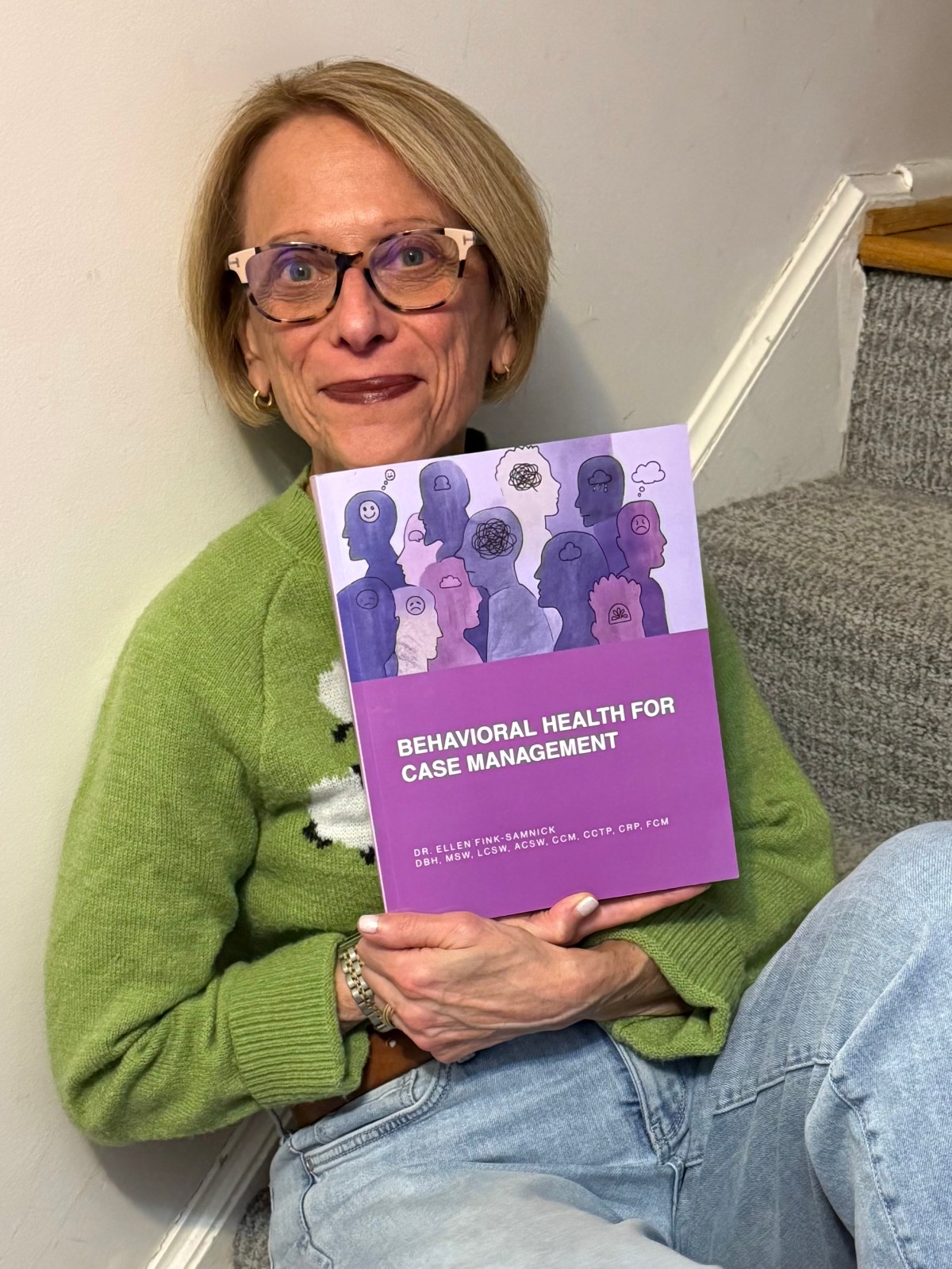
✅ I’ve written 5 books, including the first texts dedicated to ethics in case management; The Ethical Case Manager: Tools & Tactics was published in May 2023. Book 6 is entitled Behavioral Health for Case Management and will be out in Fall 2025.
✅I’m editing my first book with colleagues from Cummings Graduate Institute for Behavioral Health Studies entitled Integrated Behavioral Health: Applying the Biodyne Model in Healthcare, with publication through Routledge Press in Winter of 2026.
✅I serve professional associations as my expertise can be optimized, contributing to industry regulatory resources including codes of ethics, standards of practice, and serving on specialty committees.
✅ I’m editor of the HeartBeat of Case Management department for the scholarly journal, Professional Case Management, and first non-nurse to be elevated to this role for this publication.
✅I’ve left a legacy of published frameworks and models I never could have dreamed of in the form of blogs, journal articles, book forewords and chapters, industry position papers, and online learning modules.
✅I serve as an industry thought leader for credentialing entities, industry coalitions, and other initiatives.
✅In June 2023, I was inducted as a Fellow in Case Management by CMSA, and the first social worker to be awarded this honor.

✅In March 2025, I was recognized by NASW of Virginia and Metro DC as the Lifetime Achievement Award Recipient.

✅ In June 2025, I was named Case Manager of the Year by CMSA; the 2nd non-nurse to do so in the association’s 35-year history, and first in 25 years.

I forge ahead to ensure that every patient, provider, practitioner, and student feels safe, seen, heard, valued, and respected. Everyday is a learning journey that affords me the best vision to properly mentor the workforce and ensure their sustainability.

Where it Will Go

There aren’t enough words to express my gratitude for the support everyone has shown to me these last several decades. Many colleagues have asked if I’m retiring. Actually, I’m just getting warmed up! There’s too much work to be done in this industry. Watch out 2026!

Special thanks to those friends and family who have been part of this journey, and especially my better half for his unconditional support. My appreciation to these partners who continue to be the wind beneath my wings:

Featured

15 Job Search Lessons for Graduating MSWs

It time for my annual blog post to empower the job search efforts of MSW grads. These folks are near and dear to me with lots of rapidly emerging intel to advance a successful career trajectory.

It’s that time of year when my Master’s in Social Work students are graduating. They are ready to be done with the academic rigor and make their unique mark on the industry. Of course, they also want to obtain gainful employment that values their education and their coveted degree.

My biggest hope is that all of my students find their dream job, and especially my Masters’ folks. They struggle the most in accessing jobs aligned with their interests, salary requirements, as well as providing them quality social work supervision toward licensure. The role should also provide them psychological safety and prioritize their professional self-care, not to mention a few other things.  

How do you engage in a successful job search? How and what do you negotiate? Who’s interviewing who on the interview? Here are 15 lessons to activate and succeed in your job search! While the focus of this blog is vital for MSWs, there is valuable information for all job searchers in this space.

Lesson 1: Organize 

Set up an electronic folder on your computer with subfolders:

·       References

·       Cover letters

·       Interview questions

·       Submitted applications

·       Recruiter contacts

·       Key info about jobs applied for  

Track positions on a spreadsheet with information including application dates, if you heard back and when, job details (e.g., salary, key benefits, virtual or in-person, multiple sites), contact information. I’m a fan of Excel, but how to organize is up to you!

Lesson 2: Keep your resume focused, comprehensive, and competency-based.

A resume is your professional face. In your zest to post and send it to potential employers, it becomes easy to include too much info, be too wordy, or use unprofessional language. Think:

· Formatting: Use a resume template, plus career planning offices at your academic institution, as well as:

Beamjobs

Indeed.com

The New Social Worker 

ResumeGenius  

More folks are using AI to build their resumes, so here are several established resources:

Canva AI Resume Builder

Resume-Now

-MyPerfectResume

· Use competency-based language: Professions have competencies that are viewed as the pillars of practice. Use that language to describe roles for practicums, internships, or professional jobs; for example, ‘intervened with adolescent population’ instead of ‘worked with adolescents’. Another example is, ‘engaged in counseling’ instead of ‘provided, or did counseling’. Competency-based language also lives in course syllabi and licensure regulations for your state.

· Attention to detail matters: A resume is your first impression to prospective employers. If there are errors, they will wonder, ‘if you can’t take the time to proof your own resume, why should they believe you’ll do better on the job?’. Do spelling AND grammar checks! 

Lesson 3: Have references ready!

Reach out to references early and keep their current contact information accessible. Maintain professional letters of recommendation in your online files. Keep your references in the loop so they know to expect contact by a potential employer. It also helps to share with your references if you really want that job. With so many phishing emails, everyone is cautious about providing information. Your reference can easily miss a vital request to provide the recommendation that leads to a job offer!

Lesson 4: Know what matters to the organization

This lesson is two-fold: first, keep up on public health facts and their impact for populations served by the agency. Brush up on Crisis theory, Intersectionality, Trauma-informed care, and short-term counseling techniques. This info will help you develop ideas on how to best serve the organization. Knowledge is power; this is a great way to tout your expertise in the interview.

Second, ask how the organization continues to address DEIB-related (Diversity, Equity, Inclusion, and Belonging), as well as how they refer to these concepts. These values continue to underlie social work practice. The information goes beyond what may be on the employer’s website. You want to know exactly what mechanisms are in place to ensure all employees, patients/clients, their families and other strategic partners feel safe, seen, heard, and valued, and through every aspect of care and organizational operations.

Lesson 5: Know brief assessment tools and resources

With the uptick in mental health across populations and the workforce, have working knowledge of assessment tools to manage anxiety, stress, and depression. Know how to develop SMART goals as well! Quality resources continue to live at Therapist Aid and AHRQ

Lesson 6: Interviews are reciprocal opportunities

Interviews are not a guarantee of employment. Candidates can spend so much time during an interview discussing their expertise, they forget to ask key questions about the workplace.

Research employers before the interview. View the employer’s website to learn their mission, vision, and goals. Learn how the organization conducts business. Ask questions about short and long term goals and how they see you fitting into these plans. This tactic conveys your interest in the position.

Keep in mind that while interviews are for potential employers to interview you, you also get to interview them. This mindset puts you in control of the process, and decreases anxiety. Ask questions to learn if this job and setting are for you, such as those at Big Interview

Remember, decision-making timeframes vary, so ask about next steps. Organizations can take 2 days to make final decisions or months! Know what you are facing to help prioritize other offers!

Lesson 7: Ask about job stability

Amid these unpredictable times, it’s appropriate to ask about potential layoffs and furloughs. Some positions are funded by grants, so ask how long the position is funded and what happens next. Hiring freezes may happen and won’t necessarily be information shared. If you don’t ask, you won’t know.

Lesson 8: Be ready to name your unique strengths, and demonstrate them 

Job candidates will be asked how to handle specific situations. Identify your strengths and how they would make a difference. Consider:

·       How do your strengths set you apart from other candidates?

·       Why should the organization hire you?

·       What examples can you provide so the employer understands your worth?

·       How can you demonstrate your ability to work with a team?

·       You will be asked about your weaknesses. Be prepared to respond in a professional manner, and have your answer ready. 

Lesson 9: The only constant in our industry is change 

You may be happy to be done with school, but must still be open to new learning: the industry will change as will you. Be open to what it means for you to change with it. 

One big area of change for licensed health and behavioral health professionals involves licensure compacts and the ability to practice across state lines. Stay informed on the scope of practice within your state, and advancement of the Social Work and other Compacts.

Lesson 10: Be open to short-term or part-time roles

An exciting short-term or part-time role may turn into the best career option never anticipated. More and more MSWs are accepting multiple part-time roles. These options can promote greater flexibility, while minimizing burn-out. Also, don’t dismiss positions that are different from your expectations!

Lesson 11: Set up your professional social media profile. 

Set up a professional profile using established websites and job bank platforms. Facebook (or Meta) can help with networking, but use other websites that highlight recruitment:

Keep a profile professional! Use a polished photo versus a selfie with your BFF, pet, or family! Solid guidance is at The Ultimate Guide to Crafting a LinkedIn Profile that Recruiters Love

Lesson 12: Negotiation is expected

Negotiation is expected for any job. Negotiate for everything:

  • A higher hourly rate or salary
  • Remote options or flexible work hours
  • Coverage/reimbursement for professional fees (e.g. licensure exam application, exam prep courses, professional association dues)
  • Coverage/reimbursement for clinical supervision and if it is offered as an employment benefit. Organizations may pay a portion of the rate to the whole amount. They may only provide supervision internally or have waiting lists (so, YES, ask how long the waiting list is!). If supervision is provided, you may need to promise to stay at the organization for set number of years post-completion and attainment of your licensure. Otherwise, you may need to pay pack a set amount.
  • Don’t forget to ask if the organization has clinical social work supervisors employed by the agency (and who’s met any state requirements) and their availability. It can take some time to find that supervisory “goodness of fit”, knowing sooner than later is better.

You don’t know what you don’t know, so ask questions! The answers may surprise you! 

Lesson 13: Don’t be thrown by a title or position qualifications 

People apply for jobs based on titles; titles are deceptiveLearn about the scope of each role before dismissing a solid opportunity. 

Don’t dismiss a role based on qualifications alone. Application processes may ‘kick you out’ for not having hard competency qualifications (e.g., degree, licensure). Other knowledge or experiences can sway the decision; volunteer roles and practicums with a population speak volumes. Don’t assume you’re not qualified!

Lesson 14: Take the right job, not just any job

You want an income when you graduate, but strive for the right job. Listen to your clinical gut during the job search. Don’t jump on the first offer or settle if something feels off. Process the opportunity with peers, former professors, and mentors.  Remember, the grass isn’t always greener elsewhere; there are brown spots everywhere. 

Lesson 15: Enjoy the job search

There is pressure to be employed, but explore opportunities to fine the right one for you. Get out there and enjoy the search!

I invite colleagues and followers to post other practical lessons below to empower our next generation of professionals!

Featured

ERCI’s 2025 Top 10 Patient Safety Issues and Heeding Case Management’s Professional Obligations

ERCI’s 2025 safety issues represent a clear and present danger for patients with opportunities for all healthcare professionals. Yet, these quality missteps also yield concern for how case managers understand their professional obligations to the practice principles that underlie our licensure, certification, and organizational accreditation. 

I am a quality warrior! This fact means that my brain goes into overdrive when certain reports cross my radar.  The latest intel to have this impact was ERCI’s 2025 list of Patient Safety Threats. My focus immediately focused on the #1 issue, “Dismissal of the Patient and Caregiver Voice”. As a social worker by education and licensure and board-certified professional case manager, I am responsible for mitigating this quality gap. I also happen to be a fierce industry disruptor courtesy of my Doctorate in Behavioral Health. My DBH colleagues and students will get this one,  but I digress. 

I am an enduring ethical, legal, and regulatory champion to my core. I have been digging deep into the research, writing about, and presenting on medical gaslighting and invalidation for the past year. The dismissal and devaluing of any patient and caregiver voice is clearly associated with this obstructor to care. Medical gaslighting’s connection to increased costs of care is significant with billions of dollars lost from delayed and missed diagnoses. Increased healthcare utilization has come from unnecessary hospitalizations, readmissions, treatment missteps, yielding poor health outcomes. Mortality rates are equally higher when a patient’s voice or that of their caregiver is ignored.

Yet, two other areas of concern stood out to me as I reviewed the list of other patient safety priorities on the ERCI list:

  • #5. Caring for Veterans in non-military health settings
  • #9. Inadequate coordination during patient discharge

These two issues speak loudly to all of my colleagues, but particularly those in my professional case management world.

Professional Obligations Matter

Colleagues frequently ask me, why I get so hot about our established resources of guidance (e.g., accreditation and credentialing requirements, standards of practice, codes of ethics) ”. Yes, the hashtag or #EthicsMatter has become my hallmark. However, the list of 2025 safety issues represent a clear and present danger for patients. Quality missteps and patient safety concerns mean case managers are not heeding their professional obligations to the practice principles that underlie our licensure, certification, and organizational accreditation. This action represents potential professional sanctions for breach of the very requirements that bolster our case management profession. 

Standards of Practice

Those professionals who walk in the world of case management are accountable to assorted standards of practice and codes of professional conduct. The Case Management Society of America (CMSA) set the tone for these seminal documents, crafting the initial version in 1995. Updating of each version of the standards occurs through a formal vetting process that was completed in 2002, 2010, 2016, and 2022. The addition of Standard Q: DEIB and Health Equity yielded a revised version of the document in 2024. 

The intent of the standards are simple: to “serve as a compass for all who practice case management. They stand as a blueprint for excellence in practice”. They are not meant to be prescriptive in intent. Instead, they serve as a guide for professional case managers and their organizations to define optimal practices for the industry that meet ethical, legal, and regulatory guidelines and requirements. The relevant standards of practice by CMSA that address these patient safety realities include: 

D. Ethics

E. Advocacy

G. Resource management

I. Client selection

J. Client assessment

K. Identification of care needs and opportunities

L. Planning

M. Facilitation, coordination, and collaboration

N. Monitoring

O. Outcomes

P. Closure of professional case management services

Q. DEIB and health equity

Each standard details clear guidance for the workforce in each of these critical areas of case management practice. 

Licensure and Certification Requirements

Case managers have a primary responsibility to the licensure and scope of practice that underlies their professional discipline, whether in counseling, medicine, nursing, occupational, physical, respiratory or vocational therapy, social work or other qualified disciplines to practice (CMSA Standard A. Qualifications).  Yet, we are then responsible to our case management credentialing, which is often dependent on this primary licensure. 

Our credentialing entities prioritize the importance of critical competencies for their certificants through dedicated resources. The Code of Professional Conduct for Case Managers authored by The Commission for Case Manager Certification (CCMC) details keenly defined ethical standards, rules, procedures, and penalties for the workforce. The document’s Preamble sets a critical tone by defining case management as “a professional, collaborative, and interdisciplinary practice guided by the Code of Professional Conduct (the Code)”. The resource goes on to further denote the main purpose of the code; “to protect the public”. While the guidelines provided are advisory in nature, they still set a professional standard to which all board-certified case managers are held accountable.

The American Case Management Association (ACMA)’s Scope of Services and Standards of Practice also define clear competencies for practice. This resource also aligns with the association’s Accredited Case Managers Credentialing Exams, which have oversight by the National Board for Case Management:

Relevant Scope of Services, including but not limited to::

  • Assessment
  • Care coordination
  • Facilitation
  • Transition management  competencies 
  • Longitudinal care management
  • Identification
  • Implementation

Relevant Standards of Practice, including but not limited to:

  • Accountability
  • Advocacy
  • Resource management

Organizational Case Management Accreditation

Attention is also paid to these critical domains of practice by each of the entities that are tasked with providing, regulating, and monitoring of organizational case management accreditation. These include NCQAURAC, and ANCC’s Magnet Recognition Program. The agencies define strict compliance requirements and standards for case management practice, as well as for the entities by which they recognize certification through. 

The workforce should remain aware of the following: 

Note: As of January 1, 2024, Magnet Status Recognition only accepts certifications accredited by the Accreditation Board for Specialty Nursing Certification (ABSNC) or the National Commission Certifying Agencies (NCCA). Included are  ANCC’s Nursing Case Management board certification (CMGT-BC) and the Commission for Case Management Certification’s Board-Certified Case Management Credential (CCM).

The Bottom Line

Case managers have a critical role in ensuring compliance with the ethical, legal, and regulatory  standards and requirements that underlie our practice. Each one of the established resources of guidance for case management prioritize our professional obligations to advocate for, monitor, and ensure patient safety; public protection remain a priority. They also heed every case manager’s accountability to the industry’s Quality North Star of the Quintuple Aim: patient- and family-centric care rendered at the right time, for the right cost, by professionals who embrace the work, and delivered in a way that is equitable and accessible for all.

ERCI’s Top 10 Patient Safety List for 2025 should be a call to action by every healthcare organization with attention from every case management leader and their teams. How will you and your organization step up to mitigate these gaps in quality and care? 

Featured

Working Around the Words to Ensure Health Equity

Considerable time, effort, and energy is being spent on reframing word use in response to Federal mandates and their ripple-effect across the industry. Shifting words should not negate our professional commitments and obligations to the patients, their families, and the workforce. Our actions must continue to advance the Quintuple Aim and what matters most.

Much has been written lately about reframing word use in response to the latest generation of Executive Orders (EO) and other actions by the Federal Government. Yet, what happens when most of the words at issue are aligned with population health funding priorities as in accessibility, health equity, inclusion, or vulnerable populations? What happens when the words are commonly used in daily language, like advocate, expression, gender, or status? What happens when the words inform competencies for public health professions, as in cultural competence, implicit bias(es), oppression, or social justice? What happens when the words speak to evidence-based interventions that support populations across healthcare settings, such as anti-racism, cultural responsiveness, feminist, social justice, and trauma-informed? What happens when the words align with ethical codes of conduct and standards of practice for healthcare professionals whether discrimination, person-centered care, underserved, and vulnerable? What happens when shifting the words eliminates populations, persons, and their identities as in gender affirming, LGBTQIA, pronouns, Trans, or other terms. What happens when the list is ever-expanding and unpredictable? It is an understatement to say resolution is complicated. 

How many ways are there to say, equitable, accessible, and quality-driven whole person healthcare? It presents there are many ways. Of course, the mantra remains that the more things we call these drivers and influencers of poor health outcomes and the persons who experience these factors the most, the less people will know what they are. These words have specific meanings; using so many different terms can invoke unintended misunderstandings. While the explicit intent of this new macro-focus is “to help Americans lead healthier lives” there is a clear and present worry that all populations may not be included in this mix. 

Managing The Latest Information Flow

The constant attack on words is exhausting and frustrating to already weary professionals, practitioners, and providers, but most definitely patients and populations. This is an equally troublesome effort to those in higher education preparing future generations of the workforce. 

The latest funding and programming shifts have left many reeling, including the March 2025 announcement to cease funding on four critical value-based care models: Primary Care First, End Stage Renal Disease Treatment Choices, the Maryland Total Cost of Care, and highly-anticipated Making Care Primary model. These shifts will impact millions of Medicaid and Chips recipients, plus Medicare beneficiaries with complex, costly chronic illnesses and the primary care practices that care for them.

This week saw Joint Commission reframe their highly coveted Health Equity Resource Center to reflect new verbiage of, The Optimal Delivery of Care for All; yes, the familiar language of “page not found” now appears when you one goes to the original website. History of Joint Commission’s focus in the health equity space is provided with emphasis on the entity’s ability to provide individual consultations to meet the new industry framing. In addition. CMS’s Health Equity Framework has been reframed as CMS’s Framework for Healthy Communities. The five pillars have also been reframed. In edition, their Health Equity Index used for Medicare Advantage Star Ratings has been rebranded as…..wait for it….The Excellent Health Outcomes for All Reward ((EHO4all). There is concern that the coveted 1115 Waivers might be next on the chopping block; time will tell.

Valuable time is being spent daily by colleagues to review, consider, and revamp programming to stop the ongoing rise of National Health Expenditures, expected to hit $5.3 Trillion. Much of my current bandwidth is spent staying current on policy and EO interpretations, but also supporting colleagues through job losses, or their fear of potential job losses. My students are coping with a constant flurry of issues from disappearing funding for their education and work-study programs to general concerns for their chosen career trajectory. 

Here’s the Real Deal

Changing the terminology will not eliminate the wrath of health disparities and inequities experienced by historically minoritized and marginalized populations. Shifting words alone will do little to improve the poor clinical outcomes experienced by some populations more than others. Adjusting how populations are addressed will not decrease healthcare utilization or improve fiscal outcomes. Eliminating some populations from the conversation or funding will not dismiss the persons from those communities who experience worse illness morbidity and increased mortality rates. Reframing new initiatives will not identify the drivers of systemic racism, political determinants of health, and other social influencers of poor health for populations. In fact, each of these actions will further deteriorate the outputs of our current healthcare system. The US will continue its downward spiral of having the highest healthcare utilization and costs, along with the worse outcomes compared to other developed nations.

While we reconcile our fury about having to change longstanding terminology, the work to address the true priority at hand must continue. We must work to implement actionable strategies that heed our ethical obligations as healthcare professionals and providers. We must continue to advocate for ALL patients and their families so they receive access to the highest quality care available. That care must also be delivered to all in a fair and equitable way. 

Strategies to Advance the Health Equity Equation

Emphasis needs to focus on defining, measuring, and incentivizing progress to improve access to quality care. A recent article in Health Affairs Scholar, posed clear direction with examples for each element provided. I encourage all to take a deeper dive into the piece to integrated these steps within your organization or practice:

  1. Define clear measures of equitable access and tracking progress at both organizational and national levels.
  2. Develop and implement equity-focused quality measures and aligned incentives to support progress and create accountability for addressing barriers in access to care (e.g., quality metrics, outcomes data).
  3. Health care leaders should undertake efforts to measure the availability and quality of health care services for people who experience inequitable access to health care and track progress towards addressing barriers to access (e.g. dashboard).
  4. Build and leverage cross-sector partnerships that allow collaboration on investing to address shared patient and community needs.

My daily dialogues with valued colleagues are a reminder to continue prioritizing ourselves and our energy. This will fuel our focus on the critical work at hand. Here are a few of my own strategies to push through this muck!

  • Stay informed through your valued sources of intel but limit the amount of time spent viewing the information each day. While old habits have me check CMS Newsroom Posts weekly, there are other personal favorites: The Commonwealth FundPeterson/KFF System TrackerEpstein Becker Green, and others.
  • Explore what actionable strategies are up your sleeve
  • Don’t silo your efforts: continue to discuss and strategize with colleagues who share your passion. Those relationships and conversations will continue to nurture and motivate your efforts.
  • Try not to get lost in the alphabet soup of verbiage! Yes, it is toxic and traumatizing and will get the best of us if we let it! Instead, focus on actions to advance past the toxic energy around us. This may mean using alternative words or language, as posed in the list provided in the Federal Grant Trigger Words Replacement Workbook (yes, many alternatives were provided by ChatGPT).
  • Stay up to date; the 4/3/25 document published by the EEOC and DOJ, What You Should Know About the Recent DEI-Related Discrimination at Work is a must read. 

In the end, it is our actions that matter most to achieving the industry’s quality north star of the Quintuple Aim: patient- and family-centric care delivered at the right time, for the right cost, delivered by those who embrace the work, and assuring equitable access for all. Shifting words should not negate professional commitments and obligations to our patients, their families, and the workforce.

Featured

The DEI Crackdown in Academia Will Further Harm Patients and the Quality of Their Care: No “Could” About it!

There is no “could” about it; the current DEI crackdown in academia will yield negative outcomes for the workforce, but also worsen the quality of care rendered to patients, their families, and the communities we serve. 

A recent article published by MedPage Today and KFF Health News sent my brain into orbit. Entitled, Amid Falling Diversity at Med Schools, a Warning of DEI Crackdown’s Chilling Effectthe sub-title noted, “Education and health experts say this could ultimately harm patient care”. Use of “Could” in light of overwhelming evidence infuriates me. There is no “could” about it; the current DEI crackdown in academia will yield negative outcomes for the workforce, but also worsen the quality of care rendered to patients, their families, and the communities we serve.

The Value of Concordant Care

Concordant care involves aligning treatment with patient values and preferences. It is demonstrated in many ways, from open communication to having providers of the same race, ethnicity, sexual orientation, as well as gender identity, or gender expression. As a result, patients and their families feel psychological safety within a practice setting. Empathy is a vital competency for every healthcare professional that should be demonstrated toward every patient. But the ability to do so does not always assure concordant care. This is especially true when practitioners are employed by larger healthcare systems and organizations.

A patient’s need for health and behavioral health treatment brings them to practitioners for care. Yet, it is a patient’s trust in these practitioners that fosters their engagement in the care process. In addition, a patient’s comfort with providers of the same ethnicity, gender, race, or life experiences promotes their ability to feel safe, seen, heard, valued, and respected in the treatment space. In tandem, the practitioner’s knowledge of a patient’s culture, values, and beliefs inform their awareness of patient health literacy opportunities. This might translate to addressing spiritual and cultural differences in care, such as the need for prescription medications or treatments for chronic illness or even behavioral health. 

Discordant care contributes to medical gaslighting and invalidation. Dismissal of the patient and caregiver voice is the top patient safety issue for 2025, and a frightening fact. Increased numbers of Black primary care physicians are associated with longer life expectancy and lower mortality rates among Blacks. Similarly, when providers can identify with their patients, there are higher degrees of patient engagement, patient satisfaction, and treatment adherence for women, members of the LGBTQIA+ community, and other traditionally marginalized groups.

Healthcare utilization is higher and care costlier for these populations due to a trail of ignored complaints and symptoms and missed diagnoses. Their mortality rates are upwards of double that of numbers for less marginalized groups. These figures will only worsen as the patient voice is reduced, and particularly for traditionally marginalized populations and communities. My prior articles have detailed these abysmal numbers, with an upcoming article on this topic to be published in the May/June issue of Professional Case Management.

Systemic Bias

Countless thought leaders have emphasized the need for attention to treatment bias in healthcare. The Institute of Medicine’s seminal 2003 report, Unequal Treatment noted how African Americans and those in other minority groups receive fewer procedures and poorer-quality medical care than Whites. Stereotypes and stigma have impacted care across every cultural nuance encompassing ethnicity, gender, disability, race, and sexual identity to name just a few. These faulty beliefs have impacted every aspect of care from inaccurate treatment algorithms that fail to account for gender, race, and ethnicity to effective pain and other symptom management. Proper prescription medication dosing and other treatment is also at issue with condition not properly addressed. Patients are unnecessarily blamed for their symptom presentation rather than being fully assessed for individualized care.

The Mandate for Workforce Diversity and DEI Programs

A series of professional reports have identified opportunities to advance diversification of the healthcare workforce. The Council on Social Work Education revealed while 90% of social workers graduating with their MSW were women, opportunities for enhancing diversity continue to present. Only 22% of these same students were Black and 14% were Hispanic or Latino. The National Council of State Boards of Nursing revealed similar numbers with nurses from minority backgrounds representing under 20% of the RN workforce. Composition with respect to racial backgrounds is: 

  • 80.6% Caucasian
  • 6.7% African American 
  • 7.2% Asian
  • 5.6% Hispanic
  • 0.5% American Indian/Alaskan Native
  • 0.4 Native Hawaiian/Pacific Islander 
  • 2.1% two or more races; and 
  • 2.5% other

The Physician workforce also fails to reflect the inclusive nature of patient populations:

  • White: 56.5%
  • Asian: 18.8%
  • Hispanic or Latino: 6.3%
  • Black or African American: 5.2%
  • Multiracial (non-Hispanic): 1.3%
  • Other: 1.1%
  • American Indian or Alaska Native: 0.3%
  • Native Hawaiian or Other Pacific Islander: 0.1%
  • Unknown: 10.4% 

Gender composition notes a greater percentage of those identifying as male vs. female: 60.5% compared to 39.5%. 

There is growing availability of health and behavioral health professionals who provide affirming, accepting, and inclusive care to all patients, yet access remains challenging. Outcare and FOLX health provide directories of LGBTQIA+ friendly providers. Data detailing workforce composition for this community remains limited, though one report notes barely 14% of all medical students identify within the community.

In direct response to the percentages above, professional schools advanced DEI programs. Academia has worked for the better part of the last decade to shift from a curriculum of racial bias and develop antiracist and anti-oppressive programming. New coursework was developed with expansion of learning experiences, practicums, residencies, and specialized learning forums. These approaches prepared clinicians to better understand the patients they treat. Deshazo et al. (2021) identify how “deeply rooted bias is within the infrastructure of American Medicine, based on skin color, religion, immigrant status, gender, and ethnicity are deeply rooted, and taught as scientific racism medical schools from their earliest points in history.” This new societal playbook is a return to those times where fear of segregation and rampant inequities in access to quality care are the norm, along with putting minorities and women “back in their place”.

The UC Davis School of Medicine initiated a “race-neutral, holistic admissions model”, which tripled enrollment of Black, Latino, and Native American students. Assorted other efforts increased funding and entry to healthcare career pathways for students unable to otherwise afford or access them. There are an endless list of merits for the communities served by these new clinicians, including growth of diverse workforce that matches the patients served. 

Communities Take Care of Their Own

I’ve long said that communities take care of their own and this reality can’t be overstated. Practitioners of color are more likely to build their careers in medically underserved areas, from rural communities to lower socioeconomic areas.  The 2024 report by AAMC is clear: a shortage of >40,00 primary care doctors is expected by 2036 unless dramatic changes occur.

One way to assure workforce intercultural effectiveness has been through CEU-requirements for licensure and renewal. Yet even these requirements are now at risk. The Texas Behavioral Health Executive Council voted for removal of language requiring cultural competence as a CEU-requirement for licensed mental health professions with other states working to advance similar actions. This move de-emphasizes cultural context as a critical element of providing and assuring ethical and responsible care and intervention to each person. These shifts will create gaps in the knowledge and skills needed for the workforce to effectively engage with and serve patients from diverse backgrounds, cultures, and genders. Respect for the unique experiences, beliefs, and values that distinguish populations and communities will surely be at risk.

Moving Forward

As my colleagues in this space know, strategic action remains a moving target. We stay informed, yet angry at the daily assault on inclusion. Yet, that anger drives my actions, which are absolute: 

  • I stay committed to the Quintuple Aim: providing patient- and family-inclusive care at the right time, right cost, rendered by those who embrace the work, and ensuring equity and accessibility for all. 
    • I continue to heed my professional ethical obligations to patients, their families, and colleagues. Every day, I define one tangible way to step up in this shifting space to advance diversity, equity, inclusion, accessibility, belonging, and social justice, and through my every action, whether by:
      • Use of my professional voice through teaching, training, or authorship.
      • Supporting the workforce through ethical challenges faced in their workspaces.
      • Mentoring newer practitioners on clear strategies for their own sustainability.
      • Advocacy through my assorted roles across the industry 

How will you step up and into this space today?

Featured

Caught in the DEI & Health Equity Crossfire?: The Current State of the Social Work Compact

The Social Work Licensure Compact is again on the move. However, will it stall amid the current DEI and Health Equity crossfire spanning the US? What will the impact be to other licensure compacts, such as those for nursing, medicine, psychology, and others?

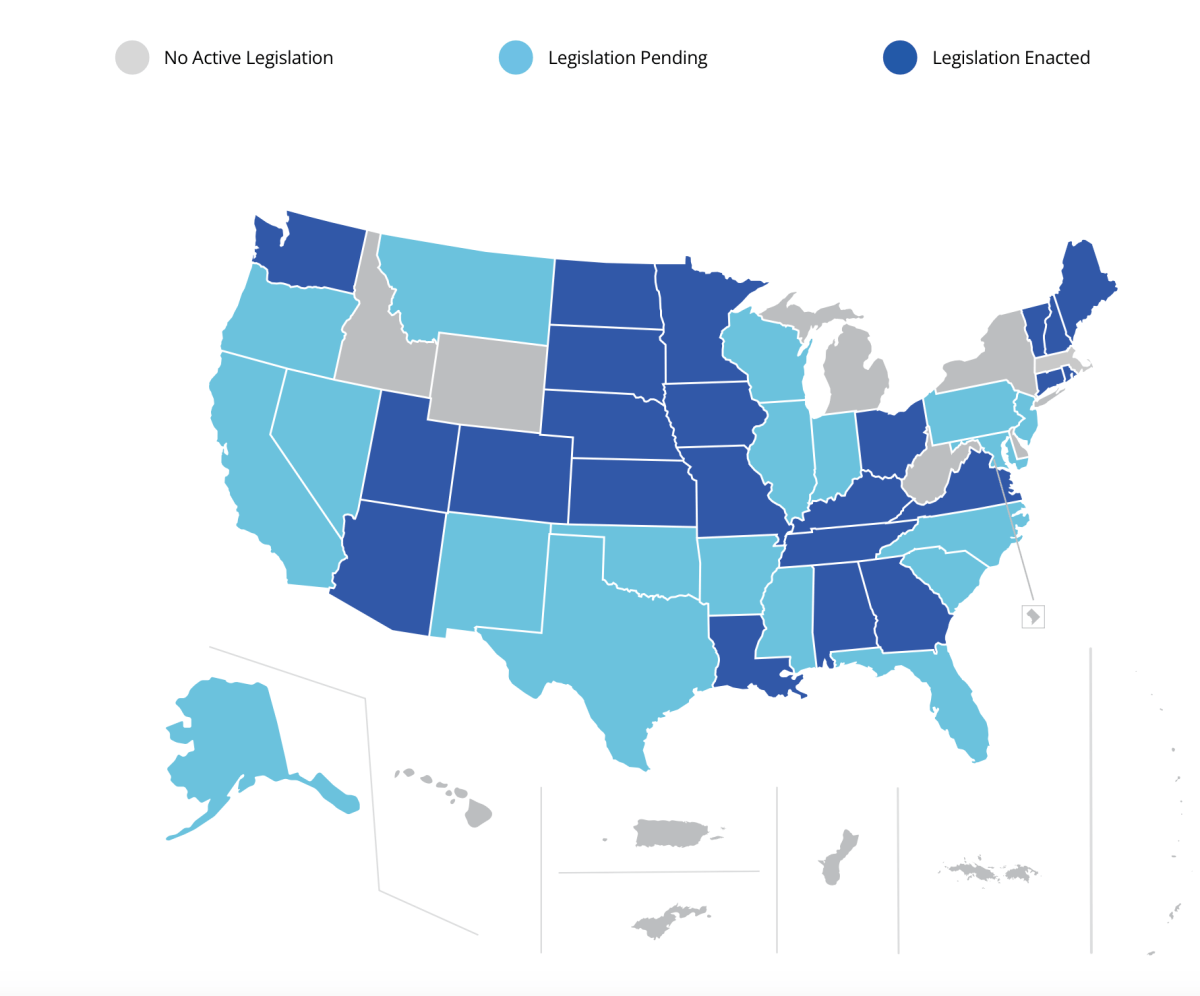
As the current state legislative session is in full swing, I thought it was a good time to review the status of the Social Work Compact. We entered the 2025 session with 24 states previously passing the Compact: Alabama, Arizona, Colorado, Connecticut, Georgia, Iowa, Kansas, Kentucky, Louisiana, Maine, Minnesota, Mississippi, Missouri, Nebraska, New Hampshire, North Dakota, Ohio, Rhode Island, South Dakota, Tennessee, Utah, Vermont, Virginia, and Washington State. The Social Work Licensure Compact Commission is advancing the formal infrastructure with the current target date for implementation by Fall 2025.

As of the time of this writing, 18 more states have stepped up with new legislation to advance the compact further: Alaska, California, Florida, Illinois, Indiana, Maryland, Mississippi, Montana, Nevada, New Jersey, New Mexico, North Carolina, Oklahoma, Oregon, Pennsylvania, South Carolina, Texas, Wisconsin. 

The Compact Landscape

There is considerable workforce commitment to advance compacts across every discipline. Contributing factors include workforce mobility and for their patient populations, along with telehealth popularity. The current state tally for compact passage across other professions includes: 

A Clear and Present Danger

Let’s get one elephant out of the corner of this room. There has been pushback by several states against the Social Work Compact due to inclusion of a requirement for passage of a standardized licensure exam. That is a valued discussion, though not the focus of this blog article.

The immediate concern to compact passage involves those states with what may be considered as more liberal rather than conservative practices or vice versa depending on your viewpoint. To practice in any compact member state, social workers must abide by laws, regulations and scope of practice of the state in which the client is located. As a result, concern has been expressed over any potential liability of workforce members should their interventions be counter to emerging legal practices for the state. Precedents for these concerns have already been defined through legal actions against our interprofessional colleagues across medicine, nursing, and other behavioral health professionals in some states. There are equal concerns about practitioners contacting ICE to report patients who present for treatment that may be undocumented. These actions are counter to professional standards previously addressed in my blog article on this topic several months ago, To Report or Not Report: Mandatory Duty to Warn for Case Management (though applicable intel for all professions). Of primary concern are states that:

  • Do not allow abortion or limit emergent medical attention to the mother in emergency situations where the health of the individual is at gross risk (e.g., miscarriages)
  • Do not allow or limit provision of resources to minors of their families for the purpose of obtaining out of state abortions in the instance of child abuse or exploitation
  • Do not allow or limit provision of resources to adults or their families for the purpose of obtaining out of state abortions for any reason including for rape, incest, or other sexual assault or intimate partner violence; this might also include providing of the morning after pill or other medical treatment guidance. 
  • Have restrictive reproductive health limits for treatments (e.g., in vitro fertilization), or other medical treatments (e.g., stem cell transplants). 
  • Do not allow or limit gender-affirming care or the provision of information on such care to minors 
  • Do not acknowledge transgender rights and access to necessary care
  • Do not acknowledge the value of concordant care across vulnerable and traditionally marginalized populations
  • Enforce cuts to Medicaid and Medicare Advantage plans that limit access to or deny services that promote patient, family, or care-giver self-sufficiency and wellness (e.g., durable medical equipment, home health care, skilled nursing facility)
  • Limit access to substance use disorder and medically-assisted treatments 
  • Do not allow use of language specific to diversity, equity, inclusion, belonging, accessibility, health equity, social justice and any aligned terminology 

There are endless examples of other concerns, along with emerging legal cases against the workforce. Some states are engaged in lawsuits against practitioners for denying emergent medical care to patients hemorrhaging from miscarriages, with mortality rates unnecessarily rising from this level of negligence. Maternal deaths in Texas have risen by close to 60% following the abortion ban. An Ohio women who suffered a miscarriage at 22 weeks of gestation in her home and sought treatment at a local hospital, initially faced criminal charges. As if the trauma of her health experience was insufficient, she was then charged with a felony; a judge ultimately dismissed the case. There are countless other similar situations. 

Moving Forward

As noted in my prior blog article, there have always been caveats to a professional’s legal and ethical obligations when religious, cultural, or other values and mores have the potential to obstruct effective care of a patient. In those situations, a safe handoff to another professional is indicated. These caveats carefully balance patient right to autonomy, self-determination, and do not harm with practitioner values. Yet, despite these protections, compact expansion has still gotten caught up in the latest values- and cultural-backlash. 

Mental health demand in the U.S. has never been higher. Given the pent-up demand for behavioral health and other services, social workers and other professionals must be able to practice across state lines. Compact expansion and social work ethics must not be allowed to suffer due to these current realities. 

Featured

The Ongoing Saga of Healthcare’s Ethical, Legal, and Regulatory Dilemmas Due to those Executive Orders

Recent Executive Orders and related actions have brought new ethical, legal, and regulatory challenges for healthcare professionals.

I traditionally avoid posting on social media about anything that might be viewed as “political”. However, my view has changed amid the latest string of Executive Orders and related actions. Each of these EOs seeks to deny the presence of certain populations, restrict equitable care access for historically marginalized and minoritized communities, as well as obstruct educational and professional pathways to career opportunities for all persons.

Colleagues have authored countless articles and blogs on the intent and reach of Executive Orders, impact on DEI efforts, and related themes. The resources are worth a deeper dive for those with interest. My focus for this article is on how the issue puts healthcare professionals directly in ethical, legal, and regulatory crosshairs, and especially my colleagues in case management.

The “Flagged Words” and Existing Regulations and Requirements

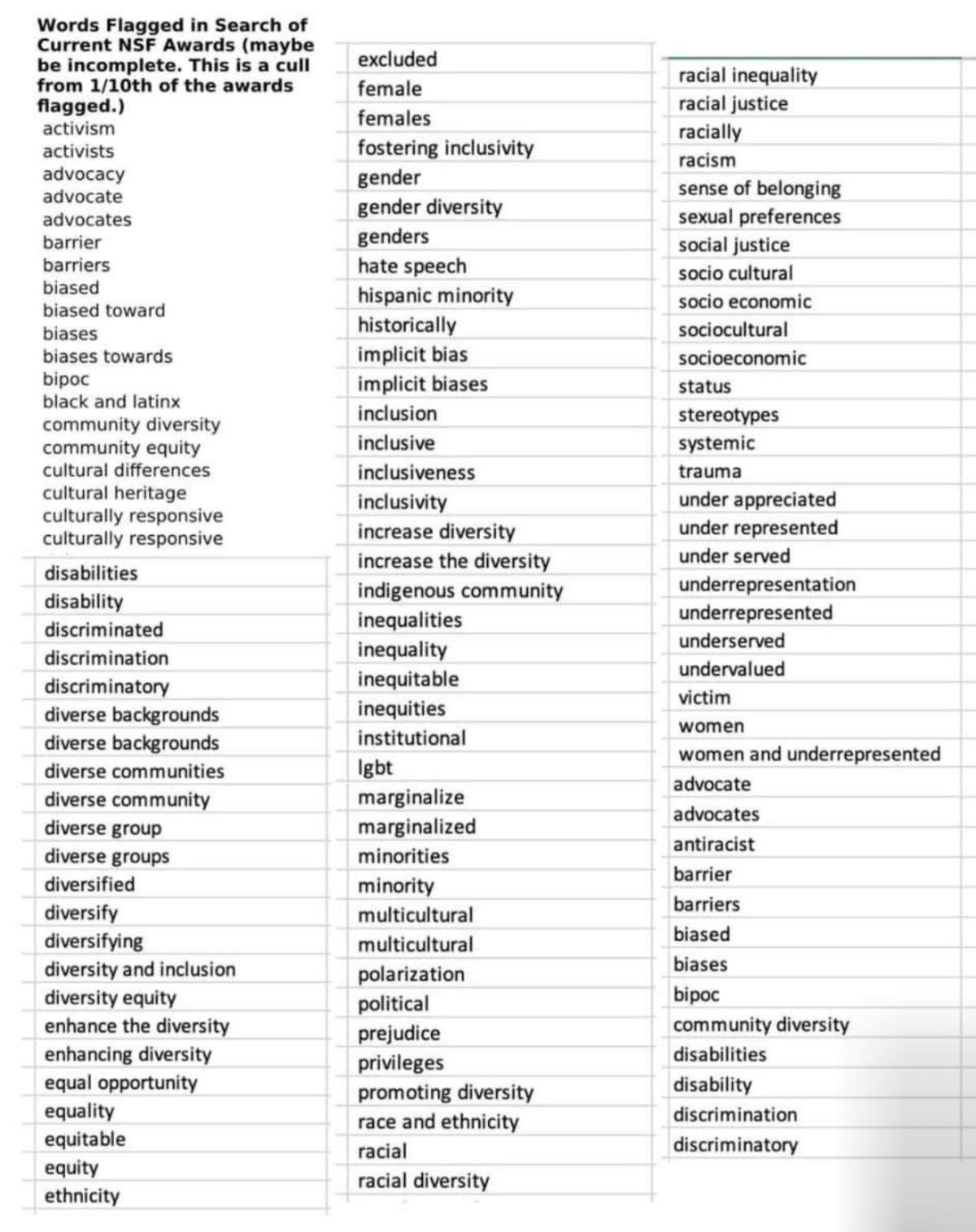
The lengthy and growing list of “flagged words” to avoid in grant requests, professional references, education, and continuing education is concerning. Most of the included terms appear in rigorous CEU-requirements for the healthcare workforce, and across more than half of the U.S: accessibility, anti-oppressive practices (implicit) bias, cultural competency and/or humility, discrimination, diversity, equity, immigration, inclusion, and social justice, to name a few. For CEU-approval, these words are required to appear in presentation and training abstracts or their learning objectives. Among other cautionary words are advocate, female, gender, political, socioeconomic, status, trauma, women, and victim.

Much of the terminology is embedded within our established resources of guidance: regulatory language for licensure practice acts, federal mandates, academic and organizational accreditation, case management and other individual exam-based certifications, ethical codes of conduct, and professional standards of practice. Examples of these include:

Licensure Renewal or Not?

Many of the terms at issue appear across professional practice acts and regulations. I’d cue my colleagues to check their current CEU-requirements for any state(s) of licensure or certification; the language is crystal clear. There are large consequences for persons unable to fulfill their renewal requirements, including fiscal costs by loss of employment. There are also potential sanctions or reprimands should one choose to abandon, refuse, or rescind care (without an alternative provided) to patients in need of emergent treatment and intervention. 

Ethical and Legal Exclusions

It is understood that not every professional shares the same belief system and mores. Yet, caveats have long been written into the established resources of guidance for religious or moral exclusions and other acknowledged beliefs that could bias or obstruct a person from rendering the acceptable standards of care delivery. All professionals are accountable to complete a safe and appropriate transfer of care to minimize the potential for patients to be put at risk of physical or emotional harm. This language, or some similar verbiage, appears across professional standards of practice and ethical codes for all disciplines and advanced specialty practices, including those for my case management colleagues.

It is also understood that some professionals reside in states where certain language has been excluded under federal law. However, our professional and ethical obligations to patients, their families, and other support systems remain paramount.

In a concerning move, the Texas Behavioral Health Executive Council voted to give preliminary approval for removal of language that requires cultural competence as a CEU-requirement for several licensed mental health professions, including counseling, marriage and family therapists, psychologists, and social workers. Prior requirements for renewal were for 24 total hours of CEUs, of which 6 were dedicated to ethics and 3 for cultural diversity or competence. The proposed revision is to “ensure competency when providing services to a distinct population, defined as a group of people who share a common attribute, trait, or defining characteristic of the licensee’s choice.” The term cultural competence has long been challenged due to its implication that every professional should be competent in every culture, which is not possible. However, other terminology has been recommended from intercultural effectiveness to cultural humility. The latter term is focused on practitioner awareness of distinct cultural nuances across populations and communities with a dedicated commitment to ongoing learning that advances their practice.

The action by Texas has prompted considerable pushback with concerns by other states on how the new rule could allow practitioners to bypass cultural diversity training about marginalized communities. This action de-emphasizes the topic’s importance to the workforce, as a critical component of providing and assuring ethical and responsible care and intervention to each person. Further actions of this type will lead to gaps in the knowledge and skills needed by the workforce to effectively engage and serve clients from diverse backgrounds, cultures, and genders. Respect for the unique experiences, beliefs, and values that distinguish populations and communities will surely be at risk.

Our Quality North Star is Under Attack

Excluding words or erasing populations does not dismiss the inequities and injustices faced by those communities. Quality-driven patient-inclusive care is an industry mandate for anyone in healthcare and its associated sectors.Colleagues have even shared how content referencing the Quintuple Aim has come under fire. This construct is the long-respected Quality North Star of our industry: population and patient-inclusive care rendered at the right time, for the right cost, by those who embrace the work, and is accessible by all persons. With National Health Expenditures slated to be at over $5.3 Trillion dollars for 2025 and hit over $7 Trillion by 2031, too much is at stake for any lesser of a quality vision.

Our Enduring Professional Obligations

Advocacy is another “forbidden word”. Yet, that word remains an enduring ethical mandate and legal obligation for all licensed and/or certified healthcare professional and disciplines. All persons deserve to feel safe, seen, heard, valued, and respected. Equally included in this mix is each practitioner, our families, as well as any friends who are patients receiving care. I have no intention of waiving these obligations or shifting my professional focus of the past 42 years.

What about you?

Featured

Tackling Workplace Bullying and Promoting Psychological Safety

October is National Workplace Bullying Awareness Month. The incidence of bullying within healthcare continues to rise, and with dangerous consequences for patients, as well as the workforce itself. Identify workplace bullying’s newest dimensions and learn how to promote your psychological safety.

October is National Bullying Awareness Month. Every year I hope for improvement in the landscape of this fierce disruptor, and especially for my colleagues within healthcare. Yet, the incidence of incivility keeps rising. The post-pandemic disruption continues with workforce shortages, attrition and retention challenges, staff burnout, and a slew of occupational hazards. What began decades ago with a few posturing practitioners and nurses who ate their young remains an interprofessional sport that every discipline plays, and nobody gets to sit out.

Psychological Safety and Workplace Bullying

Bullies take chronic hits at your psychological safety. Their goal is to make you feel inefficient, ineffective, and incapable of performing your role. They mess with your perception of whether it is safe to take interpersonal risks within your appointed role at work, such as in taking initiative to advocated for patient care and treatment. They sabotage your sense of self and thus confidence so that you may fail to follow through on critical communications with team members. Ultimately, the quality of your workplace performance is questioned along with your mental health.

Bullies are ever-present across sectors and can invade your volunteer experiences, such as roles for a professional association or other efforts. An activity you engaged in for sheer enjoyment, becomes as arduous to engage in as any professional role. Ultimately your occupational health, mental health, and safety are all compromised. Every member of healthcare’s valued interprofessional workforce is impacted:

Bullying and incivility incidence have ramped up from DEIB’s lens, and impacting:

Negative outcomes are plaguing quality improvement and risk management specialists across practice settings. Incivility by practitioners leads to medical errors >75% of the time, and resulting in death >30% of the time. The workforce is also at elevated risk of trauma, and especially suicide from repeated psychological assaults:

  • Suicidal ideation: >30% of victims (of bullying) 
  • Suicide: Victims 2X as likely to take their own life compared to those not exposed

Bullying’s Advancing Dimensions

Bullying is a consistent pattern of repeated, health-harming mistreatment of one or more members of the workforce, marked by abusive conduct that is threatening, humiliating, or intimidating. Work is delayed, sabotaged, and obstructed. These are impediments that NO professional can afford in the fast-paced industry. We’re not talking about random episodes when someone feels crispy around the edges or has a bad day, but rather a chronic and recurrent pattern of behaviors that somehow devalues others.

Gaslighting, Mobbing, and Remote Bullying, OH MY!

Bullying has morphed into assorted dimensions. Gaslighting occurs when a colleague ignites the gas by tossing out an inflammatory implication that forces you or others to question your actions or ability to do the job. The bully fans the fire by ongoing attacks; they may challenge your memory of events, such as implying that you ‘forgot’ to follow up on dialogues with a patient’s family or member of the care team. There may be comments to other colleagues about your bouts of ‘memory loss’. Imagine, being approached by staff or patient families to verify if you completed documentation that you clearly recall doing. Even you start to question the quality of your work performance, especially as your reputation and job performance are at issue. Six types of gaslighting are:

  • Countering: Challenging someone’s memory 
  • Denial: Refusal to take responsibility for actions
  • Diverting: Changing a discussion focus by questioning someone else’s credibility 
  • Stereotyping: Generalizing through negative or discriminatory views of a person’s race, ethnicity, sexuality, nationality, or other cultural nuance. 
  • Trivializing: Disregarding when someone feels minimized by what is said and devaluing the impact
  • Withholding: A bully pretends to not understand a conversation and refuses to listen to another person’s view. That person ends up doubting themself. 

Mobbing is bullying on steroids and occurs when multiple staff target one or more personnel. Almost 50% all bullying incidents involve mobbing with 54% of primary care professionals exposed to this type of incivility on at least one occasion. Perhaps, a new director of Case Management at an MCO changes the job description to require all new hires to possess case management certification; current employees must be certified by the end of that calendar year. Staff view this requirement as an undue hardship and become frustrated. The rumor mill ensues: ‘The quality of the work isn’t important, only if we can pass a test.’; ‘she doesn’t care about us.’ The mob works to discredit the boss and push her out the door. Staff may view a new colleague as not fitting in, whether because of being in a different age group, professional discipline, as well as race, ethnicity, gender, sexual orientation or other cultural nuance. As a result the staff member does not feel safe, seen, heard, or valued.

Remote bullying has risen amid the increase of virtual roles. Some 43% of employees were exposed to remote bullying experiences:

  • 50% of incidents during virtual meetings
  • 10% via email interactions, and 
  • 6% during group emails and chats. 

What YOU Can Do to Promote Psychological Safety!
Bullies are insidious and invasive in their efforts. BUT, here’s their dirty secret and biggest misstep! BULLIES target the most ethical, hard-working, and high-performing individuals in an organization. If you’ve been bullied, it means you’re more powerful than you’ve ever imagined, as you’re a threat to the bully and their ineptitude.

Tackling bullying involves strategy:

  • Intervene early: Don’t let a precedent be set and address the behavior directly
  • Don’t react to the bully: ‘Take 10’ to breathe, consider, and define an approach
  • Document each incident: Date, time, witnesses, and who you discussed it with.
  • Don’t let the bully isolate you: Keep engaged with peers and those who trust your savvy.
  • Set limits on negative behaviors you will allow: We may let small things go, but stay vigilant.
  • Don’t share lots of personal details at work: This info will be used against you
  • Take time to recharge from incidents: Mental health days or vaca help restore your resilience
  • Seek Support: Peer support and mental health support are MUSTS; one may potentially need independent legal support!
  • Put your best professional self forward: Bullies thrive on the weakness of others, so keep showing that best version of yourself  
  • Approach bullying as a work project: Being methodical keeps you in control. Assess  financial costs of staff departures related to bullying, and the ROI of psychological safety and other workforce retention strategies

Those steps and other ways to advance each above strategy live in Chapters 3 and 6 of The Ethical Case Manager: Tools and Tactics. The book’s content:

  1. Defines terms associated with workplace bullying
  2. Discusses how workplace bullying impacts physical and mental health 
  3. Aligns workplace bullying, quality of care, and patient safety 
  4. Recognizes the “Bullying Recipe” within organizations
  5. Examines how the practice culture of professional education impacts incidence
  6. Explores the incidence across the DEIB landscape 
  7. Identifies types of organizational culture that contradict workplace bullying
  8. Discusses leadership styles to impact workplace bullying in organizations
  9. Identifies legislation and professional initiatives to combat workplace bullying
  10. Explores how bullying impedes the ethical performance of case managers 
  11. Offers quality monitoring tools to address unprofessional behaviors
  12. Informs you how to calculate costs of workplace bullying for your organization 

REMEMBER

Keep Ellen’s Ethical Mantras close by:

  • We deserve respect.
  • We deserve to feel safe. 
  • We deserve not to feel trapped in a toxic workplace.
  • We deserve to have our knowledge and expertise valued.
  • We deserve to have confidence that all are accountable for their actions.
  • We deserve to be able to confront workplace bullying without fear of retribution.

October is National Bullying Awareness Month. Every year I hope for improvement in the landscape of this fierce disruptor, and especially for my colleagues within healthcare. Yet, the incidence of incivility keeps rising. The post-pandemic disruption continues with workforce shortages, attrition and retention challenges, staff burnout, and a slew of occupational hazards. What began decades ago with a few posturing practitioners and nurses who ate their young remains an interprofessional sport that every discipline plays, and nobody gets to sit out.

Psychological Safety and Workplace Bullying

Bullies take chronic hits at your psychological safety. Their goal is to make you feel inefficient, ineffective, and incapable of performing your role. They mess with your perception of whether it is safe to take interpersonal risks within your appointed role at work, such as in taking initiative to advocated for patient care and treatment. They sabotage your sense of self and thus confidence so that you may fail to follow through on critical communications with team members. Ultimately, the quality of your workplace performance is questioned along with your mental health.

Bullies are ever-present across sectors and can invade your volunteer experiences, such as roles for a professional association or other efforts. An activity you engaged in for sheer enjoyment, becomes as arduous to engage in as any professional role. Ultimately your occupational health, mental health, and safety are all compromised. Every member of healthcare’s valued interprofessional workforce is impacted:

Bullying and incivility incidence have ramped up from DEIB’s lens, and impacting:

Negative outcomes are plaguing quality improvement and risk management specialists across practice settings. Incivility by practitioners leads to medical errors >75% of the time, and resulting in death >30% of the time. The workforce is also at elevated risk of trauma, and especially suicide from repeated psychological assaults:

  • Suicidal ideation: >30% of victims (of bullying) 
  • Suicide: Victims 2X as likely to take their own life compared to those not exposed

Bullying’s Advancing Dimensions

Bullying is a consistent pattern of repeated, health-harming mistreatment of one or more members of the workforce, marked by abusive conduct that is threatening, humiliating, or intimidating. Work is delayed, sabotaged, and obstructed. These are impediments that NO professional can afford in the fast-paced industry. We’re not talking about random episodes when someone feels crispy around the edges or has a bad day, but rather a chronic and recurrent pattern of behaviors that somehow devalues others.

Gaslighting, Mobbing, and Remote Bullying, OH MY!

Bullying has morphed into assorted dimensions. Gaslighting occurs when a colleague ignites the gas by tossing out an inflammatory implication that forces you or others to question your actions or ability to do the job. The bully fans the fire by ongoing attacks; they may challenge your memory of events, such as implying that you ‘forgot’ to follow up on dialogues with a patient’s family or member of the care team. There may be comments to other colleagues about your bouts of ‘memory loss’. Imagine, being approached by staff or patient families to verify if you completed documentation that you clearly recall doing. Even you start to question the quality of your work performance, especially as your reputation and job performance are at issue. Six types of gaslighting are:

  • Countering: Challenging someone’s memory 
  • Denial: Refusal to take responsibility for actions
  • Diverting: Changing a discussion focus by questioning someone else’s credibility 
  • Stereotyping: Generalizing through negative or discriminatory views of a person’s race, ethnicity, sexuality, nationality, or other cultural nuance. 
  • Trivializing: Disregarding when someone feels minimized by what is said and devaluing the impact
  • Withholding: A bully pretends to not understand a conversation and refuses to listen to another person’s view. That person ends up doubting themself. 

Mobbing is bullying on steroids and occurs when multiple staff target one or more personnel. Almost 50% all bullying incidents involve mobbing with 54% of primary care professionals exposed to this type of incivility on at least one occasion. Perhaps, a new director of Case Management at an MCO changes the job description to require all new hires to possess case management certification; current employees must be certified by the end of that calendar year. Staff view this requirement as an undue hardship and become frustrated. The rumor mill ensues: ‘The quality of the work isn’t important, only if we can pass a test.’; ‘she doesn’t care about us.’ The mob works to discredit the boss and push her out the door. Staff may view a new colleague as not fitting in, whether because of being in a different age group, professional discipline, as well as race, ethnicity, gender, sexual orientation or other cultural nuance. As a result the staff member does not feel safe, seen, heard, or valued.

Remote bullying has risen amid the increase of virtual roles. Some 43% of employees were exposed to remote bullying experiences:

  • 50% of incidents during virtual meetings
  • 10% via email interactions, and 
  • 6% during group emails and chats. 

What YOU Can Do to Promote Psychological Safety!
Bullies are insidious and invasive in their efforts. BUT, here’s their dirty secret and biggest misstep! BULLIES target the most ethical, hard-working, and high-performing individuals in an organization. If you’ve been bullied, it means you’re more powerful than you’ve ever imagined, as you’re a threat to the bully and their ineptitude.

Tackling bullying involves strategy:

  • Intervene early: Don’t let a precedent be set and address the behavior directly
  • Don’t react to the bully: ‘Take 10’ to breathe, consider, and define an approach
  • Document each incident: Date, time, witnesses, and who you discussed it with.
  • Don’t let the bully isolate you: Keep engaged with peers and those who trust your savvy.
  • Set limits on negative behaviors you will allow: We may let small things go, but stay vigilant.
  • Don’t share lots of personal details at work: This info will be used against you
  • Take time to recharge from incidents: Mental health days or vaca help restore your resilience
  • Seek Support: Peer support and mental health support are MUSTS; one may potentially need independent legal support!
  • Put your best professional self forward: Bullies thrive on the weakness of others, so keep showing that best version of yourself  
  • Approach bullying as a work project: Being methodical keeps you in control. Assess  financial costs of staff departures related to bullying, and the ROI of psychological safety and other workforce retention strategies

Those steps and other ways to advance each above strategy live in Chapters 3 and 6 of The Ethical Case Manager: Tools and Tactics. The book’s content:

  1. Defines terms associated with workplace bullying
  2. Discusses how workplace bullying impacts physical and mental health 
  3. Aligns workplace bullying, quality of care, and patient safety 
  4. Recognizes the “Bullying Recipe” within organizations
  5. Examines how the practice culture of professional education impacts incidence
  6. Explores the incidence across the DEIB landscape 
  7. Identifies types of organizational culture that contradict workplace bullying
  8. Discusses leadership styles to impact workplace bullying in organizations
  9. Identifies legislation and professional initiatives to combat workplace bullying
  10. Explores how bullying impedes the ethical performance of case managers 
  11. Offers quality monitoring tools to address unprofessional behaviors
  12. Informs you how to calculate costs of workplace bullying for your organization 

REMEMBER

Keep Ellen’s Ethical Mantras close by:

  • We deserve respect.
  • We deserve to feel safe. 
  • We deserve not to feel trapped in a toxic workplace.
  • We deserve to have our knowledge and expertise valued.
  • We deserve to have confidence that all are accountable for their actions.
  • We deserve to be able to confront workplace bullying without fear of retribution.
Featured

Medical Gaslighting and Employing Ethical Equity Advocacy

Medical Gaslighting intersects directly with health equity and is among the industry’s top priorities. What started with Lyme disease, chronic illness and chronic fatigue syndrome, now spans every disease state. There are massive fiscal, clinical, and human consequences from delayed and incorrect treatment.

Stop and consider if you, a family member, or someone you care about has experienced any of the following:

  • Had pain, or the severity of that pain, devalued by a provider?
  • Had a healthcare symptom, or severity of a symptom, dismissed by a provider?
  • Had a healthcare symptom, or severity of a symptom, attributed to “too much stress or balancing too many priorities”?
  • Had the presence, or severity of a behavioral health symptom (depression, anxiety, agitation, worry, insomnia), minimized by a provider?
  • Been told that you’re overthinking symptoms because of being “in the biz”?
  • Been interrupted by a provider while presenting symptoms
  • Had a diagnosis and/or treatment delayed or deferred?
  • Been told to stop self-diagnosing on the internet, OR
  • Left a provider feeling that you weren’t safe, seen, heard, or valued?

If you’ve acknowledged any experience on this list, then Medical Gaslighting (MG) has gained unwelcome entry into your world. What started with Lyme disease, chronic illness and chronic fatigue syndrome, now spans every disease state. However, it is also evident that MG intersects directly with health equity, and is among the industry’s top priorities.

Definitions and Distinctions

Gaslighting involves psychological manipulation through inappropriate use of power and has long been associated with bullying. Consider the boss who invalidates an employee’s thoughts, feelings, or emotions by making that person question what was said, thought, or if any of the events that were experienced really happened. Logical rationale is questioned, as well as the individual’s mental sanity. MG is an extension of this behavior and counter to patient-inclusive and proactive care.

MG is not simply a difference of opinion or negative interaction with a practitioner. It involves physician (or practitioner) ignorance and a blatant misuse of power to disregard, dismissal, degrade, and devalue the patient, their family, or other decision-makers. These actions may occur verbally or non-verbally, as in the curt reply to a question posed, eye-rolling or grimacing. Patients may face chronic interruptions by the provider and not be permitted to present their symptoms fully. Worries about increased shortness of breath, chest pain, decreased endurance, or brain fog become trivialized and chalked up to stress. Concerns about decreased mobility or functionality are automatically associated with menopause or “normal” aging.

There may be documentation entered in a person’s electronic health record noting biased perspectives of a patient’s “chronic” or “repeated” visits to the provider, or even “drug-seeking” behaviors. Perhaps a patient’s unanswered questions about their health status prompt frustration and, thus, a more assertive presentation. The provider views this behavior as aggressive and documents it as such. Patients are made to feel powerless and guilty for their self-advocacy, and blamed for being engaged and motivated participants in their healthcare process. These dynamics can easily trigger a patient’s trauma experiences, and from any point in their lives.

Ethics, Evidence, and Equity Impact

MG involves the privilege of biomedical expertise over lived experience. The physician is often viewed as a revered spokesperson for the institution of medicine; this perspective provides them with an endowed power to pronounce which symptoms are real and which are not. The result is a refusal to listen to patients and appropriately diagnose their illness, with increased morbidity and mortality rates. There are massive fiscal, clinical, and human consequences from grossly delayed, poor, and incorrect treatment.

MG is counter to the ethical principles shared by all health professionals: autonomy, beneficence, fidelity, justice, and nonmaleficence. The evidence demonstrates the concerning escalation of MG’s ethical equity impact across populations, and specific to patient physical and psychological harm:

  • 94% of patients note at least one experience of MG in their interactions with providers, with roughly 10% on multiple occasions
  • Women and Persons of Color have the highest rates of maternal mortality with dismissal of symptoms or voiced concerns, and delay in treatment; this is often associated with systemic racism and bias by providers.
    • Black women die at a rate of 41.7%, American Indian and Alaska Native women at a rate of 28.3%, and White women at a rate of 13.4%.
  • 66% of women are told (by providers) that their physical symptoms (e.g., headaches, shortness of breath, severe pain, excessive bleeding) were stress-related, or due to obesity
  • Women are 4X more likely than men to have their physical symptoms attributed anxiety, depression, or stress.
  • Diagnoses of cancer, heart disease, and other chronic illnesses in Women are often delayed by a minimum of 4 years compared to men.

Marginalized and minoritized populations experience a far higher incidence and prevalence of MG compared to other populations. Recent research validates how >50% of healthcare workers identified providers as more accepting of White patients who advocate for themselves than Persons of Color. Even when communicating the same messaging and in the same way (e.g., in-person), Whites are viewed as assertive while Persons of Color are more often assessed to be aggressive, and an immediate safety threat.

Data across these populations would fill several articles, but chew on these outcomes for now:

The LGBTQIA+ Community:

  • 50% are more likely to have experienced MG vs. cisgender, heterosexual people.
  • 40% had at least one negative experience or form of mistreatment from a health care provider in the past year

Individuals seeking Reproductive Health:

  • 72% experienced MG by providers
  • 57% were told their infertility was due to stress or anxiety
  • 54% were told that gaining or losing weight would improve their fertility outcomes
  • 37% of Women of Color were denied care for symptoms associated with cancers, blood clots, and other acute health issues.

Older Adults

  • 45% felt their symptoms were dismissed or devalued by providers
  • 54% were Women of Color

Ableism

There is a large data gap involving Ableism and MG. Ableism is the marginalization of disabled people according to their disability status. Individuals with visible and invisible disabilities are among the largest marginalized groups in the US. They face gross health inequities with poor outcomes and were officially designated by the National Institute on Minority Health and Health Disparities (NIMHD) as a health disparity population. Considerable literature speaks to the mandate for practitioner training, as well as ongoing care gaps, stigma, and discrimination faced by individuals. Yet, despite these realities and almost 25 years since passage of the 1990 Americans with Disabilities Act, systemic barriers to healthcare access are the norm versus the exception. While volumes of anecdotal data demonstrate the severity of these issues, frequent invalidation by practitioners remains a mandated area of focus for the research.

Long COVID

  • 79% report negative interactions with providers
  • 34% had symptoms dismissed
  • 39% identified delays in treatment
    • 75% identified as Female
    • 22% identified as Male
    • 3% as other

Employing Ethical Equity Advocacy

Four critical steps will enhance effective management of MG by case managers and other health professionals.

First, Heed Established the Resources of Guidance: These evidence-based and industry-vetted resources guide how professionals step into their work. These resources span professional regulations and practice acts across all disciplines, organizational accreditations (e.g., CMS, NCQA, URAC, NQF, Joint Commission) and codes of ethics and professional conduct for individual certifications and credentials, as well as standards of practice for professional associations. My colleagues in case management should be particularly familiar with their professional codes of conduct (2023) through CCMC, CDMS, and CRCC and CMSA‘s Standards of Practice for Case Management (2022). All:

  • Prioritize cultural humility and awareness
  • Mandate a whole person assessment
  • Promote health equity through every effort
  • Heed integrity, worth of the person, and objectivity in all relationships
  • Leverage ethical principles of autonomy, fidelity, beneficence, justice, and nonmalfeasance through every professional intervention and interaction.

Second, Promote Psychological Safety Using Trauma-Informed Care and Other Anti-Oppressive Practices: Implement use of Trauma-informed Care to set a space where patients, their families, and staff feel respected by, comfortable with, and confident of the care they receive, and by every member of the workforce. Every professional interaction should assure:

  • Physical, psychological, and emotional safety
  • Trust
  • Choice
  • Collaboration
  • Empowerment

This action involves more than simply offering annual and mandatory employee continuing education on the topic, or other related content on microaggressions or implicit biases. Instead, professionals should always ask:

  • Does the person fully understand your role?
  • What are their provider preferences or choices?
  • What name or pronouns they wish you to use?
  • What types of accommodations might they need with respect to physical, cognitive, intellectual, or other disabilities?
  • How will health literacy be assessed and addressed?
  • Will information be provided in the patient’s primary language, whether written or electronic?
  • Who does the patient want with them during the interview, assessment, examination, or test (if anyone)?
  • Do they know how to use, update, or troubleshoot their digital device, specific EHR platforms, or apps?
  • How do they understand their diagnosis?

Third, Employ Advocacy at the Macro, Meso, Micro Levels Practice: This domain spans policy, community/organizational, and population-based practices, such as:

  • Advance professional state-specific CEU requirements for licensure renewal encompassing Anti-oppressive practices, trauma-informed care, intercultural effectiveness, bias management, microaggressions and other related themes.
  • Advance and enforce Federal requirements by HHS, the Office for Civil Rights (OCR) and EEOC including the 2024 HHS Rights of Conscience Bill , EEOC Workplace Guidance to Prevent Harassment, and the HHS Health Equity Action Plan.
  • Case managers can also refer to the work of CMSA’s DEIB Committee for guidance inclusive of the association’s Position Statement (2024) and upcoming resources to guide case management practice. These items will encompass a dedicated standard of practice, position paper, member library, and other deliverables.

Within organizations:

  • Provide easy ways for patients and staff to anonymously report situations involving racism or discrimination 
  • Examine policies to make sure they result in equitable outcomes
  • Require coursework on bias and discrimination at professional schools, and 
  • Ongoing performance metrics that address continuing education
  • Ensure policies and procedures through Human Resources that enforce anti-discrimination practices, and are addressed through employee performance appraisals. Incentives and disincentives for heeding (or not heeding) these policies should also be consistently enforced.
  • Have patient voices reflected through involvement on boards and organizational committees and with the ability to vote on decisions.

Fourth and most importantly, Model and Mentor: Maneuvering MG is not a “one and done” activity, especially amid the changing face of patient and workforce demographics. Nobody is an expert in this space. Any ethical, caring, quality-driven professional should be committed to eliminating MG. We must recognize the uniqueness of each patient experience, and:

  • Be a steward of inclusive, empathic care and lead by example
  • Be humble and accept the need for lifelong learning
  • Strive to engage and establish rapport that fosters partnership with patients and their families
  • Talk to, and with patients and their families, rather than at them
  • Use shared-decision making for every dialogue with patients and their families
  • Inform patients of your process the start of each interaction; this will promote your valuing of their voice
  • Hire diverse staff to ensure patient populations are reflected

I know there are other strategies to stop MG and welcome those through your comments. Experience my CMSA Annual Conference presentation on MG through the digital content. Register for CMSA of Houston’s Annual Conference on 9/14 where I’ll be presenting on Medical Gaslighting’s Universal Truth and moderating a panel discussion on this topic of critical workforce importance.

Featured

Mental Health of LGBTQ+ Youth and The Trevor Project’s 6th National Survey 

The Trevor Project’s 6th National Survey on Mental Health of LGTBQ+ Young People is a must read for all health and behavioral health professionals. The mandate is clear: sustainable programming and intervention must be developed and expanded to ensure psychologically safe and concordant care is readily accessible for all youth who want it, as well as for their family members, and other allies.

The Trevor Project recently published its  6th National Survey on the Mental Health of LGBTQ+ Young People. The annual report is a must read at any point in time, and particularly for those engaged in the health and well-being of pediatric patients and their families. However, it holds special significance during Mental Health Awareness Month. In the spirit of patient-inclusive care, every person deserves to feel safe, seen, heard, and valued.

The experiences of over 18,000 LGBTQ+ young people (ages 13 -24) across the US are detailed in this seminal report. There is one big disclaimer: caring human beings will be overwhelmed by the current level of mental health risk for youth who identify within this community. 

Key Themes

This year’s report reflects several key themes, including profound levels of trauma, victimization, and a disproportionately high risk of suicide for those surveyed. It is challenging enough for youth to acknowledge and present their authentic self to others, let alone identify as part of the LGBTQIA++ community. The intersectionality of minoritized and vulnerable identities (e.g., racial, ethnic, socioeconomic, ableist) easily prompts discrimination and oppression. The layering of these marginalities only exacerbates a person’s exclusion from social connection, resources, and opportunities to engage in mainstream society; fear of stigma, rejection, and abandonment by family, peers, teachers, and other individuals is a reality for far too many individuals.

high volume of LGBTQIA+ youth are unable to access the mental health care they need, and when they need it most. The widening gaps in treatment accessibility and availability trouble me greatly. I had a strong visceral reaction to this data during my initial read, especially as a fierce ally of the community, a behavioral health professional, and one who cares deeply about the human condition. Preliminary conversations with colleagues and friends yielded equally powerful reactions. Here are the data high points for your own reflection and consideration:

Access to care:

  • 84% of all respondents wanted mental health care
  • 50% were unable to access it

For youth who wanted mental health intervention but were unable to access it: 

  • 42%: Scared to discuss their mental health concerns with others
  • 40%: Unable to afford it
  • 37%: Unable to obtain parental or caregiver’s permission
  • 34%: Worried they would not be taken seriously
  • 31%: Fearful of being hospitalized involuntarily
  • 24%: Not yet out and worried being outed 
  • 22%: Concerned that treatment providers would not understand their sexual orientation or gender identity
  • 20%: Had a prior negative experience with a clinician

Suicidality:

  • 46% of ages 13-17 considered suicide in the past year, while 16% attempted.
  • 33% of ages 18-24 considered suicide, while 8 % attempted

For all youth who considered suicide:

  • 52%: Transgender Men
  • 47%: Transgender Women
  • 43%: Nonbinary/Genderqueer
  • 42%: Questioning
  • 31%: Cisgender Women
  • 27%: Cisgender Men

LGBTQ+ Youth of Color reported increased suicidal attempts vs. Whites:

  • 24% :Native American/Indigenous youth
  • 16%: Multiracial youth
  • 14%: Black/African American youth
  • 14%: Middle Eastern/North African youth
  • 13%: Hispanic/Latinx youth
  • 10%: Asian American/Pacific Islander youth

Mental Health and Well-being:

  • 90%: Well-being was negatively impacted by recent politics.
  • 45% of transgender/nonbinary young people: Reported their family considered moving to a different state due to anti-LGBTQ+-related politics and laws.
  • 49%: Experienced bullying in the past year
    • Those who reported being bullied had significantly higher rates of attempting suicide in the past year vs. those who did not experience bullying.


Gender-affirming treatment

  • 62% of youth on Gender-affirming hormones were concerned they would lose access to this care.

Bullying and At Risk of Physical Harm

  • 23%: Were physically threatened or harmed due to sexual orientation or gender identity
  • 28% of transgender and nonbinary young people: Were physically threatened or harmed in the past year due to their gender identity

The concerns intensify when this data point is broken down by sexual orientation, racial, and ethnic status. Prevalence increases by up to 20% when looking at gender identity by group:

  • 40%: Asian Americans
  • 36%: Blacks
  • 44%: Latinx
  • 43%: Middle Eastern
  • 55%: Native American
  • 48%: Whites

Ten Actions for Peers and Allies to Show Support

The Trevor Project identifies how to support youth, including through providing psychological safety and a sense of belonging by : 

  • Ensuring availability of gender-affirming spaces 
  • Providing access to gender-affirming clothing, gender-neutral bathrooms at school, and respect of pronouns by those they live with 
  • Having at least one adult in their school or academic setting who is supportive and affirming of their authentic self
  • Have an affirming space at home, school, work, place or worship, community, and/or social media (online)

In addition, respondents were queried on their 10 top priorities for how peers and allies can actively convey support:

  1. Trust the person knows who they are (88%)
  2. Stand up for the person (81%)
  3. Not support politicians who advocate for anti-LGBTQIA+ legislation (77%)
  4. Look up things about LGBTQ+ identities on their own to better understand (62%)
  5. Respect pronouns (59%)
  6. Show support for how the person expresses their gender (57%)
  7. Ask questions about LGBTQ+ identities to better understand (56%)
  8. Accept their partner (55%)
  9. Show support on social media (44%)
  10. Have or display pride flags (43%)

Resources to support LGBTQIA+ Youth

Prior blogs have addressed these valued resources: 

  • GLADD provides a clearinghouse of population-specific resources for advocacy, legal, and other general information. 
  • The Human Rights Campaign  advocates and promotes equity for all persons within the movement. Their massive resource database empowers allies and other community stakeholders how to support individuals with coming out, maneuvering college, elections, hate crimes, health and aging, parenting, religion and faith, and workplace support. 
  • Outcare Health offers concordant care directories with a 50-state community resource directory for LGBTQIA++ affirming practitioners, primary care, mental health, youth groups, shelters, support groups, and STI testing. They also provide an interactive map on U.S. legislation targeting LGBTQIA++ rights across the states.
  • SMYAL offers locale-based housing programs that ensure safe, LGBTQ-affirming support through tiered residential options: transitional housing, extended transitional housing, and rapid re-housing. 
  • The Trevor Project provides 24/7 information, support, and resource connection for LGBTQIA++ Youth around the globe. There is immediate access to trained counselors via call, text, or chat, and linkage to an international community for LGBTQ young people
  • LGBTQ+ Healthcare Directory provides a listing of LGBTQ+ informed and welcoming health, mental health and other providers and practitioners across the U.S. and Canada.

Readers of this blog are encouraged to add resources in the comments area below.

Data Must Yield Actionable Solutions

I echo the sentiment of my colleagues in that the industry has substantial data to validate the severity of this mental health crisis. Actionable and sustainable programming and intervention must be developed and expanded to ensure psychologically safe and concordant care is readily accessible for all youth who want it, as well as for their family members, and other allies. The risks and consequences for youth unable to access needed mental health support and intervention are far too great to ignore.

Featured

To Report or Not to Report? Mandatory Reporting and Duty to Warn for Case Management

Case managers and other professionals have a front row seat to the psychosocial realities faced by their patients and families. The workforce also faces increasing pressures to report undocumented patients and other situations to legal authorities. Yet, what are case managers mandated to report? This article lays out the facts.

The topic of mandatory reporting has been a major conundrum for the health care industry, and especially for those in case management. After all, our workforce has a front row seat to the life circumstances of patients and families, which can mean anything and everything across the psychosocial landscape. I’ve had a number of case managers express major confusion about the reporting requirements, especially whether they should report patients or their family members who are “undocumented illegal immigrants” to the authorities. Let’s clear up this conundrum!

Mandatory Reporting

Mandatory reporting refers to case managers and other practitioners informing formal state authorities about their suspicions for potential child or adult abuse, neglect, and exploitation. That word “potential” is an important one as it is up to those formal state authorities and agencies to define the actions and not the case manager. I’ve had countless colleagues in leadership roles for these agencies remind me of that fact! 

Mandatory reporting is codified as law across the states most, if not allhealth care disciplines, as well as other licensed professions (view your state requirements here). The Child Abuse Prevention and Treatment Act (CAPTA) was enacted in in 1974 and led to the subsequent Federal Laws in for this arena. The federal government, states, commonwealths, territories and the District of Columbia also have laws in place to protect older adults from abuse, neglect, and exploitation; they also guide the practice of adult protective services agencies, law enforcement agencies, and others. These laws vary across jurisdictions with more information available from the U.S. Department of Justice website.

Keep in mind any suspicions by you or the treatment team should be based on objective and documented facts deemed from a preliminary assessment versus subjective judgments or biases. It is easy to make assumptions about other person’s actions, but that is not the role of any case manager or other licensed professional. Besides, we all know that mantra about assumptions, or at least should. 

In these situations, case managers should use critical thinking which involves 4 distinct steps: 

  • Enjoy objectivity by removing biases 
  • Assess the situation and obtain the facts
  • Reflect on the assessment facts and obtain quick consultation as needed, then 
  • Document the information and move into action, whether mandatory reporting or not. 

Keep in mind that there are potential consequences for failing to report potential acts of child, elder, or other abuse that could have been prevented. These actions vary based on the professional discipline sanctions by a state licensing board, to criminal culpability. Case managers are reminded that each case management credential prioritizes the importance of their workforce to heed any Federal, state, and local laws that guide their practice (Yup, those scope of practice laws for the state(s) of your primary licensure). In addition, CMSA’s Legal Standard of Practice (C) is equally clear on this professional requirement for case managers. 

Mandatory Duty to Warn

A professional’s mandated duty to warn or duty to protect is different from mandatory reporting. Duty to warn involves when there is foreseeable and immediate concern about a patient’s potential to harm themselves or specific others, such as in suicidal or homicidal intent or action. 

Duty to warn legislation was first imposed by the California courts in 1976 as part of the ruling in Tarasoff v. The Regents of the University of California. The ruling in this landmark case made it the legal duty of psychotherapists to warn third parties of patients’ threats to their safety. Yet, while the Tarasoff case triggered passage of duty to warn or duty to protect laws in most states, great variation exists among these laws, including which professionals they cover, and whether reporting is mandatory, permissive, or viewed in some other light. At the time of this writing 29 states have mandatory reporting laws, 14 states have permissive laws, and 4 states have no legislation. Georgia has unique nuances in their legal statutes that bear attention. Detailed information on these laws is available on one of my favorite websites for the National Conference of State Legislatures. You can access a state-to-state table with each law, its scope and status, as well as a color-coded interactive map. 

As far as case managers go, in the absence of a state law to guide their actions, most professionals will err on the side of caution. They will proceed with assessment of the person, obtain requisite information about the potential threat, and then contact local authorities as there are concerns about a patient’s potential for self- or public-harm. This may include law enforcement, state or country agencies for mobile psychiatric emergencies and mental health crisis, or other entities and resources in place to manage said events.

Reporting Undocumented Individuals

It is a HIPAA violation for case managers to report persons who are undocumented to legal authorities for it breaches patient privacy and confidentiality.  Hospitals and healthcare organizations have no duty to report individuals that they suspect or find out are undocumented immigrants. Legal and ethical guidance across case management’s established resources of guidance (e.g., state practice acts, codes of ethics and professional conduct, standards of practice) and the disciplines which comprise our workforce are unified in this stance (e.g., counseling, medicine, nursing, occupational therapy, physical therapy, social work, and others). 

Hospital employees should only ask questions about a patient’s immigration status to define if the that person or their family is eligible for services or needed resources, and not to report them. Reporting patients and family members puts them at immediate risk of stigma, and potential discrimination by workforce members who may not be immigrant-friendly. Patients and family members may easily delay or refuse treatment because of their fears around being reported by a clinic, hospital, or other care provider and ultimately, deported. 

Disclosure of information is limited to:

  • When there is a court order or court-ordered warrant, subpoena, or summons issued by a judicial officer or grand jury officer
  • There is an administrative or other legal request, or
  • The covered entity in good faith believes the PHI to be evidence of a crime that occurred on the covered entity’s premises

More information on all the moving parts of HIPAA, including Mandatory Duty to Warn and Report is in The Ethical Case Manager: Tools and Tactics, specifically in Chapter 7: Ethics is What you do While Everyone Watches!

Featured

Women’s Health and Health Equity Continue Under Attack

March may be Women’s History month, but the recent events in Alabama were not any cause for celebration. They represented an attack on women’s and reproductive health and a major setback for inclusive and quality-driven patient-centered care. The need for ongoing advocacy is a must.

March is a month for celebration for it prompts attention to priorities for health equity warriors everywhere, from Developmental Disabilities Awareness Month and Social Work Month, to Women’s History Month.

This blog’s health equity happenings focus on actions that signify, yet, another dichotomy in our space this week. The events are as profound as when the Federal Health Equity Plan advanced the same week as glaring data on patient discrimination by the workforce hit the media.

In the same week that First Lady Jill Biden and the White House announced $100 M in federal funding for women’s health research and development, the Alabama Supreme Court overstepped, and (falsely) ruled that embryos are children, freezing all access to fertility treatment for women in that state. This action is an attack on women’s and reproductive health for all persons. It equally represents a major setback to attainment of inclusive and quality patient-centered care.

To Catch Everyone Up

For those who need a quick review, The Hill’s Martha Nolan wrote a stellar piece providing the realities and moving parts of In Vitro Fertilization; I’m all about attributions so give that piece a read here. However, this quote really got me thinking:

“Whatever your political or religious beliefs, limiting access to safe, effective and essential medical care is bad for women…….Alabama has made a hard situation — infertility and the struggle to have children — more complicated, stressful and difficult.”

Pregnancy is emotionally and physically stressful and traumatic for individuals. Some persons face even greater risks in walking down this road than others. Nolan frames high maternal mortality rates, which have been areas of major focus. I’m a fan of other notable data cited by the OECD and WHO, and in a wonderful article by Njoku et al. (2023). The data points speak to the profound risks faced by persons who become pregnant, whether that pregnancy is planned or not:

  • The mortality rate in the US was 32.9 maternal deaths per 100,000 live births, and >10X the estimated rates of comparable developed high income countries
  • Black and Hispanic women experience 2 to 3X higher mortality rates compared to White women.
  • Every day in 2020, almost 800 women died from preventable causes related to pregnancy and childbirth, with a maternal death occurring every 2 minutes.
  • Almost 95% of all maternal deaths occurred in low and lower middle-income countries in 2020.

These dire outcomes are exacerbated by the pervasive incidence of racial trauma, discrimination, and marginalization. The recent attacks on rights associated with the health and well-being of all persons makes this latest assault even more worrisome. Alabama and other states have made challenging situations for patients far more complicated and traumatic, from managing unwanted pregnancies (such and those during child abuse, domestic and sexual abuse/assault) and access to receiving necessary emergent medical care that saves the life of the mother. Receipt of gender-affirming care has put countless youth at risk. The latest game of political football involves management of infertility and an individual’s challenge to become pregnant. Political scrutiny dictates who defines care plan versus the rightful purview of these decisions: between patients and their chosen practitioners and specialists. The ethical principals of practice are put to test: autonomy, beneficence, fidelity, justice, and nonmaleficence.

Advocacy for Action

Yes, there is much work to do. I couldn’t agree with Ms. Nolan more in that the Biden-Harris Administration should invest in research to advance health for ALL persons. It’s tough to write a piece on women’s and reproductive health without providing attention to all marginalized groups who struggle with accessing care reflective of their needs, such as members of the Trans community. You don’t want to miss the Fierce article on how Trans men struggle for inclusive gynecological care. The topic is a relevant thread of this post given my mantra on ensuring that all patients and their families feel safe, seen, heard, and valued.

I’ll quote the White House Proclamation for Women’s History Month 2024…., though also add a respectful mandate. I understand the imperative to speak to all “women” but feel compelled to remind everyone that the rights of all identities are at stake. To that end I’ve added language in parentheses.

“All of us stand on the shoulders of these sung and unsung trailblazers — from the women (and all persons) who took a stand as suffragists, abolitionists, and labor leaders to pioneering scientists and engineers, groundbreaking artists, proud public servants, and brave members of our Armed Forces.

  Despite the progress that these visionaries have achieved, there is more work ahead to knock down the barriers that stand in the way of women and girls (and all individuals) realizing their full potential — in a country founded on freedom and equality, nothing is more fundamental.”

Far more work is needed to right the wrongs and shift the latest tide of attacks on personal civil rights. The acknowledgment of monthly designated celebrations is nice, but insufficient for the level of advocacy needed. Advocacy for action is vital. Time to get the word out to vote, plus engage in public policy actions with professional organizations, and other advocacy groups. Feel free to add to the list below.

  1. The American Civil Liberties Union (ACLU) has links to a range of reproductive freedom sites.
  2. The American Medical Women’s Association provides a further robust list of groups focused on women’s and reproductive health advocacy
  3. The American College of Obstetrics and Gynecology provides a position statement on healthcare for Transgender and Gender Diverse Individuals.
  4. The Transgender Law Center is the largest Trans-led organization focused on empowerment for the Trans community.

Featured

Ethics Book for Case Management Frames a Vivid Ethics Spectrum

Ethics book aligns ethical, legal, and regulatory practice for Case Management

Ethics has long been viewed as not simple black and white, but varied shades of gray. Oh, how the times have changed! Ethics now comprise a spectrum of vivid colors that reflect its fierce disruptions to practice. This reality spans every health and behavioral health professional across every setting. Yet, those in case management face unique struggles. My latest book, The Ethical Case Manager: Tools and Tactics, offers clear guidance.

Unique Workforce Challenges

Case management’s workforce faces challenges not experienced by other professions. First, case management is an umbrella profession comprised of varied professions (e.g., counseling, nursing, occupational therapy, and social work). Each discipline has a distinct code of ethics or professional conduct, as well as dedicated standards of practice. Let’s add another layer of complexity that includes over 25 case management-related credentials for individuals (e.g., ACM, CCM, CDMS, CMGT-BCTM, CRC), organizations (e.g., NCQA, URAC) and their unique requirements. There are assorted professional associations across the industry, which each possess their own standards of practice. The landscape gets more confusing when we include the industry’s hierarchy of case management roles: community health workers, case management assistants, community-based case managers, board-certified case managers, and those in leadership positions. 

The question beckons: Where should your ethical compass point? The range of established resources of guidance defined by each of the above entities makes the answer to this question challenging to answer. It also yields two more confusing conundrums for the workforce:

  1. Defining the ethical and legal parameters for case management practice, and 
  2. Reconciling these parameters with employer policies and procedures across the industry.

The Ethical Case Manager to the Rescue

Here’s where, The Ethical Case Manager: Tools and Tactics comes to the rescueThe book’s content is written for an interprofessional audience that spans the spectrum of degrees held by case managers. This approach provides a context for accountability, while addressing the most complex ethical dilemmas to date.

Focus is on case management job descriptions, outcomes measurement, discharge planning, and care coordination. There’s content on digital healthcare innovation and patient assessment, addressing implicit biases, microaggressions, and health disparities. Promoting the latest domain of health equity, inclusion and belonging is covered, as is workplace bullying, licensure compacts and interstate practice.

Practical facts are blended with Federal and state regulations, tables, templates, and dedicated resources. Each chapter includes case scenarios and critical-thinking review questions for learners to apply the content. 20 Ethical Tactics provide touchpoints for learning. Every reader will reap their own reward, from students, to new and more seasoned case managers, consultants, as well as those in leadership roles.

The Ethical Case Manager’s 318 pages encompass the most vital areas for case managers:

  • Forward by Dr. Colleen Morley
  • Section 1: Essentials of Ethics
  • Chapter 1: Terms and Definitions
  • Chapter 2: Established Resources of Guidance
  • Chapter 3: The Value Proposition
  • Section 2: Realities of Practice
  • Chapter 4: Population-based Practice
  • Chapter 5: Diversity, Equity, Inclusion, and Justice (co-authored with Michael Garrett)
  • Chapter 6: Workplace Bullying
  • Chapter 7: Health Information Technology
  • Chapter 8: Interstate Practice
  • Section 3: Activation of Ethical Decision-Making
  • Chapter 9: Ethical Decision-Making Models
  • Chapter 10: Case Scenarios
  • Epilogue

The Ethical Case Manager: Tools & Tactics will be your primary resource, whether you wish to:

  • Educate students
  • Onboard new staff
  • Benchmark ethical practices
  • Resolve ethical dilemmas
  • Possess timely compliance knowledge
  • Ensure successful fiscal, clinical, and operational outcomes 
  • Use ethical decision-making models
  • Leverage interprofessional teams
  • Inform individual practices

No wonder the book is now on ANCC’s formal list of study references for their Nursing Case Management Exam (CMGT-BCTM)

*************************************************

The Ethical Case Manager: Tools and Tactics is only available on Amazon

Attending these conferences? Special access for attendees to book signing events and giveaways: 

Featured

Federal HHS Equity Action Plan Advances Amid New Data on Discrimination by the Health Care Workforce

There’s much to follow on the current health equity radar, from advancement of the HHS’s Equity Action Plan to concerning data validating the high incidence of discrimination by the health workforce toward patients. The onset of stress and vicarious trauma for staff witnessing these events was also identified. Each of these actions will provide pause to even the most seasoned health equity warrior.

The title of this blog article reflects one jam-packed week in our health equity space! There’s much to follow on the health equity radar, from advancement of the Federal Equity Action Plan to concerning data validating the high incidence of discrimination by the health workforce toward patients. The onset of stress and vicarious trauma for staff witnessing these events was also identified. Each of these actions will provide pause to even the most seasoned health equity warrior.

An Equity Action Plan Amplified

The U.S. Department of Health and Human Services (HHS) released a 2023 update to its Federal Equity Action Plan! The plan amplified the commitment of the Biden-Harris Administration to employ its whole-of-government equity agenda that empowers inclusive access to care for all. Many of this blog’s readership are aware of my affinity for wholistic health approaches that encompass physical, behavioral and psychosocial health. Research affirms the validity of these models to ensure successful outcomes for those populations living amid the wholistic health determinants encompassing social determinants of health and mental health, political determinants health, and the systemic racism that perpetuates them.

The HHS Plan outlines five key areas to advance health equity at the macro, meso, and micro practice levels:

  1. Prevent neglect and improve care to help children thrive in their families and communities. 
  2. Promote accessible and welcoming health care for all. 
  3. Improve maternal health outcomes for rural, racial, and ethnic minority communities. 
  4. Prioritize the behavioral health of underserved populations. 
  5. Increase clinical research and trial diversity to support innovation. 

Each of these actions has been the focus of legislation and funding targeting minoritized and marginalized communities. At the Federal level Aligning for Health is a membership association that uses a team of federal and state administration experts to address the mandate for efficient, integrated and coordinated programs that enhance health outcomes for Americans. Their website has an in-time and interactive tracking tool for legislation on health equity and the SDoH. The current 118th Congress is reviewing the following legislation in this space. The current bill count tally is:

  • SDoH Bills; 118
  • Health Equity/Disparity Bills: 36 
  • Maternal and Infant Bills: 0

Since the Equity Action Plan was released in 2022, some progress to address health equity and racial justice has advanced:

  • Proposed rules on language access in all health programs and activities funded by HHS and guidance to states on how to comply with language access and effective communication obligations during and after public health emergencies. 
  • Approved 42 states, DC, and the Virgin Islands to provide 12 months of continuous postpartum coverage through the Centers for Medicare and Medicaid Services (CMS) so that women with low-incomes have stability in coverage.
  • Proposed rules that prohibit discrimination on the basis of disability by updating critical provisions that help persons with disabilities access health and human services under section 504 of the Rehabilitation Act of 1973.
  • Provided practical guidance to HHS offices on identifying actions to ensure opportunity for all.

In addition, The Kaiser Family Foundation (KFF) Medicaid Waiver Tracker shows 63 approved and 37 pending 1115 Waivers in process across the states. For those who haven’t accessed this informative tool, it is a must read. You can also access a current view of the 1115 Waiver landscape by state through the KFF Tracker.

Discrimination by the Workforce: More Norm Than Exception

This action by HHS is especially timely in light of this week’s compelling and concerning research by the Commonwealth Fund on Health Care Workers Observations of Discrimination Against Patients. The report details the perspectives of >3000 members of the interprofessional care team. Discrimination against patients due to race, ethnicity, language and other cultural areas remains widespread, as does the traumatic impact for the workforce itself. Among the most concerning findings include:

Recommendations

Much more work is required to attain the pinnacle of health equity excellence that society deserves. The Commonwealth report lists a series of recommendations to advance actions to mitigate discrimination and ensure psychological and physical safety for patients and the workforce itself:

  • Provide an easy way for patients and health care staff to anonymously report situations involving racism or discrimination. 
  • Examine policies to make sure they result in equitable outcomes
  • Require classes on discrimination at professional schools
  • Create opportunities to listen to patients of color and health care professionals of color
  • Examine treatment of non-English-speaking patients
  • Train health care staff to spot discrimination

I would also add the importance of an ongoing and consistent organizational total quality management approach. This action ensures continuous improvement efforts that are ongoing and sustainable. Addressing health equity, systemic racism, and trauma are NOT one and done.

Professional associations also need to continue their important work to develop advance, and activate strategic health equity deliverables such as implementing revised standards of practice, ethical codes, formal position papers, dedicated tool kits to name a few. 

As I’ve quoted through my health equity and DEIB work on many occasions, “Every patient, their family member, and member of the healthcare workforce should feel safe, seen, heard, and valued.”. The healthcare industry cannot possibly begin to address the health equity equation’s abysmal outcomes without first addressing these levels of oppression, racism, and manifesting trauma faced by for all involved. 

Featured

The Interstate Licensure Compact Imperative

Despite interstate practice being more norm than exception, significant obstacles exist for those persons rendering and accessing care. Learn about the current Interstate Compacts and how you can advance them.

What times we are in! Providing clinical intervention and treatment can happen anywhere courtesy of telephonic platforms, plus virtual, remote, and digital products galore. Rural populations rely on these technologies to engage with their practitioners and even health plan case managers, whether for assessment or monitoring of the care process and resource linkage. Patient with disabilities can now access care with greater ease. Yet, there’s a BIG CATCH! Despite interstate practice being more norm than exception, significant obstacles exist for those persons rendering and accessing care.

The health and behavioral health workforce continues to be held hostage by lack of an inappropriate licensure portability structure. Care for consumers is obstructed amid a regulatory system that fails to account for the reality of our professional practice landscape.

Regulatory Realities Reduce Access to Care and Employment

Technology is only one driver of the need for professionals to practice across state lines. Society is more mobile than ever, both for clients and clinicians alike. Traveling practitioners (e.g., case managers, nurses, social workers) are commonly hired to fill employment gaps for staff on medical or family leave, and to mitigate workforce shortages. Yet, this sector of the workforce and their employers face chronic challenges with licensure delays, which only perpetuate barriers and limits to care for the public.

Throngs of licensed mental health providers are at the ready to provide sorely needed telehealth intervention across the states. However, care is often delayed and waiting lists for treatment grow from an antiquated licensure structure that limits one’s inability to practice across state lines. Military families move their state residence every few years and in doing so deal with financial difficulties imposed by licensure delays, and thus, employment. First responders may find their interventions are limited when disasters occur across state lines.

There are an endless list of challenges for the workforce and the public they serve. With minimal exceptions (e.g., licensed professionals who are military members, employed for military contractors), licensed professionals may only practice in the state(s) where they are licensed in good standing. How can licensed practitioners engage with their ethical and legal due diligence when their practice regulations interfere with their ability to do so?

Licensure Compacts on the Move

Licensure compacts are a viable solution for professionals seeking to be licensed in multiple jurisdictions and the that hire them. Through the compact structure, members of the workforce, such as behavioral health providers, case managers, and others who are licensed in one state can actively practice at that same level in other states which are part of the compact. The presence of a compact also reduces the economic burden faced by licensed individuals in dealing with multiple state licensure applications.

The practice of all licensed professionals is controlled by the law in the state(s) where each individual is licensed, typically by the practice act of each state. Scope of practice even supersedes academic degrees. For example, one might presume that as a Doctor of Behavioral Health, I am licensed to prescribe psychopharmacological agents to patients. However, prescribing medications is not included under the scope of practice for my licensure as an LCSW in the Commonwealth of Virginia. The scope of practice for any practitioner extends only to those activities that a person who is licensed to practice as a health professional is permitted to perform.

A change in the traditional licensure structure is mandated: one that allows health and behavioral health professionals to intervene across state and jurisdictional lines. Several professions have engaged in rigorous efforts to advocate for licensure portability through formal regulation.

Nursing

Nurses are required to be licensed in any state where they practice and where the recipient of nursing practice is located at the time service is provided. This fact is a common point of confusion for most licensed professionals—and especially tricky for those my case management colleagues. In contrast, many employers believe licensure must be held in the professional’s state of residence only, instead of where a patient may reside or is receiving care. The Nurse Licensure Compact is actively on the move, and now covers 41 states. More information is accessible on the NCSBN website.

Social Work

The lack of licensure portability has been identified as a public
safety, workforce, and technology issue
. The mandate is clear that the workforce responsible for providing the bulk of mental health services to society must be able to practice across geographic state borders. The formal language for the Social Work Licensure Compact was released in February 2023, with legislation actively being introduced across state legislatures; 24 states have done so at the time of blog post with a current map viewable on the official compact website. 4 states have fully approved the legislation: Missouri, S. Dakota, Utah, and Washington State. The Model Compact Bill must be approved by 7 states to be enacted in its entirety before its necessary infrastructure can be implemented, which is expected to happen in the coming months. After verifying eligibility, individual social workers will then be granted a multistate license, which authorizes their ability to practice in all other compact member states, and removes those longstanding barriers to interstate practice.

Counseling

The American Counseling Association Counseling Compact calls for counselors licensed in one state who have no disciplinary record, to be eligible for licensure in any state or U.S. jurisdiction where they seek residence. Like other disciplines, laws that impact counselors (e.g., mandated reporting statutes) vary from state to state, so the compact recognizes how jurisdictions may require a state jurisprudence exam. At the time of this writing, over 32 states have approved the Counseling Compact with the interactive map viewable on the compact site.

Compacts on the Move

In addition to the compacts listed, further information is available for those covering:

Individual practitioners must engage in advocacy efforts through their respective professional associations. Many of these entities have fierce public policy committees that work diligently to support interstate practice. In addition, contact local legislators to provide individual support for those licensure compacts of interest to you. Access your elected legislators through USA.gov. Remember, support for one interstate compact, leverages them all!

What to find out more on Interstate Compacts, and the Do’s and Don’ts of practice across state lines?? Read Chapter 8 in The Ethical Case Manager: Tools and Tactics, available on Amazon.

Featured

The Innovation in Behavioral Health Model: Will the Outcomes Reflect the Hype?

The Innovation in Behavioral Health Model is the latest greatest model from CMS and CMMI to ensure whole-person care for patients with complex, integrated physical and behavioral health conditions, who also experience health related social needs. Will the program outcomes reflect the preliminary hype?

The Innovation in Behavioral Health Model (IBH) is big news, and certainly worthy of a blog post. This newly unveiled state-run model from CMS’s Centers for Medicare and Medicaid Innovation (CMMI) employs that value-based mindset we’ve come to know and love from other CMS models. Among these latest offerings include Making Care Primary (MCP), ACO Reach, All-Payer Health Equity Approaches and Development (AHEAD), and Transforming Maternal Health (TmaH).

Each of these models strives to ease the clinical and fiscal burdens of care for all stakeholders by enhancing access for all beneficiaries, while reducing disparities experienced by minoritized and marginalized populations. Each model focuses on wholistic health approaches that leverage interdisciplinary team-based care to ensure timely screening, assessment and treatment of physical, behavioral, and psychosocial health needs. Each model is poised to ensure proactive attention to closed-loop care referrals that will hopefully yield decreased costs of healthcare utilization, reduce workforce burden and burnout, and ensure quality-driven care that heeds the Triple, Quadruple, and Quintuple or Quintile Aims (whichever you subscribe to). Clearly there’s lot of pent-up anticipation, but will the preliminary hype and the outcomes align?

The IBH Lowdown

  Primary care has long sheltered the full responsibility for mental health attention, though behavioral health practices will now receive extra funding to shoulder the burden. Here’s the IBH lowdown:

  • Notice of Funding Opportunity will be released late Spring 2024. 
    • Up to 8 states will be picked for an 8-year run that will launch in Fall 2024.
      • Years 1-3: Pre-implementation periods for states to conduct outreach and recruit behavioral health practice participants into the model. Funding will go to upgrading health IT, advancing EHRs, aligning practices with the model, and adding staff.
    • Year 4-8: The chosen states will implement a Medicaid payment model to support practice participants in implementing the care delivery framework. Practice participants in selected states who participate in the additional Medicare payment model will receive a per-beneficiary-per-month payment to support implementation of the care delivery framework and performance-based payments.

  Community-based health practices will be front and center in IBH. These sites already have interprofessional models equipt to manage whole person care. The model will maximize its power through a single point of entry that uses 4 pillars; each one will bolster the model’s framework and critical infrastructure:

  1. Care Integration: Behavioral health practice participants will screen, assess, refer, and treat patients, as needed, for the services they require across the wholistic health triad of behavioral, physical, and psychosocial health.
  2. Care Management: An interprofessional care team led by the behavioral health practice participant will identify, and as appropriate address care of patients and provide ongoing care management.
  3. Health Equity: Behavioral health practice participants will conduct screenings for HRSNs and refer patients to appropriate community-based services. Participating practices will be required to develop a health equity plan (HEP) that stipulates how the practice participant will address disparities that impact their service populations.
  4. Health Information Technology: Capacity building will the priority with expansion of health IT through investments in interoperability and necessary tools (e.g., EHRs). These actions will also ensure greater emphasis on quality reporting and data sharing.

A Sustainable Fix

  To say this model is a must is an understatement:

  • Medicaid is the large single payer in the US for mental health
  • 25% of Medicare beneficiaries experience a mental illness, 
  • 40% of Medicaid beneficiaries who are non-elderly adults experienced a mental illness or substance use disorder in 2020
    • The percentage of hospitalizations for patients with a mental health and substance use disorder condition (M/SUD) that involved a co-occurring physical health condition increases with age and has variation across subgroups:
      • These stays were more common among adults aged 45-64 years (92.3 %) and 65 years and older (97.9 %) than for adults aged 18-44 years (75.8 %). 
        • Co-occurring physical health conditions were more common among patients with Medicare (92.9 %) compared to patients in other payer categories (< 83 %) and among Whites (85.5 %) vs. Asian/Pacific Islanders (75.9 %)

  Patients and providers deal with a lengthy list of barriers to access and treatment, starting with how behavioral health services are not a specifically defined category under Medicaid benefits. Feel free to add further problems with service fragmention, poor reimbursement, limited treatment availability, and lack of true payment parity with physical health, but I digress. Many of behavioral health services are wiggled to fall under mandatory Medicaid benefit categories, such as when psychiatrist services are coded as physician evaluations or visits. Several states have defined mechanisms to cover behavioral health through optional benefit categories, such as case management services, prescription drugs, and rehabilitative services. Children diagnosed with behavioral health conditions can receive any service available under federal Medicaid law that is needed to correct or ameliorate the condition. However, the same requirements are not in place for adults. This lack of consistency is far from optimal and further perpetuates a dysfunctional system.

One Big Takeaway

  Under the IBH model, participating states will be responsible for ensuring delivery of integrated care to fully support the patient’s individual care needs. Comprehensive care coordination and care management will be key elements for inclusion. There are plenty of successful outcomes across the targeted populations that validate the power of those professional practices.

I know that my colleagues across case management and integrated care have developed successful models across Community Health Centers, Federally Qualified Health Centers, Rural Health Centers, Look Alikes, and other ambulatory care sites to meet the IBH requirements. I’ll be watching closely over the next 8 years to see where #IBH implementation goes and what the outcomes yield! 

Featured

And to All a Space Where They Feel Safe, Seen, Heard, and Valued…

2023 saw grand movement in the health equity space, especially in terms of accreditation, regulations, reimbursement, and programming. However, despite the best intent, there are miles to go before we sleep.

A flurry of recent headlines came to mind as I sat down to craft this last blog for 2023. Each of them were noteworthy for commentary:

At a time when society, and especially the health care industry have fixated their attention on policies and programs to advance diversity, equity, inclusion, and belonging, it appears that there is still much work to do. Despite the wins that we have seen in 2023, my fellow health equity warriors and I have miles to go before we sleep.

2023 Was Not For Naught

Now, we’ve seen some big wins in the health equity space this past year, including but not limited to:

There is a robust list of legislation and funding action that has occurred across the macro- , meso-, and micro-level arenas of care. However, I’m one of those who is impatient with the progress heretofore, despite the well-intended actions. It often feels that there so many gaps and chasms in care to address, that we’ve barely scratched the surface.


Moving Forward and My Commitment to You

Every step I walk in the health equity arena ignites my passion, purpose, and the promise of all that is possible for our industry and every stakeholder. I am appreciative of those who have followed and read my blog, attended presentations, and read the content that I’ve authored, whether books, chapters, scholarly articles and other continuing education content. Your enthusiasm for my innovative work in this space has meant so much.

My Top 5 blog articles for 2023 have been:

1. Health Equity and the SDoH Are NOT Synonyms

2. The U.S. Playbook to Address the SDoH: Launchpad vs. Final Comprehensive Strategy

3. Patient Compliance vs. Adherence: Advancing the Health Equity Mandate

4. Workplace Bullying’s Wrath Continues

5. Job Search Lessons for Health, Behavioral Health, and Public Health Students

I’m taking a rest to restore my resilience over these next few weeks. But as we embark on 2024, know how much your support fuels me to keep advancing our healthcare industry.

Every effort is meaningful, no matter how big or small. Only through our collective energies will we achieve that coveted wholistic health quality compass of the Quintuple/Quintile Aim. Only in this way will we forge a safe and ethical space for practice where every patient, population, provider, practitioner be able to feel safe, seen, heard, and valued.

Featured

The U.S. Playbook to Address the SDoH: Launchpad vs. Final Comprehensive Strategy

The White House released the inaugural U.S. Playbook to Address the Social Determinants of Health. The document serves as an important cross-sector guidepost for application, implementation, and action by all involved stakeholders to best serve their patients and communities. But, does the Playbook go far enough to fully address the SDoH? What other opportunities loom?

It’s been another exciting week for those of us taking our daily walk down Social Determinants of Health Lane. The White House released their U.S. Playbook to Address the Social Determinants of Health. The document has captured the industry’s attention, though also yielded some scrutiny.

The Lowdown

The Playbook is a bold undertaking. The document level-sets the massive work engaged in so far to address the health disparities and barriers to care engaged in across the industry. It quotes research and seminal reports citing the clinical and fiscal impact of health inequities faced by society’s minoritized and marginalized populations and providers. This vital foundation also highlights the importance of patient- and family- centric care that heeds the Quintuple and Quintile Aims at micro, meso, and macro levels, and across involved sectors.

For those who want the Cliff Notes version, here you go. Pages 1-18 provide critical information for persons and organizations who seek foundational information on SDoH (e.g., research, definitions, models) and context for them. This is especially valuable knowledge for students, as well as those who might not be as informed on this topic.

For my colleagues who have been in these trenches, pages 18-35 detail the three Playbook pillars with numbered strategic actions to advance each pillar. There is a candid and comprehensive review of the context for each pillar and potential challenges for implementation. Opportunities for Congressional Action are also detailed.

1. Expand data gathering and sharing: Advance data collection and interoperability among health care, public health, social care services, and other data systems to better address SDOH with federal, state, local, tribal, and territorial support.

2. Support flexible funding for social needs: Identify how flexible use of funds could align investments across sectors to finance community infrastructure, offer grants to empower communities to address HRSNs, and encourage coordinated use of resources to improve health outcomes.

3. Support backbone organizations: Support the development of community backbone organizations and other infrastructure to link health care systems to community-based organizations

The Appendics (pages 36-46) discuss how aspects of the Playbook are currently being operationalized using the Whole of Government approach. This section is a ‘must read’ for it provides specific examples to operationalize each action, with further guidance and information for readers on funding opportunities, toolkits with existing screening and assessment resources, and other critical community activities.

To Be Clear

Like most Federal reports and position papers, the Playbook was not developed as a ‘be all to end all’ document. This valuable resource highlights the mandate for all stakeholders and sectors of health and behavioral health services to ensure the most robust and sustainable approach to inclusive care for all populations possible.

How each organization accomplishes this critical priority is on them. Some might have preferred a greater Playbook focus on expanded funding and reimbursement, and that’s one clear opportunity. My take for ensuring organizational success in addressing the SDoH involves ten elements:

1. Take an honest and critical look at their current SDoH priorities.

2. Identify their target populations most impacted and develop means to ensure equitable and accessible care for all persons. This also includes incorporation of quality metrics and relevant outcomes that go beyond length of stay and readmissions to population-specific health priorities (e.g Patient-reported Outcomes Measures).

3. Align all existing inter- and intra-organizational resources and community partners.

4. Utilize and partner on funding access and opportunities; this includes ongoing investment in their communities served, advocacy for appropriate reimbursement (yup, those ICD-10-CM Z codes), and other fiscal imperatives.

5. Ensure appropriate mechanisms for data-gathering, interoperability, and use.

6. Heed industry compliance requirements (e.g., CMS, the Joint Commission, NCQA, NQF) to implement formal patient assessment (or Health-related Social Needs (HRSNs)) intervention, and direct referral linkage.

7. Ensure diverse and sufficient interprofessional staffing who can provide concordant and respectful whole-person care to all populations, which leverages integrated care frameworks and integrated behavioral health models of treatment.

8. Prioritize workforce training on trauma-informed approaches to care, eliminating implicit and explicit biases and microaggressions, and maximizing ethical engagement to enhance patient engagement and treatment adherence versus compliance and resistance.

9. Ensure the alignment and application of Diversity, Equity, Inclusion, and Belonging (DEIB) policies, whereby all patients and the industry workforce feel safe, seen, heard, and valued.

10. Commit to long-term strategic solutioning of the SDoH rather than short-term reactive response.

In Closing

“The Playbook is a launchpad, and not a final comprehensive strategy for addressing the SDoH”. It may not go as far as all stakeholders would like. Yet, the Playbook serves as an important guidepost for necessary cross-sector application, implementation, and action by all entities and individuals to best serve their patients and communities. I trust readers of this post will weigh in with other suggestions, and that input is encouraged. Just remember, final accountability for advancing these efforts is on us all.

Featured

Housing Insecurity=Increased Illness Morbidity and Mortality: Solutions Mandated

Despite abundant research on the intersection of chronic illness morbidity, mortality, & homelessness, poor health outcomes related to housing insufficiency continue. The data is meaningless without using it to activate solid solutions.

“Homelessness remains a key social determinant of health, with researchers from the University of California, San Francisco, revealing that individuals who are homeless are 16X more likely to experience sudden cardiac death than those who are not.” This quote appeared in my social media feed last week, and several thoughts immediately popped in my head. First, it had been over a month since I wrote a blog and that needed to be remedied pronto. Next, this topic gave me a mandate to chew on. However, I wondered, if I had missed something in translation. Surely, this topic was not new news. Despite the significance of this new research on the intersection of sudden cardiac death and homelessness, poor outcomes related to housing insufficiency have been long-standing.

Where it Started IS STILL How it’s Going

Housing insufficiency has been among the most frequently researched SDoH, particularly in how it contributes to excessive clinical and fiscal healthcare utilization for patients. I’ve always valued this quote: “While differences in health between housed socioeconomic groups can be described as a ‘slope’, differences in health between housed and homeless people are better understood as a ‘cliff’.”

Persons who are housing insecure face considerable wholistic health challenges across the domains of physical, mental, and psychosocial health. Barriers to care are only exacerbated by the provision of care that can be suboptimal, and is often fueled by implicit bias on the part of providers. This connection leads to lack of trust by the population of practitioners and the healthcare system overall. 

Global mortality rates for those who are housing insecure are far higher than other populations, and impacts every demographic. Research-driven me wanted to share a few items to ponder:

There’s plenty data more where that came from and across every cultural nuance spanning minoritized and marginalized populations (e.g., age, ethnicity, gender, persons with physical, developmental and intellectual disabilities, race, sexual orientation, socioeconomic status, and other groups) . However, amid my profound respect for the research is a valid concern; data is meaningless without using it to activate solid solutions. 

Strategic Solutioning

I posted related thoughts about this topic on LinkedIn earlier in the week. Countless colleagues and thought leaders in this space chimed in to echo similar and strong sentiments. Among the wisdom shared included:

  1. Active implementation and use of ICD-10-CM-Z codes: Homelessness and healthcare have been misaligned for well over my 40-year tenure in the industry. Fortunately the ICD-10-CM-Z code of Z59 for homelessness has morphed into more realistic and reimbursable codes for industry use, with many effective as of October 1, 2023. A big nod to Evelyn Gallego, the Gravity Project, Dr. Ronald Hirsch, Tiffany Ferguson, and other Z-Code warriors for their tireless energies in this space. Despite this progress, I still hear coders, utilization management specialists, and case managers push back on their use. Many are discouraged from using the codes in their organizations in deference to those that reap higher revenue capture. This is short-sighted, if not potentially fraudulent action; can we say “upcoding”? For those who need a refresher, the codes are listed below with a deeper dive available here:
    • Z59.1: Inadequate housing
      • Z59.10: unspecified
      • Z59.11: environmental temperature
      • Z59.12: utilities
      • Z59.19: other inadequate housing
    • Z59.81: Housing instability, housed
      • Z59.811: with risk of homelessness
      • Z59.812: homelessness in the past 12 months
      • Z59.819: unspecified
  2. Greater acknowledgement of and attention to all social drivers of health: For those who not privy to this information, the CMS 2023 IPPS Final Rule mandated that hospitals reporting to the Inpatient Quality Reporting program submit two measures, SDOH-1 and SDOH-2: voluntary for 2023 but required by 2024. We’re all waiting anxiously to see what the penalties for not reporting this data will be, but we can expect they’ll be significant. Joint Commission has also stepped in with standards NPSG.16.01.01 and EP 2 (Notes 1 and 2)You snooze, you lose!
  3. Attention to How Environmental Factors Exacerbate Social Drivers: Evelyn Gallego is the ultimate data mavin for our industry. Emphasis of environmental exposure due to homelessness and sudden death is a population health priority and public health imperative. As a fellow data-geek, I know how use of the data drives making the case to define policy and funding imperatives, so here are my favorites:
  4. Cities Taking Action to Address Health, Equity and Climate Risks: Through the RWJF’s grant-funded project, Cities Taking Action to Address Health, Equity and Climate Change, 6 U.S. cities have been supported to respond to the interconnected challenges of health, equity and the climate crisis with innovative, community-led projects. The cities and their areas include: 
  5. Enhanced Acknowledgement of the Different Types of Homelessness: There is a cultural shift as the industry is being forced to distinguish between types of housing insufficiency, such as acute and chronic homelessness across populations. Innovators working on the front lines of this challenge include Peter Badgley, Jake Rothstein, and John Gorman from Upside I Housing for Health. The National Alliance to End Homelessness continues their tireless crusade to prevent and end homelessness in the US. The National Community Action Partnership’s over 1000 state agencies take an active role in coordinating on housing advocacy and resource provision. FindHelp.org has a dedicated portal on their site for localized housing information.
  6. Expansion of Affordable Housing, Tax Credits, and other Housing ProgramsThe Center for Budget Priorities continues to advocate in this arena with a litany of recommendations for capital investments at the Federal, state, and local levels:
    • Reducing the shortage of deeply affordable rental housing 
    • Expanding vouchers for housing
    • Implementing a housing developer-focused renters’ tax credit
    • Reversing restrictive local zoning practices
    • Preventing the loss of existing affordable housing
    • Improving the Low-Income Housing Tax Credit program
    • Investing in tribal communities’ housing needs
    • Removing barriers to homeownership
    • Reforming project-based housing programs to encourage higher-quality housing.

Where We Need to Go

I’m just getting warmed up here, though always strive for comprehensive articles. I encourage others to add solid strategies and resources in the comments section of this blog post. Remember, we are made stronger by using the data to advocate for practical and sustainable solutions! Keep fighting the fight #SDoHWarriors.

Featured

The Ethical Conundrum of Healthcare Ethics Committees

Ethics committees have been a condition of Joint Commission accreditation since 1992, yet there is massive variation in their implementation and use. They should not replace the dialogues of interprofessional team members with patients, families, or each other.

There’s been a recent uptick by case managers of their patient referrals to hospital ethics committees. This topic is near and dear to me, especially having served as the chair or co-chair of several acute care-based ethics committees over the years. The industry demand for decreased hospital utilization and length of stay has meant a shift in how ethics committees are viewed and often utilized. We’ve gone from traditional referrals, as in defining a treatment plan when practitioners define care as futile or a patient lacks advance directives, to when an individual refuses to accept a discharge plan. I’ve heard of situations where ethics committee consults are tapped should a patient be “non-compliant” with their treatment; this is language that I challenge at every opportunity and my recent blog on this topic reveals just how much. But I digress….

Ethics committees have been a condition of Joint Commission accreditation since 1992, yet there is massive variation in their implementation and use. The Joint Commission standard is clear: “healthcare organizations must have a mechanism in place to develop and implement a process that allows staff, [patients], and families to address ethical issues or issues prone to conflict.” Yet, the details of that mechanism are left to the discretion of each organization and therein lies the conundrum and challenge!

The Power of Ethics Committee 

The requirements for ethics committees were driven by increasing patient situations that involved a lack of clarity between patient and family wishes, expectations for treatment, the provider’s prognosis, and/or the patient’s treatment plan. The case of Karen Ann Quinlan is often viewed as that legal landmark to set the precedent for formalization of bio-ethics and ethics committees in hospitals. In April 1975 at the age of 21, Ms. Quinlan became unconscious after consuming Valium with alcohol while on a crash diet. She lapsed into a coma, followed by a persistent vegetative state. After a lengthy legal battle, the New Jersey Supreme Court allowed Ms. Quinlan’s parents to disconnect the respirator, affirming the choice she would have made; Karen lived until 1985. Other patient situations would follow and continue to appear, Terry Schiavo to Brittany Maynard and David Adox. The real-life experiences of these individuals have bolstered the vital role of ethics committees as one firm pillar of today’s healthcare process, leveraging the industry’s ethical principles of autonomy, beneficence, fidelity, justice, and nonmalfeasance.

Misconceptions Run Amuck

Despite clear guidelines for ethics committees, organizations can have a varied understanding of their moving parts. Among these points of confusion can be what members of the interprofessional team should be involved, how many persons should serve and for how long, the amount of onboarding required, and scope of each member’s role. Even the amount of work expected can prompt a moment of pause. Ethics committees are too often developed haphazardly and without a formal plan. The consequences of these actions yield an Ethics Committee in name only, which devalues the role of this critical resource for patients, their families, and the interprofessional teams that care for them. 

One of the largest misperceptions of ethics committees lies in their true function. Despite recent popular belief, ethics committees are not used to tell patients, their families, and members of the interprofessional team what to do. Ethics committees review the clinical nuances of individual patient situations and documentation from interprofessional team members to make sure the wishes of the patient and/or their legal representatives are acknowledged. This may be specific to end-of-life decision-making, reviewing futility of care determinations by practitioners, or recognizing the rights of patients to refuse care or treatment.

Ethics committees play a vital role is reviewing that the care rendered is done in accordance with all Federal and State laws and regulations. One of my physician co-chairs used to say, “Ethics Committees step in when the treatment team has employed their due diligence to engage, assess, and communicate with the patient and family, whether through informed consent, shared decision-making, or other collaborative efforts (e.g., team and/or family meetings, care coordination rounds). Anything less reflects incomplete work by the team.”

Functions of Ethics Committees in a Changing Practice Climate

It might seem optimal to involve the ethics committee’s objective lens for review of discharge planning processes, such as when a patient refuses to go to a particular nursing home in deference to another facility or plan. However, that can also be a misuse or critical resources. Ethics committees should not replace the dialogues of interprofessional team members with patients, families or each other.

Ethics Committees have three basic functions:

  • Consultation:
    • Ensure training and support for committee members and consultants.
    • Provide consistent subject matter expertise for cases requiring formal ethics evaluation and recommendations.
    • Develop and implement evaluation metrics to ensure quality improvement, and,
    • Develop appropriate reports, publications, presentations for both internal personnel and external strategic partners.
    • Promote ethical leadership behaviors, such as explaining the values that underlie decisions, stressing the importance of ethics, and promoting transparency in decision making.
  • Education
    • Assure knowledgeable ethics committee members.
    • Provide appropriate education to the organization (e.g., trainings, journal articles, reports, available literature on professional resource trainings and conferences).
  • Policy review and development

In recent years, ethics committees affiliated with academic institutions and large healthcare systems have advanced into comprehensive ethics programs. A growing number of healthcare organizations integrate ethics from the bedside to the boardroom (University of Washington, 2023).Others provide consultations in response to non-clinical ethics questions, such as identifying and remedying systems-level factors that have the potential to induce or exacerbate ethical problems and/or impede their resolution, as in staffing issues from workforce shortages. A valuable article recommends key foundational principles to:

  • Strengthen the position of ethics committees in hospitals, 
  • Ensure continuous supervision over committee formation and meetings, operations and decision-making processes, and
  • Define how committees’ decisions are shared with involved hospital stakeholders and staff.

Case managers can find out more on ethics committees, the seminal cases that drove them, and innovative ways to engage with them in Chapters 2 and 4 of The Ethical Case Manager: Tools and Tactics available on Amazon.

Featured

Seeking Social Media Recommendations: The Ethical Quandary for Case Management

Case managers and other healthcare professional commonly ping “friends” or tag “connections” for resource info from treatment and provider recommendations to specific home health agencies and skilled nursing homes. Complex patient circumstances become group chats. After all, there’s no harm in seeking consultation or recommendations, right? Read how unintentional posts become ethical and legal missteps, and how to best manage them.

The discharge planning process always moved quickly, but these days it’s on steroids! Case managers face intense pressure to quickly transition patients to that next level of care, or home. Whether you case manage for a hospital, an MCO, or a community-based agency, you need information when you need it! You seek answers to questions “in the moment” and that is usually not the workplace! Social media has become fastest way for case managers to quickly get resource information on how to access what you need, and when you need it!

More and more new case managers are entering the workforce than ever before. Their onboarding happens at warp speed, though learning discharge planning resources can take time; they also change rapidly. Case managers and other healthcare professionals commonly ping “friends” or tag “connections for needed resources, from treatment and provider recommendations to specific home health agencies and skilled nursing homes. Complex patient circumstances become group discussions where colleagues to weigh in on management of everything from addiction and family dynamics to “tough to place” patients, or those with chronic readmissions and ED visits. Access to costly prescription drug access, transportation, and other health-related social need are also popular topics. After all, there’s no harm in seeking consultation or recommendations, right? I get countless emails and queries about this topic, so decided to write a brief blog post to guide the masses.

HIPAA Breaches, Penalties, and Professional Sanctions

Actually, there are ethical, and often legal pitfalls of posting these recommendations. Despite a case manager’s best intent to seek guidance, these types of posts can easily and unintentionally become HIPAA breaches. This may translate to financial penalties for the case manager and their employer, or potential sanctions or reprimands against one’s professional licensure and case management credential.

It can be common to see these posts within professional groups or communities. You know how it plays out. Limited information is posted about the patient, but then questions are posed by connections or group members. For each question and with each answer, more ePHI is inadvertently released. Ultimately there is just enough data for the patient or their family to be identified. It may not be one piece of information that leads to a HIPAA breach, but the collective discussion. This might include:

  • Posting the names and locations of potential facilities for transfer
  • Posting the age, psychosocial information about family demographics, or unique characteristics. 
  • Posting the name of the health plan for the patient
  • When a case manager’s social media profile includes information about their current employer
  • Providing psychosocial information on a patient who resides in a community of under 20,000 persons.

What’s the best way to handle obtaining these recommendations?

There are a series of ways that case managers can consult with colleagues and heed HIPAA and other ethical and legal requirements for patient privacy and confidentiality:

  • Use the least information possible about the person (or their family members) to obtain needed guidance and be mindful of the amount of detail provided (e.g., use obesity vs. a specific weight).
  • Make sure all necessary permissions for release of information documentation are clearly signed.
  • Move recommendation dialogues offline (e.g., emails, telephone calls) 
  • Heed those HIPAA and ePHI guidelines
  • Remember, all disciplines have unique privacy and confidentiality guidelines listed in their standards of practice and codes of ethics; many have additional social media policies with detailed parameters.
  • DO NOT FORGET that there are also distinct case management standards, guidelines, and ethical codes for most credentials addressing the legal parameters for use of health information technology, electronic communication, seeking consultations, informed consent, and associated privacy and confidentiality requirements (e.g., ACM, CCM, CDMS, CMC, CRC, RN-CMGT). All board-certified and credentialed case managers are beholden to those requirements. 

NOTE: Detailed information on this topic can be found in Chapter 7: Ethics is What You Do While Everyone Watches: Health Information Technology, in The Ethical Case Manager: Tools and Tactics by Dr. Ellen Fink-Samnick published through Blue Bayou Press and available on Amazon.

DISCLAIMER: This blog post is meant to provide professional recommendation and does not supersede formal legal guidance. All case managers are strongly urged to review the the regulations and requirements for their individual licensure scope of practice, requisite case management and other formal credentials, plus relevant risk management and compliance policies and procedures for their employer.

Featured

Patient Compliance vs. Adherence: Advancing the Health Equity Mandate

Use of the term “compliance” instead of “adherence” by healthcare regulatory entities and organizations, plus practitioners, health systems and their and employees condones the blaming of patients for poor outcomes. It’s time to change this practice!

First, big thanks to all who read my last blog post Health Equity and the SDoH are Not Synonyms. That article has quickly become my top blog post with thousands of views across social media platforms and other news outlets. Ellen’s Interprofessional Insights is free access to all who value its messaging, so please share the link. Now, onto my latest fierce focus. 

I was reminded last week of a long-standing pet peeve: (mis)use of the terms compliance and adherence. I participated in RISE’s Annual Population Health Summit with vibrant conversations int he space about patient engagement. Through a number of sessions there was THAT framing that makes me vibrate with frustration. My brain went into overdrive! 

When will the industry stop blaming patients for treatment inactions? Has there not been enough focus on DEI strategies to enhance practitioner and provider cultural awareness and humility? How much emphasis has there been to advance assessment of health-related social needs (HRSNs) or social drivers of health, patient health literacy, and decreasing biases? (Psssst: Remember, the CMS penalties and Joint Commission standards (TJC) are real!). Despite a resounding YES to the above questions, we’ve got miles to go before we sleep. Use of the term “compliance” instead of “adherence” by healthcare regulatory entities and organizations, plus practitioners, health systems and their and employees only condones the blaming of patients for poor outcomes. It’s time to change this practice!

Compliance Conveys Power Not Partnership

I’m notorious for level-setting and wanted to start with a review of definitions. Compliance refers to regulatory enforcement of applicable requirements whereby organizations and their providers are expected to meet or exceed the defined legal, ethical, and professional standards.Their explicit goal is to reduce fraud, abuse, and waste, with the implicit intent to ensure patient and occupational safety. Yet, there is a concerning power dynamic imposed by this definition as regulatory entities (e.g., NCQA, NQF, TJC) possess legitimate power by virtue of their role in the industry.

Compliance also implies power verses partnership. The term speaks to an assumption that patients must be subservient to a practitioner’s authority, a troublesome concept for this clinical professional. What happens when a patient’s voice is not heard or dismissed by practitioners? What about when a patient doesn’t feel seen?  These situations emerge with increasing incidence across every population, with who are marginalized and minoritized experiencing this reality in unacceptable numbers.

Compliance suggests passive behavior, as when a patient is expected to follow treatment instructions. It may be the patient who is comfortable doing what the physician tells them to, whether take a prescribed medication in a defined dose or follow-up for counseling with a behavioral health provider. Some patients may heed this guidance as the norm, not daring to question their provider, while others will seek to clarify the rationale. This approach should not be surprising in an era where patients are consumers of their care. However, questioning, challenging, or ignoring provider recommendations is too often viewed as a negative. 

Power and misused power yield trauma, whether historical, experiential or event in scope. Acute, chronic, and complex trauma share misused power and/or oppression at their source.  Blaming patients is laden with stigma and accusatory messaging. It gets me wondering how much attention is paid to a patient’s health literacy, language proficiency, or any of their concordant preferences. 


By contrast, adherence is the active choice of patients to follow through with prescribed treatments, while taking responsibility for their well-being. This term signifies that patients and practitioners collaborate to improve their health behaviors toward overall a higher state of wellness. Successful outcomes are achieved through a blend of clinician expertise with patient choice incorporating lifestyle, values, and care preferences. Shared decision-making and personal integrity leverage meaningful therapeutic relationships.

Sync for Social Needs, Z-Codes, Yet Being Out of Sync

I was excited when NCQA, NQF, and the TJC joined the Sync for Social Needs Coalition. Yet, these entities present as out of sync with their views on how to best assess and address exactly what drives patient motivation and engagement in treatment. NCQA still uses the term adherence on their resource pages and metrics. TJC echoed emphasis on patient activation and adherence in recent issue briefs.

My beloved Z-Codes are not so in sync either. ICD-10-CM Z codes for Patient Noncompliance were expanded in 2023 to my disappointment. To be fair, I’m a member of the Gravity Project and tout their work at every opportunity. However, I took a brief break from my involvement to finish my Doctoral Culminating Project. The mantra, you snooze, you lose applies!

Z-Code Z91.1 of patient noncompliance with medical treatment and regimen made me shiver. How is this concept objectively evaluated in the current care climate? Hearing colleagues refer to “non-compliant patients” always felt subjective. The terminology stirred thoughts of misbehaving children or those unable to follow traditional societal norms. 

My clinical training aligns with psychodynamic theory, thus there are always reasons for all behaviors, whether conscious or unconscious. This approach explains why a person may present as unable or unwilling to follow medical treatment. If we don’t ask why, we can’t properly assess the reasons for these behavioral manifestations. Expanding these codes gave the industry license to label patient actions as “noncompliance” with their dietary regimen and medical treatment. Caregivers of patients are also subject to these same biasesfor their “noncompliance “with an expansive list of codes under Z.91. These codes can be viewed here.

This terminology use is shocking given how the workforce is readily cued to manage their biases, stay informed of microaggressions, and participate in continuous learning to decrease missteps. Training on cultural awareness to promote patient engagement and satisfaction with care is emphasized at every turn. Yet, I am disappointed that practitioners are empowered to code, and thus blame, patients and caregivers for treatment disparities and misunderstandings.

Activating Change

Industry prioritization of health equity mandates a cultural shift in treatment language and perspectives. Here are tangible recommendations:

1Shift the narrative and power dynamic: Practitioners and providers must shift from viewing compliant and “obedient” patients to persons provided the respect and space to partner in their treatment decisions. Autonomy and self-determination remain enduring ethical principles and amplify attention to cultural perspectives.

2. Coping with the human condition is universal: Most patients and their caregivers experience fear and anxiety about their health conditions and those of their loved ones. A majority worry about diagnosis, prognosis, and quality of life. Everyone uses some defense mechanism to cope or not (e.g., denial, isolation, projection, displacement). The reality of the health experience often occurs without warning, and usually when least expected. We must give people the grace and space to cope with it.

3. Engage to understand patient and care giver rationale: To embrace cultural awareness and humility we must seek to understand patient and caregiver behaviors. We must eliminate implicit biases rather than empower them through quality metrics and measures; “these biases reinforce blame on the patients rather than look to the system and/or the competencies of the clinicians”; big nod to my friend Michael Garrett for this quote!

4. Assess for Psychosocial Needs: This arena is a top priority for organizations and most I know are on the case to integrate reflective screening tools into their efforts. I appreciate that far more resources are needed for all of those who need them. However, let’s make sure the right team members are employed for assessment and referral of patients, including community health workers, case management assistants, and health service coordinators. The outcomes are clear about their merits to assess across the touchpoints of care for:

  • Health and digital health literacy
  • Cultural preferences for treatment (e.g., medication, provider gender)
  • HRSNs, financial, and other impediments to care (e.g., co-pays, medical debt, lack of family support, isolation, transportation, incarceration, techquity) 

5. Use Non-Judgmental Communication: It is critical we set an inclusive tone to care, including but not limited to:

  • Maintain an affirming presence to establish trust 
  • Ask the patient to verify their gender and pronouns 
  • Ask the patient to verify their race and ethnicity
  • Ask the patient to identify their family or support system, regardless of blood relation
  • Demonstrate empathic and reflective listening 
  • Respect client autonomy by allowing the person to speak 
  • Empower patient through use of open-ended questions, such as, ‘What matters most to you?” or “What can I do for you today?”
  • Respond, clarify, and confirm, instead of reacting
  • Honor the patients religious and cultural beliefs, values, and choices

(Fink-Samnick & Garrett, 2023

Unconditional respect between patients and providers is difficult, but not impossible. Little will change toward engaging patients in their needed care until we stop blaming them for the industry’s shortcomings.

Featured

Health Equity and the Social Determinants of Health Are NOT Synonyms

Successful health equity strategies must be inclusive, and focus on all marginalized and minoritized persons and their communities. Any lesser view will continue to yield a faulty health equity equation. 

I delayed writing this blog to not compete with a recently published article in CMSA Today on The Social Determinants of Health: Case Management’s Next Mandate. It’s a quick 5-minute read if you haven’t gotten to it yet. However, that additional week gave me time to review another important and slightly longer read, the National of Academies of Science, Engineering, and Medicine report, Federal Policy to Advance Racial, Ethnic, and Tribal Health Equity 

Report Overview and Missteps

This well-intended report from the National Academies highlights the mandate for macro-level oversight of three disparity domains, as reflected in the title. There was affirmation how the social determinants of health and mental health (SDoH and MH) and the policies that shape them contribute to hindering and advancing health equity. Valuable recommendations included:

  • Creating a permanent federal body responsible for improving racial, ethnic, and tribal equity across the federal government
  • Development by Congress of a score card to assess the impact on health equity of all proposed federal legislation in the future, and
  • Having Federal agencies conduct an equity audit of their current policies. 
  • Collecting more accurate and complete population data for minoritized communities; those social (racial) groups that are marginalized or persecuted due to systemic oppression. 
  • Improving coordination among federal agencies
  • Supporting better inclusion of community input, and 
  • Increasing federal support and access for state and local programs.

These recommendations were sound, as the communities highlighted all face considerable obstacles in accessing optimal physical and behavioral health. Yet, the report suffers from two common flaws that I often identify when reviewing published works on this topic:

  1. Aligning health equity attainment only with the SDoH and MH, and 
  2. Viewing only racial and ethnic populations in the context of the discussion.

Health Equity and the SDoH Are Not Synonyms

Few things annoy me more than short-sighted views of the healthcare horizon in the context of our health equity challenge. I get especially irritated when health disparities are attributed to the SDoH alone. For example, I often hear presenters discuss high mortality rates for minoritized populations and attribute these poor outcomes to poverty and low socioeconomic status, unemployment, and lesser education. Maternal mortality for Black Women is >2.6 X that of White Women, though this particular data point was independent of income, education, or other elements commonly associated with health disparities. 

These faulty views impede accurate comprehension of the full scope of factors obstructing health equity, including systemic and structural racism, implicit and explicit biases, and the political determinants of health (PDoH). This erroneous perspective perpetuates generations of historical, experiential, and other event traumas endured by these populations. Patients continue to be blamed for their poor health outcomes rather than the system (and its providers) that created the chasms in care to begin with. 

Inadequate data to reflect minoritized populations has led to a risk-management ripple-effect. Faulty algorithms have been identified across clinical decision-making and interviewing models leading to inaccurate risk assessment, treatment recommendations, and medication dosages. Poor operational and fiscal outcomes intersect with quality and safety concerns, especially when the data used does not accurately reflect the clinical needs of the population. 

Health Equity Includes More than Race and Ethnicity

Achieving health equity involves taking dedicated action to improve the access, quality, and experience of healthcare for all individuals, populations, and communities. There is no doubt that race and ethnicity are key constructs for research attention and action, with abysmal morbidity and mortality rates. The National Academies report notes:  

  • Life expectancy for non-Hispanic Whites at 78.9 years of age compared to 75.3 for Blacks, and 73.1 for the American Indian and Alaska Native populations.

However, other marginalized populations face equally worrisome barriers to equitable care access and treatment. Of equal importance are gender orientation, age, and individuals with physical, cognitive, developmental, and mental health disabilities, to name a few areas. These populations are too often left out of health equity discussions:

  • Sexual and gender minority (SGM) populations have a higher incidence than non-SGM of developing chronic diseases (e.g., asthma, arthritis, diabetes, kidney disease, hypertension, cardiovascular disease, heart attack, stroke, and chronic obstructive pulmonary disease (COPD)), and more frequently deal with barriers to care from discrimination, let alone cost.
  • People living with disabilities (PLWD) have poorer health than the general population and are at a greater risk of injury and of developing non-communicable chronic diseases and age-related health conditions at earlier ages. 
  • Rampant gender disparities present in pain management, especially for those who identify as women. They experience “gendered treatment” across healthcare settings and with symptoms devalued or dismissed by their healthcare providers. This study’s results were also independent of socioeconomic status, education, or other health-related social needs.

The President of the National Academy of Medicine, Dr. Victor J. Dzau is correct that “Addressing the nation’s racial and ethnic health disparities is an imperative for the medical community.”; I would also add the priority for behavioral health given the current societal demand; after all, there is no health without mental health and visa-versa. However, efforts that limit health equity strategies to racial and ethnic disparities are short-sighted. Successful diversity, equity, and inclusion imperatives require the voice of every societal stakeholder across the entire cultural schema. 

Health Equity Actions Advance

Attaining health equity involves dedicated action to improve the access, quality, and experience of healthcare overall. This translates to intentional work by everyone, from those in data analysis, and learning and development, to persons specializing in process improvement and data measurement. This means:

  1. Developing quality metrics for health plans, health systems, and other entities that focus on more than reactive, short-term return on investment metrics, such as readmissions, patient engagement, and patient satisfaction. These antiquated data points only blame patients for poor outcomes through use of language such as “non-compliant”, rather than put accountability for change in the hands of providers. 
  2. Ensuring quality improvement efforts reduce unnecessary care utilization (e.g., ED visits, hospitalization), while simultaneously increasing access to preventative and primary care, behavioral health, and specialty care; this means adding concordant providers and approaches to care, which has been addressed in prior blog posts.
  3. Shift case management back to a proactive vs. reactive model; discharge planning is not the sole priority. Instead, case management competencies must highlight swift assessment of patients and their support systems, care coordination, interprofessional collaboration, effective communication, and outcomes management, while heeding professional ethical and compliance standards.
  4. Educate policy makers on inclusive health equity frameworks such as by Peterson et al. (2020). This robust framework accounts for equity and justice at the core of health outcomes, multiple and interacting spheres of influence, and a historical and life-course perspective (e.g., historical, experiential, developmental traumas). 
  5. Reinforce a sense of belongingness by everyone, especially persons from underserved communities. All patients and their families should feel seen, heard, and safe in the healthcare sector. This outcome can be measured by patient reported outcomes measures (PROMs), employee satisfaction and engagement surveys, and methods that involve analysis of these measures through demographics of race, ethnicity, and gender, sexual orientation, gender identity, physical and developmental disabilities, and socioeconomic status.

The Call to Action

“Our industry achieves the highest level of health for all persons, only when all voices are includedCommunities that commit to health equity make all persons feel valued, and do so via concerted and ongoing attention. It is only through this all-encompassing effort that avoidable inequities are identified and addressed, historical and contemporary injustices are eliminated, and healthcare disparities are mitigated.” (Fink-Samnick & Garrett, 2023). 

Successful health equity strategies must be inclusive, and focus on all marginalized and minoritized persons and their communities. Any lesser view will continue to yield a faulty health equity equation. All populations deserve better.

Featured

The Case for Diversity in Health and Behavioral Health Professions is More Than Powerful: It’s an Interprofessional Mandate

The face of the current health and behavioral health workforce fails to mirror the workforce it cares for. The recent SCOTUS decision will only further negate cross-sector efforts to attract, admit, train and, sustain the inclusive workforce patients need. What must happen to mitigate this massive gap in care?

I am a fan of the Commonwealth Fund’s issue briefs, and the recent one on The Case for Diversity in Health Professions Remains Powerful was especially significant. The messaging was in direct response to the latest SCOTUS decision on Students for Fair Admissions, Inc. v. President and Fellows of Harvard College. For those who missed it, this decision removed “race-conscious affirmative action” in undergraduate admissions. This decision is poised to drop Black and Hispanic admissions by at least 10%, and strike a blow to diversity, equity, and inclusion (DEI) in education. The ripple-effect of this decision across all historically vulnerable populations was made clear in GLAAD’s post-decision statement

 “This decision inaccurately and unfairly limits access to the American dream, and drags our entire country backward, upending decades of precedent and progress. Equity for Black Americans and all people of color, including LGBTQ people, is essential to our democracy, economy, and future. This decision could also open the door for challenges to DEI practices in business settings and it is critical that companies and educational institutions respond with loud commitments to continue best practices for inclusion.”

Gaping wholistic health disparities already limit access to necessary physical, behavioral, and psychosocial health. The face of the current health and behavioral health workforce fails to mirror the workforce it cares for. The recent SCOTUS decision will only further negate cross-sector efforts to attract, admit, train and, sustain the inclusive workforce patients need. This action has great potential to inflict greater harm to a population already dealing with historical, experiential, developmental and other traumas. What must happen to mitigate this massive gap in care?

The Current Discordant Reality

I was educated and trained at a time when practitioners were often taught that anyone could work with anyone; I fought the opposing views for years. However, the research to support concordant care is equally compelling. I feel strongly that we must teach and emphasize the importance of cultural humility and work to eliminate implicit and explicit biases in practice. But, we also have an ethical obligation to be sensitive to the cultural nuances that come with caring for others. Every patient deserves to feel safe and a sense of belonging in the context of their care and treatment.

Academic programs across every discipline are working overtime to fill the massive void of practitioners available to treat underserved communities and their populations. Conclusive data validates how patient-provider concordance makes a difference in the quality of patient engagement, trust, and satisfaction. Patients do better in treatment when they feel that their providers and practitioners understand them and look like, and this reality transcends the cultural schema. However, current workforce demographics fails to ensure any level of concordant care.

A recent report  of medical residents yielded: 

  • Black men make up less than 3 %of all physicians
  • <1 percent identify as American Indian, Alaska Native, Native Hawaiian, or other, Pacific Islander

For active physicians:

  • Persons who identify as men comprise a majority of the physician workforce: 63% vs. 37% (women) 
  • Persons who identify as women comprise >50% of the medical specialties focused on children, women, and families (e.g., reproductive health, pediatrics, neonatal and perinatal medicine, and child and adolescent psychiatry). 
  • 64 %: White
  • 20.6 %: Asian 
  • 6.9%: Hispanic, and 5.7 %: Black or African American. 
  • Barely 1 %: multiple races and non-Hispanic
  • < .3%: American Indian or Alaska Native or
  • .1% Native Hawaiian or Other Pacific Islander

Data for mental health practitioners yield equally concerning results, particularly in light of the high demand for care. A survey >37,000 mental health professionals yielded abysmal numbers that fail to reflect the diversity of populations requiring intervention and treatment:

  • 74.2%: White  
  • 7.9%: Black or African American 
  • 7.9%: Hispanic or Latino.
  • 3.1 %: Asian
  • .7%: American Indian or Alaska Native

There are insufficient health and behavioral health professionals trained to work with the LGBTQIA++ community, and ensure patient safety, trust, and satisfaction with their care. 

Persons with Disabilities have limited representation in the healthcare workforce. A report from 2022 revealed:

  • 7.9% employed within healthcare with 4% as practitioners and 4% in healthcare support roles

The industry has miles to go toward ensuring a concordant health and behavioral health system and workforce that matches the face of the population it is entrusted to care for. How else can patients feel seen, heard, and assured of the care they deserve?

Advancing Action

I rarely post dramatic data without offering ways to mitigate the gaps in care presented. Considerable action across industry sectors is being dedicated to attaining a more diverse health and behavioral health workforce. The efforts in play comprise an exhaustive list, but a few novel ones are listed below. Add others that you may be aware of in the comments section at the end of this post.

Featured

The Smallest Advocacy Actions Can Yield the Greatest Reward

My recent travels reminded me how much satisfaction can be gained by advocacy on behalf of a larger group of individuals.

The universe provides us interesting lessons, and usually when we least expect them. That mantra about the journey being as meaningful as the destination applies to this blog, but in a different way than you might expect. While the theme of this post alludes to the importance of equity and response to trauma, it is not my traditional fierce messaging. Instead, this post offers my reflections on the rewards that can come from contributing to the greater good.

Where it Started

This last month has been full of conference travel, with my usual array of presentations and panel discussions. I was honored with the publication of my fifth book (The Ethical Case Manager: Tools and Tactics) and also inducted as a Case Management Fellow (FCM™) by the Case Management Society of America (CMSA), and the first social worker to do so. These accolades are important career milestones for which I’m grateful. Yet, these milestones paled in comparison to one experience that occurred around the same time. That event reminded me how much satisfaction can be gained when one small action is taken on behalf of a larger group of individuals.

These past weeks saw travel challenges for much of the population. The experiential trauma for all traveling during this timeframe was palpable, and due to events that were usually beyond each person’s control. This loss of power left travelers reeling. There were flight delays courtesy of extreme weather conditions, workforce shortages, and flight cancellations. There was even a substation fire that prompted a lengthy hold on flight departures and arrivals at one large international airport.

Who sat at airports for endless hours or days, in hopes of getting to their anticipated destination? How many slept on airport furniture or even floors? Who missed conferences, business meetings, family, or other long-awaited celebrations? Who missed flight connections by a matter of minutes? How frustrating to see your connecting flight at the neighboring gate upon landing, but unable to sprint off the plane quickly enough to get on board!

Where it Went

I was among the lucky ones. While several of my flights were delayed, I always got to my destination. Yet, the experiences for one flight impacted me greatly. I was heading home from a conference in Miami. That event fell during the initial, and often chaotic, June vacation week. The flight was loaded with travelers embarking on international trips, and catching connections at my destination, Dulles Airport in Herndon, Virginia. 

A large band of thunderstorms delayed our departure from Miami by 90 minutes and threw passengers into a panicked state. Some individuals had planned their trips for months, while others had sudden family and business emergencies to manage abroad. Even once we were in the air, flight attendants worked continuously to calm upset passengers throughout the aircraft and contact various airlines to hold connecting flights, as possible. Some of these flights were also delayed, which somewhat eased the worry of already tired and, in some cases, traumatized passengers.

Upon landing at Dulles, an announcement was made by the flight attendant to allow travelers with connecting flights to disembark first. I had a sneaking suspicion that this action would be hard to implement and wasn’t wrong. Everyone stood up to grab their bags and deplane. Here was my opportunity to help! I was close to the front of plane and in a pivotal position to be an enforcer of this one simple and logical request. Little did I know that I had a collaborator seated nearby who was equally committed to doing the right thing, and for all passengers.

My collaborator sat directly across the aisle from me, and spent most of the trip consoling the passenger next to her. This person was visibly upset about the disruption to her travel. The flight attendants were able to confirm that this passenger’s connection flight was three gates away and being held for her arrival. Yet, her worry remained at a fever pitch.

My collaborator and I stepped up simultaneously and into action. We realized that some people might not feel empowered to get off the plane, especially those persons sitting toward the back. We directed passengers who did not need to run for a flight to stay in their seats. There were some interesting expressions and explicatives shared, though everyone ultimately got our drift and pitched in to support the efforts. Within minutes, close to 180 passengers successfully (and gratefully) deplaned. My aisle-mate and I were among the last passengers to leave, and with appreciation of the flight crew.

How it Mattered

I slowly walked to the airport shuttle, then turned around to see my collaborator behind me. We smiled at each other and chatted about our actions. We treated others as we would want to be treated if in the same situation. We advocated for the human condition, which was what I was trained to do as a board-certified case manager and clinical social worker. She and I were also in agreement about one key takeaway from this experience, which more than equaled, if not exceeded any of my recent accolades. Our advocacy takes all forms. Yet, even the smallest advocacy actions can make the biggest difference to others, and in turn, can provide us the greatest reward.

Featured

Part 2: Wholistic Health Equity Determinants and the LGBTQIA++ Community

This Part 2 post continues exploring the pervasive impact of Wholistic Health Equity Determinants (WHED) on the LGBTQIA++ community. Focus is on the rising incidence of trauma and mental health conditions across the community and the expanding advocacy, funding, as well as resources to mitigate the WHED.

I appreciate the buzz about my last blog; it’s a quick read if you missed it. To catch you up, the LGBTQIA++ community face pervasive Wholistic Health Equity Determinants (WHED): SDoH, SDoMH, PDoH, and the systemic racism that perpetuates them. Discrimination, dismissal, and rejection trigger trauma across every demographic, and intensify integrated health incidence across this population. This Part 2 post explores the unprecedented exacerbation of behavioral health conditions and escalation in mental illness for the the LGBTQIA++ community. Additional focus is placed on novel resources to mitigate the physical, behavioral, and psychosocial health disparities faced by this population.

The Behavioral Health Landscape

     Let’s be clear, the LGBTQIA++ community is a marginalized population with morbidity and mortality rates that are worse than other groups. Increasing attacks on the community’s legal rights have amplified the impact of historical, experiential, and event traumas for the population. 

The following data sources span The Trevor Project’s 2023 U.S. National Survey on the Mental Health of LGBTQ Young People, the 2020 National Survey on Drug Use and Health, and other research.

Suicide

There has been a dramatic uptick in suicidal ideation and gestures among LGBTQIA++ individuals, especially for the community’s youngest members:

  • 41% considered attempting suicide:
    • 46%: Ages 13-17 and 34%: Ages 18-24
    • Of those who attempted suicide: 
      • 17%: Ages 13-17
      •   9%: Ages 18-24
      • 22%: Native/Indigenous 
      • 18%: Middle Eastern/N. African
      • 17%: Multiracial
      • 16% Black
      • 15%: Latinx
      • 11%: White
      • 10%: Asian American/Pacific Islander

Mental Health and Access to Care

The incidence of mental health faced by the community is alarming with higher rates for depression and anxietycompared with non-community members. The prevalence of post-traumatic stress disorder impact upwards of 47% of the community.

Yet, the rates for mental health realities faced by LGBTQIA++ youth concern me greatly:

  • 67%: symptoms of anxiety
  • 25%: symptoms of depression
  • 56% who wanted mental health care were unable to get it:
    • 47%: afraid to talk about their mental health with someone else
    • 41%: didn’t want to get their parent’s/caregiver’s permission
    • 40%: afraid that they wouldn’t be taken seriously
    • 38%: couldn’t afford it
    • 27%: were not out about their authentic self and were afraid of being outed
    • 23%: didn’t feel they would understand their sexual orientation or gender identity
    • 20%: parent/caregiver didn’t allow them to go
  • <50% of transgender and nonbinary youth found their school to be gender-affirming
  • 30% said their mental health was poor most of the time or always from anti-LGBTQ policies and legislation.
  • Nearly 66% affirmed how hearing about potential state or local laws banning people from discussing LGBTQ people at school made their mental health worse.

Persons with Disabilities

Members of the LGBTQIA++ community have a higher likelihood of disabilities, whether physical, cognitive, or intellectual. Incidence is upwards of 40% of persons, though fewer of these disabilities are often expressed by individuals or formally identified.

As an already marginalized group, individuals with disabilities may feel “unseen” and experience more profound stigma and discrimination. Cumulative effects of this marginalisation can occur over the life course, with older members of the community experiencing higher rates of disability, depression, anxiety and isolation than the general community, and decreased social support. They are less likely to advance academically, with fewer persons attending college or attaining beyond a 2 or 4-year degree.

Transgender, non-binary, or gender non-conforming people with disabilities can often feel silenced. Abundant literature affirms they are more likely to experience chronic illnesses, including cardiac disease, high blood pressure, high cholesterol, diabetes, stroke, arthritis, and asthma compared to persons living without disabilities.

Substance Use

The community experiences substance abuse at higher rates than their heterosexual counterparts:

  • LGB Adults: 2X as likely
  • Trans Adults: 4X as likely

21.8%: Diagnosed with an alcohol use disorder vs. 11% of the general population

Advocacy and Action

Advocacy and action have ramped up for dedicated funding, legislation, and program development. Educating industry stakeholders is vital, as is ensuring mentoring and support for LGBTQIA++ youth, adults, and their families. Registries of providers, practitioners, and treatment specialists who offer concordant care are essential. Here is a list of novel community-focused efforts:

  • The Department of Housing and Human Development has launched a new LGBTQIA++ Youth Housing initiative. HUD will partner with local communities, service providers, and young people directly impacted by residential insufficiency to address barriers to housing and shelter access. The recent press release lists further details
  • GLADD provides a clearinghouse of population-specific resources for advocacy, legal, and other general information across the life span. Military members and veterans can access specific linkages to various entities such as OutServe and the Service Members Legal Defense Network.
  • The Human Rights Campaign strives to advocate and promote equity for all persons within the movement. Their massive resource database encompasses topics to empower allies and other community stakeholders from coming out to maneuvering college, elections, hate crimes, health and aging, parenting, religion and faith, and workplace support. 

HRC’s Foundation supports the National LGBTQIA++ Health Education Center, which provides educational programs, resources, and consultation to healthcare organizations to optimize quality, cost-effective care for the population. Accessible webinars span topics as behavioral health, population-based health, trauma-informed care for Trans and Gender Diverse Patients, reproductive health.

  • NAMI offers general guidance on mental health issues faced by the community, and considerations for seeking LGBTQIA++-competent care.
  • Rainbow Labs in Los Angeles, addresses the bullying, isolation, and lack of support often faced by Queer and Gender non-conforming youth (QGNC). The organization provides mentorship, support groups, and linkage with safe individuals, advocates, and programs. One Bold Summer is a free 8-week summer mentoring initiative for QGNC youth (ages 12-18) that pairs QGNC youth with mentors. 
  • SAGE is the largest and oldest U.S. organization dedicated to improving the lives of LGBTQIA++ older adults. The group has been on the forefront of advocacy for elders, quality of long-term care, housing, and other resources. Their National Resource Center on LGBTQ+ Aging hones in on the unique needs of community older adults such as caregiving, elder abuse and neglect, benefit programs, financial, and other health-related social needs.  
  • SMYAL is among a growing number of locale-based housing programs that ensure safe, LGBTQ-affirming support, through tiered residential options: transitional housing, extended transitional housing, and rapid re-housing. Residents can access a range of courses and community engagement opportunities including nutrition and cooking classes, financial literacy, healthy relationships and communication, and resume workshops.
  • The Trevor Project provides 24/7 information, support, and resource connection for LGBTQIA++ Youth around the world. Mechanisms allow for immediate access to trained counselors via call, text, or chat, and linkage to an international community for LGBTQ young people

What’s Next?

I have been a fierce ally of the LGBTQIA++ community for well over 45 years, with countless family, friends, and colleagues in this space. Despite efforts to address the massive WHED faced by the community, innumerable challenges remain. The list of resources in this post is a broad swipe of efforts on the move.

Blog readers are encouraged to contribute resources as they know of them. The work to mitigate WHED for this population will take the collective and concerted action of us all!

Featured

Wholistic Health Equity Determinants and the LGBTQIA++ Community

Too little emphasis has historically been placed on this population’s challenges in addressing these determinants, as in accessing quality concordant health and behavioral health care, managing their psychosocial health and reflective resource needs, and activating action to mitigate their abysmal health outcomes. Systemic racism further perpetuates each of these disparities, triggers trauma that activates physical illness, while also compromising individual safety. It is time to shift this trend.

A number of this blog’s followers expected me to review the recent (May 2023) Federal Reserve Report, The Economic Well-being of US Households in 2022 this week. The report poses interesting implications about the Wholistic Health Equity Determinants discussed in my last post. While this topic is of interest to my health equity lens, a more critical focus beckons.

With PRIDE in full stride, the dire needs of the LGBTQIA++ community will receive prime attention today, and for my next several blog posts. Too little emphasis has historically been placed on this population’s challenges in addressing these determinants and continues to be the norm. The community still struggles in accessing quality concordant health and behavioral health care, managing their psychosocial health and reflective resource needs, and activating action to mitigate their abysmal health outcomes. Systemic racism further perpetuates each of these disparities. It triggers trauma that further exacerbates physical and behavioral health, while also compromising individual safety. Time to shift this trend.

Recent Realities

The recent article in Health Affairs by Auerbach & Fox nailed it: “significant evidence suggests that virtually all LGBTQ++ populations are at elevated risk of preventable illness, injury, and death.” This article and previous works by the Kaiser Family FoundationUniversity of Wisconsin’s Institute for Research and Poverty, and HRC arm us with considerable data to advance action!

Poverty and Food Insecurity

An increasing incidence of the LGBTQIA+ community live close to the federal poverty level:

  • 34% have incomes below 200% (of the FPL) vs. 25% of non-LGBTQIA++ people.
  • 39% earn $30,000 a year or less annually. 
    • 28% of lesbian and bisexual women compared to 21% of heterosexual women. 
    • 23% of gay and bisexual men compared to 15% of heterosexual men.
  • 32% of transgender persons earned an annual income of under $10,000 compared to 23% of heterosexual persons.
  • Lesbian couples have the highest poverty rates followed by heterosexual couples and male same sex couples.

In general, across the community:

  • 30% are unable to pay their bills.
  • 67% used all or most of their savings for healthcare expenses.
  • 52% had trouble paying medical bills in the past 12 months or had difficulty paying for necessities (e.g., food, heat, or housing) 
  • 41% borrowed money from family or friends.
  • 2x as likely to experience food insecurity than other populations at rates upwards of 30% of the population. One recent study reported female sexual minorities as: 
    • 52% more likely to experience nutrition obstacles, and
    44% more likely to report household SNAP assistance than their heterosexual counterparts. 

Unemployment

Unemployment rates loom large for the community:

  • 22% of adults vs. 16% of straight and cisgender counterparts
  • 29% of transgender adults, 30% of bisexual women

Amid the pandemic these numbers soared with surveys revealing as high as:

  • 28% of LGBTQIA+ report that they, or another member of their household experienced a job loss vs. 23% of the rest of the population, and
  • Close to 50% report their work hours reduced.
  • 45% of the population reported challenges paying their rent or mortgage vs. 32% of the remaining population.

Quality of and Access to Necessary and Concordant Care

The Kaiser Family Foundation yielded concerning results in the context of chronic illness management:

  • 47% have an ongoing health condition that requires regular monitoring, medical care, or medication.
  • 21% have a disability or chronic disease that keeps them from participating fully in work, school or housework.
  • 34% of those on Medicaid with a disability or limiting chronic disease report the following experiences with providers:
  • Not believe they were telling the truth (16% )
  • Suggest they were personally to blame for a health problem (13%)
  • Assume something about them without asking (21%)
  • Dismiss their concerns (29%)

Trauma and Chronic Illness Exacerbation

The community’s higher rates of exposure to psychosocial stressors contribute to higher rates of chronic and autoimmune illnesses. The higher incidence of individuals to poverty, unemployment, homelessness, interpersonal violence, as well as family and peer abandonment, contribute take their toll across LGBTQIA++ populations.

Research notes high incidence and prevalence reported for the onset and exacerbation of migraines, respiratory issues, HIV/STIs, diabetes, heart attacks, hypertension, arthritis, visual/hearing impairment, and stomach/gall bladder trouble, along with substance use and addiction. Neurological symptoms can be especially fierce in response to the expansive psychosocial stressors faced by individuals.

But Wait, There’s More

The pervasive WHED struggles of the community contribute to higher rates of discrimination, trauma, and, ultimately, more intense behavioral health conditions and mental illness. The incidence of suicidal ideation, gestures, and completed actions are at record levels, and for the youngest members of the LGBTQIA++ community. This topic deserves its own blog post and where I’ll go next time.

In addition, there must be defined recommendations for industry action. Reports have noted a variety of recommendations that ensure protective factors are in place for members of the community; these may include having healthcare providers and practitioners promote inclusion and belongingness, as well as expanding access to concordant treatment specialists. Emphasis has also been placed on individuals reducing isolation, leaving rural areas and residing in more urban areas, seeking higher levels of education, being employed, being married, not growing up in poverty or becoming a parent at a young age. 

These  factors make for a nice wish list but may not directly eliminate the immense disparities that have plagued the community for centuries. More can and must be done. Stay tuned for my next bi-weekly post. 

Featured

Time to Advance Wholistic Health Equity Quality

In response to this growing price tag the industry has evolved a fresh generation of quality frameworks, metrics, and models to forge a more comprehensive health equity vista. However, all of these efforts fall short of that goal. Every organization and entity still uses different metrics to measure and benchmark their actions. The actions of NCQA, the National Quality Forum, and CMS (through their Health Equity Pillar) are not for naught. Yet, there remains no viable, formal roadmap adopted to align cross-sector efforts and steer a successful course toward wholistic health equity; at least not until now. 

Whole person care is the ideal model to attain health equity across populations, though current quality metrics are not aligned to the wholistic health compass. Despite decades of research and successful outcomes, Integrated care’s domains of physical and behavioral health continue to remain remain siloed. While the social determinants of health and mental health (SDoH and MH) dramatically impact health and behavioral health outcomes across every practice setting, they are inconsistently factored into national quality models. 

What Comprise the WHEDs

Systemic racism, historical, developmental, and event traumas are also well recognized in the literature as correlates of health disparities. The Political Determinants of Health (PDoH) add their fury to the fire by fueling worsening clinical outcomes as a person’s social position decreases. Yet despite these facts, the US health system lacks a unified health equity vision that consistently includes assessment of these fundamental constructs. Add systemic racism, and the PDoH to the SDoH and SDoMH, and we gain a comprehensive lens for addressing health disparities: wholistic health equity determinants (WHED).

The WHED contribute to poor clinical outcomes and fiscal losses across each touchpoint of care though increased chronic illness severity, morbidity, mortality for every life stage. Vast differences appear across rural and urban regions. Safety-net hospitals have profoundly higher hospitalization utilization rates for length of stay, intensity of treatments, and costs, including readmission rates and associated penalties.

ACEs, historical, developmental, and other event traumas increase onset and exacerbation of chronic respiratory illnesses, diabetes, obesity, and mortality. Members of the LGBTQIA++ population are at higher risk than other groups of developing severe mental illness, and for experiencing an exacerbation or new onset of mental illness. Reasons for these disparities include the community’s chronic exposure to implicit bias, discrimination, and racism, as well as increased social isolation and exposure to interpersonal violence.

Given the realities addressed above, anything less than a vantage focused on the WHEDs is short-sighted. This limited gaze will not enhance quality of care for the rising number of vulnerable and disenfranchised populations across the globe.

Mandate for Action

National health expenditures now exceed $4.3 Trillion annually and will further rise. I can hear some of you muttering how this number is related to the pandemic only. Here’s food for thought: pre-pandemic these numbers had already topped over $3.8 Trillion related to chronic illness exacerbation and the SDoH. The incidence of these factors has only intensified and escalated from the pandemic.

In response to this growing price tag the industry has evolved a fresh generation of quality frameworks, metrics, and models to forge a more comprehensive health equity vista. However, all of these efforts fall short of that goal. Every organization and entity still uses different metrics to measure and benchmark their actions. The actions of NCQA, the National Quality Forum, and CMS (through their Health Equity Pillar) are not for naught. Yet, there remains no viable, formal roadmap adopted to align cross-sector efforts and steer a successful course toward wholistic health equity; at least not until now. 

Advancing the Wholistic Health Equity Quality Roadmap©

Imagine an 8-step color-coded roadmap that aligns with a dedicated total quality management process. This novel framework holds organizations across sectors accountable for improving care access and provision, and can be tailored to any organization. Quality data on the front-end is culled from evidence-based screening and assessment of health-related social needs, and uses diagnostic data (e.g., ICD-10CM-Z Codes). Revenue cycle management is as vital as interprofessional intervention, inter- and intra- agency collaboration, DEI priorities, then eclipsed by use of whole-person and inclusive- population health outcomes data. 

You’ve all been patiently waiting for me to unveil my Doctoral Culminating Project, and your wait is over! My Wholistic Health Equity Quality Roadmap© will be formally unveiled in distinct versions at the upcoming industry events, including:

A 2-part article series will also be published in Wolter Kluwer’s Professional Case Management Journal this Fall. 

The industry and its stakeholders are out of options! Implementation of the Wholistic Health Equity Quality Roadmap©  at a national level is a moral, ethical, and financial imperative that will ensure inclusive, quality-driven, patient-centered, and concordant interventions for all populations.

Featured

New Book Frames a Vivid Ethics Spectrum for the Interprofessional Case Management Workforce

Case managers strive to be ethical, and can recite the industry’s ethical tenets of autonomy, beneficence, fidelity, justice, and nonmaleficence by heart. Yet, too often case managers get caught in the crosshairs. Enter, Dr. Ellen Fink-Samnick with a timely resource and Amazon’s #1 best seller (Medical Ethics, Nursing Administration & Mgmt.) for all professional stakeholders: student, novice and more seasoned case managers, consultants, and those in leadership roles.

Ethics has long been viewed as not black and white, but rather varied shades of gray. However, these interesting times mandate a novel stance. Ethics now comprise a spectrum of vivid colors that reflect its fierce disruptions to practice, and for every member of the health and behavioral health workforce. Managing this intense reality is a constant struggle for all practitioners, especially those in case management. My latest book and Amazon’s #1 Best Seller in Medical Ethics offers clear guidance; enter The Ethical Case Manager: Tools and Tactics

Case management’s workforce faces many accountability challenges not experienced by other professions. First, case management is an umbrella profession comprised of varied disciplines (e.g., counseling, nursing, occupational therapy, and social work). Each discipline has a distinct code of ethics or professional conduct, as well as dedicated standards of practice. Let’s add another layer of complexity that includes the over 25 case management-related credentials for individuals (e.g., ACM, CCM, CDMS, CMGT-BCTM, CRC), those for organizations (e.g., NCQA, URAC)and their unique requirements. Of course, there are also a lion’s share of professional associations across the industry. The landscape gets even more precarious when including the hierarchy of case management roles that span community health workers, case management assistants, and community based case managers, to board-certified case managers, and those in leadership positions. 

The question beckons: Where should your ethical compass point? The range of established resources of guidance defined by each of the above entities makes the answer to this question challenging to answer. It also yields two confusing conundrums for the workforce:

  1. Defining the ethical and legal parameters for case management practice, and 
  2. Reconciling these parameters with employer policies and procedures across the industry.

Here’s where, The Ethical Case Manager: Tools and Tactics comes to the rescue. The book’s content is written for an interprofessional audience that spans the educational spectrum of degrees held by those in the field. This approach provides a context for accountability, while addressing the most complex ethical dilemmas to date. Attention is paid to workplace bullying, digital healthcare innovation, management of implicit biases, microaggressions, health equity and inclusion, plus interstate practice, and other population health situations. The pandemic’s wrath is woven within chapters where relevant. Didactic knowledge is blended with Federal and state regulations, innovative models, practice templates, and dedicated resources.

Each of the book’s 10 chapters includes real-life case scenarios and contemplation questions that allow learners to dig in and apply the content. 20 Ethical Tactics provide tangible touchpoints for learning. Every reader will reap their own reward, from students, to new or more seasoned case managers, consultants, as well as those in leadership roles.

The Ethical Case Manager’s 318 pages encompass the most vital areas for case managers:

  • Section 1: Essentials of Ethics
    • Chapter 1: Terms and Definitions
    • Chapter 2: Established Resources of Guidance
  • Chapter 3: The Value Proposition for Ethical Case Management
  • Section 2: Realities of practice
  • Chapter 4: Population-based Practice
  • Chapter 5: Diversity, Equity, Inclusion, and Justice (co-authored with Michael Garrett)
  • Chapter 6: Workplace Bullying
  • Chapter 7: Health Information Technology
  • Chapter 8: Interstate Practice
  • Section 3: Activation of Ethical Decision-making
  • Chapter 9: Enduring Models
  • Chapter 10: Case Scenarios and Direct Application
  • Epilogue

The Ethical Case Manager: Tools & Tactics will be your primary resource, whether you seek to:

  • Educate students
  • Onboard new staff
  • Benchmark ethical practice
  • Resolve ethical dilemmas
  • Guide compliance practices 
  • Ensure successful fiscal, clinical, and operational outcomes 
  • Employ ethical decision-making models
  • Leverage interprofessional teams
  • Inform individual practices

***********************************************************

The Ethical Case Manager: Tools and Tactics is only available on Amazon and for a special introductory price of $43.18. Pricing increase to $69.99 on 5/31/23.

Attending the upcoming Case Management Society of America Conference in Las Vegas? You will have access to 2 exciting book signing events: 

  • 6/27/23-Pre-Con, Telehealth 2024: Advancing Case Management’s Practice Proficiency, 2:15-3:15 PM
  • 6/29/23-Exhibit Hall book signing at the Case Management Institute table, 11 AM to 2:30 PM. Discounted rates, bulk orders, and bundled specials will be available

#ethicsmatter

#ethicalCM

Featured

15 Job Search Lessons for Health, Behavioral, and Public Health Students

Today’s job search has become complex, especially for the next generation of health, behavioral health, and public health professionals. Here are 15 lessons to activate and succeed in your actions.

It’s been way too long since I wrote a blog and now is the PERFECT time to restart this action. My Baccalaureate, Masters’ and now, Doctoral students are graduating, and ready to make their mark on the industry.

Yet it is my MSW students that I worry the most about. They face lots of considerations, especially in light of an ongoing Great Resignation and the newest dynamic of “Quiet Quitting”. How can you engage in a successful job search? What can you negotiate? Who’s interviewing who on the interview? Here are 15 lessons to activate and succeed in your job search!

Lesson 1: Organize 

Set up an electronic folder on your computer, with subfolders:

·       References

·       Cover letters

·       Interview questions

·       Submitted applications

·       Recruiter contacts

·       Key info about jobs applied for  

Track positions on a spreadsheet with information including application dates, if you heard back and when, job details (e.g., salary, key benefits, virtual or in-person, multiple sites), contact information. I’m a fan of Excel, but how to organize is up to you!

Lesson 2: Keep your resume focused, comprehensive, and competency-based.

A resume is your professional face. In your zest to post and send it to potential employers, it becomes easy to include too much info, be too wordy, or use unprofessional language. Think:

· Formatting: Use a resume template, plus career planning offices at your college or university, and:

o Indeed.com

o  The New Social Worker 

o  ResumeGenius  

· Use competency-based language: Professions have competencies that are viewed as the pillars of practice. Use that language to describe roles for practicums, internships, or professional jobs; for example, ‘intervened with adolescent population’ instead of ‘worked with adolescents’. Another example is, ‘engaged in counseling’ instead of ‘provided, or did counseling’. Competency-based language also lives in course syllabi and licensure regulations for your state.

· Attention to detail matters: A resume is your first impression to perspective employers. If there are errors, they will wonder, ‘if you can’t take the time to proof your own resume, why should they believe you’ll do better on the job?’. Do spelling AND grammar checks!

Lesson 3: Have references ready!

Reach out early to references and keep their current contact information accessible! Maintain professional letters of recommendation in your online files. Keep references in the loop so they know to expect any calls or emails for information about you. With so many phishing emails, everyone is cautious about providing information. Your reference can easily miss a vital request to provide the recommendation that leads to a job offer!

Lesson 4: Know what matters to the organization

This lesson is two-fold: first, keep up on public health facts and their impact for populations served by the agency. Brush up on Crisis theory, Trauma-informed care, and short-term counseling techniques. This info will help you develop ideas on how to best serve the organization. Knowledge is power; this is a great way to tout your expertise in the interview.

Second, ask what DEIJ (Diversity, Equity, Inclusion, and Justice) initiatives the organization has in place; this information goes beyond what may be on the employer’s website. You want to know exactly what initiatives have been put in place to ensure all employees, patients and clients, and other stakeholders feel included, safe, and experience a sense of belonging in their interactions with the entity.

Lesson 5: Know brief assessment tools and resources

With the uptick in mental health across populations and the workforce, have working knowledge of assessment tools to manage anxiety, stress, and depression. Quality resources live at Therapist Aid and AHRQ

Lesson 6: Interviews are reciprocal opportunities

Interviews are not a guarantee of employment. Candidates can spend so much time during an interview discussing their expertise, they forget to ask key questions about the workplace.

Research employers before the interview. View the employer’s website to learn their mission, vision, and goals. Learn how the organization conducts business. Ask questions about short and long term goals, and how they see you fitting into these plans. This tactic conveys your interest in the position. Interviews are for potential employers to interview you, but also you to interview them. This mindset puts you in control of the process, and decreases anxiety. Ask questions to learn if this job and setting are for you, such as those at Big Interview

Remember, decision-making timeframes vary, so ask about next steps. Organizations can take 2 days to make final decisions or months! Know what you are facing to help prioritize other offers!

Lesson 7: Ask about job stability

Amid these unpredictable times, it’s appropriate to ask about potential layoffs and furloughs. Some positions are funded by grants, so ask how long the position is funded and what happens next; this is especially true of the termination of Covid-19 emergency declarations. Hiring freezes are still common and won’t necessarily be information shared. If you don’t ask, you won’t know.

Lesson 8: Be ready to name your unique strengths, and demonstrate them 

Job candidates will be asked how to handle specific situations. Identify your strengths and how they would make a difference. Consider:

·       How do your strengths set you apart from other candidates?

·       Why should the organization hire you?

·       What examples can you provide so the employer understands your worth?

·       How can you demonstrate your ability to work with a team?

·       You will be asked about your weaknesses. Be prepared to respond in a professional manner, and have your answer ready. 

Lesson 9: The only constant in our industry is change 

You might be happy to NOT be in school for a bit, but be open to new learning: the industry will change as will you; be open to what it means for you to change with it.

Lesson 10: Be open to short-term or part-time roles

An exciting short-term or part-time role may turn into the best career option never anticipated. In these interesting times, more MSWs are accepting multiple part-time positions. This option can promote greater flexibility, while minimizing burn-out. Also, don’t dismiss positions that are different from your expectations!

Lesson 11: Set up your professional social media profile. 

Set up a professional profile using established websites and job bank platforms. Facebook (or Meta) can help with networking, but use other websites that highlight recruitment:

Keep a profile professional! Use a polished photo versus a selfie with your BFF, pet, or family! Solid guidance is at What Recruiters Want to See on Your LinkedIn Profile

Lesson 12: Negotiation is expected

Negotiation is expected for any job. Negotiate for everything:

  • A higher hourly rate or salary
  • Remote options or flexible work hours
  • Coverage/reimbursement for professional fees (e.g. licensure exam application, exam prep courses, professional association dues)
  • Coverage/reimbursement for clinical supervision and if it is offered onsite. Organizations may pay a portion of the rate to the whole amount. They may only provide supervision internally or have waiting lists. If supervision is provided, you may need to promise to stay at the organization for set number of years post-completion, or pay pack a set amount.

You don’t know what you don’t know, so ask questions! The answers may surprise you! 

Lesson 13: Don’t be thrown by a title or position qualifications 

People apply for jobs based on titles; titles are deceptiveLearn about the scope of each role before dismissing a solid opportunity. 

Don’t dismiss a role based on qualifications alone. Application processes may ‘kick you out’ for not having hard competency qualifications (e.g., degree, licensure). Other knowledge or experiences can sway the decision; volunteer roles and practicums with a population speak volumes. Don’t assume you’re not qualified!

Lesson 14: Take the right job, not just any job

You want an income when you graduate, but strive for the right job. Listen to your clinical gut during the job search. Don’t jump on the first offer or settle if something feels off. Process the opportunity with peers, former professors, and mentors. We may be amid the Great Resignation, but, the grass isn’t always greener; there are brown spots everywhere. 

Lesson 15: Enjoy the job search

There is pressure to be employed, but explore opportunities. Get out there and enjoy the search!

I invite colleagues and followers to post other practical lessons below to empower our next generation of professionals!

Photo by Pixabay on Pexels.com
Featured

The Standardized Test Dilemma

Systemic racism has long been attributed to standardized tests across education levels, academic programs, and professional licensure. The ASWB’s report on exam passage rates revealed large racial and ethnic disparities. How will social work ensure its professional path is not laden with the same disparities and obstacles faced by populations served by the profession itself?

The Association of Social Work Board’s (ASWB) release of their long-requested report on licensure exam passage rates has prompted industry outrage. Professional response has been fierce with calls for action by every sector, especially for social work regulatory boards across the states and territories to stop giving and requiring licensure exams.The report’s appearance forced me to pause, especially as a clinical social worker with 40 years committed to patient and professional empowerment. Add my roles as a former ASWB clinical exam item-writer, social work educator, and clinical supervisor to the mix, and know I’ve engaged in my share of reflection.

Historic challenges 

Systemic racism has long been attributed to standardized tests across education levels, academic programs, and professional licensure and credentialing entities. The National Education Association calls for more authentic means of assessment, viewing the exams as “instruments of racism and a biased system”. Ibram X. Kendi states,” The tests have failed time and again to achieve their intended purposes: measuring intelligence and predicting future academic and professional success. The tests, not the black test-takers, have been underachieving”. Students who are English Language Learners (ELL), persons with disabilities, and Black males are all identified among persons least likely to receive a passing score.

Social work is not alone in its outcry over licensure exams passage rates and the associated disparities. There are countless studies, including a recent release by the American Bar Association in May 2022. The report revealed how Whites pass the Bar exam as first-time test takers (and within two years of graduation) at higher rates than graduates from other racial and ethnic groups.  

The Ultimate Dilemma

What should happen next? Herein lies the $64 M question. Social work is a regulated profession, the primary purpose of which, is protection and safety of the public; the secondary purpose is to protect the profession. Yet, I’m confident most have met individuals who are expert test takers, but less than effective practitioners.

Is exam passage necessary? If yes, what becomes the best method to “test” that an individual has the level of didactic knowledge, critical thinking, and professional maturity required to intervene as an independent clinician? If no, are other licensure requirements alone sufficient to denote competency to practice in a state, such as graduating from an accredited school of social work, fulfilling the requisite practicum hours, completion of a requisite number of clinical (direct) and work (indirect) hours, plus a set number of supervision hours? How should the minimum standard for clinical practice be defined by state boards, considering the different requirements across them?

From a liability standpoint, standardized exams were thought to provide an objective measure of the minimum standard of practice expected for that licensure/credential, though this is not the case. Protecting patient’s from harm has been a priority of licensure, but what of practitioner harm? From an ethical standpoint, conclusive data shows standardized exams in their current form, obstruct access to (independent) licensure, especially for persons of color, certain ethnic groups, and those with disabilities, among others. Practitioner harm and trauma are direct outcomes when these individuals are unable to pass the exam; professional reputation and financial status are impacted through loss of promotions or jobs, as well as dollars spent on prep courses and repeated exam application. This action fails to ensure attainment of a diverse workforce that can provide the concordant care warranted across patient populations.

The Response

From social work’s lens, if the ASWB exam is removed, what will replace it? That premise is a central consideration. Some states, as Illinois, charted that course prior to the ASWB report; the LSW no longer requires a person take an ASWB exam. Other states are actively considering their next steps.Petitions to eliminate the ASWB and the exam are circulating and gaining momentum. Other suggestions include passing those persons who took the exam multiple times and missed passage within 10 questions. Social work strives to identify and fix systems that are broken. The licensure exam process is broken, and we are beholden to fix it.

The National Association of Social Workers (NASW) released their formal response, emphasizing concern over racial disparities and need to address the “systemic racism within the profession”. Further statements have appeared from the Social Work Hospice and Palliative Care Network, and are expected from other groups.

Whatever happens next, one action is certain; strategic, coordinated, and equitable action is mandated; too much is at stake. That action must ensure social work’s professional path is not laden with the same disparities and obstacles faced by populations served by the profession itself.

Featured

Trauma 4.0: 30-Day Landscape of the Post-Roe v. Wade Era

Providers, practitioners, patients, and their supports have long dealt with public scrutiny over the decision to terminate an unintended, unviable, if not potentially life-threatening pregnancy. Yet, amid the post-Roe v. Wade era, it has become tougher to receive and render necessary care; a new dimension of trauma is being unleashed for all involved.

Roe v. Wade was overturned one month ago. The flagrant assault on women’s health and their reproductive rights is now at full throttle. My blog post, Trauma Amid Roe v. Wade Despair, addressed the historical, manifesting, and enduring trauma experienced across society from this new norm. Providers, practitioners, patients, and their supports have long dealt with public scrutiny over the decision to terminate an unintended, unviable, if not potentially life-threatening pregnancy. Yet, this intimate choice was a guaranteed right under the law for almost 50 years, that is until June 24th, 2022. 

I introduced the hashtag, #Therewillbetrauma, which has resonated loudly across the globe. It has joined other entries on social media related to this topic, including:

#abortionishealthcare

#freedomofchoice

#mybodymychoice 

#reclaimRoe

#reproductiverights

#righttochoose 

#Roe43

There has been an outpouring of mobilization this last month to counter the Dobbs v. Jackson decision that overturned Roe v. Wade. Struggles to ensure necessary care for women in need have been fierce with ongoing efforts to craft new abortion and reproductive rights legislation. More vulnerable populations, such as women of color, transgender men, nonbinary, and gender-nonconforming persons. and those living in poverty were disproportionally impacted prior to Dobbs v. Jackson; their access to appropriate healthcare often limited. A recent Kaiser Family Foundation analysis identifies these populations are more likely to obtain abortions, yet have limited access to health care, and face systemic inequities that make out of state travel for abortions more difficult compared to White counterparts.

Recent events have occurred amid these struggles that reinforce the impact of trauma’s wrath. Each packs a fierce intensity to challenge ethical tenets across health and behavioral health care. Patient autonomy is compromised, as is beneficence, fidelity, justice, and non-maleficence. What happens when “do no harm” is the antithesis of reality for those reconciling their intimate right to choose, and the inability to do so?


Ethics Matter

#Ethicsmatter is another of my popular hashtags. The following news stories demonstrate how little ethics matter to far too many. Each event activates a trauma response that sends my cortisol levels into overdrive. I am a seasoned clinical professional, but also a woman working hard to maintain balance amid a range of emotions, from anger and frustration, to sheer rage:

  1. Within weeks of Roe v. Wade being overturned, a horrific story surfaced. A 10 year old in Ohio, had been sexually assaulted and raped by a 27 year old man, resulting in a pregnancy. At 6 weeks and 3 days of gestation, the child was denied an abortion in her home state due to the Dobbs v. Jackson decision; she was forced to travel across state lines to receive appropriate health care. The physical and psychological trauma from rape is unthinkable. The thought of a rape victim being forced to carry a resulting pregnancy to full-term against her choice is reprehensible; for a 10 year old child, it is unconscionable. This is trauma.
  2. The 10 year old discussed above was referred by her physician to an OB/GYN in Indiana to terminate her pregnancy. The treating physician, Dr. Caitlin Bernard, has subsequently been harassed and threatened by the public, as well as Indiana’s attorney general; her medical license is now under scrutiny. Reports validate Dr. Bernard complied with state and local laws, such as existing HIPAA privacy rights laws for treating a minor, reporting the case to child protective services, and other regulations. Despite acting with beneficence, fidelity, non-maleficence, and egal due diligence, Dr. Bernard faces “reputational harm and emotional distress”. This is trauma.
  3. Marlena Still and her husband, Abie DeSilva live in Texas and were excited about their pregnancy; the couple have a toddler and had tried conceive a second child for some time. During a routine office visit at 9 weeks, doctors informed the couple that there was no heartbeat, and thus, no viable pregnancy; a fetal demise was their new norm. The emotional intensity of their baby dying in utero was unthinkable and traumatic enough. Yet, this tragic situation took an even, more tragic turn. The events that followed were antithetical to “do not harm”:
  4. Marlena was forced to carry a dead fetus for 2 weeks: This is trauma.
  5. Marlena requested a Dilation and Curettage, also known as a D and C and the traditional care following a miscarriage. Her physician refused to do the procedure, citing the new Texas anti-abortion law as the reason. She noted the patient must have a transvaginal ultrasound before further consideration of the procedure. This is trauma.
  6. Marlena endured this invasive diagnostic procedure, plus, then was forced to hear the words no parent experience, and more than once: “your baby is dead”: This is trauma.
  7. After the second ultrasound, Marlena’s OB/GYN still refused to provide clinically indicated care putting her at grave clinical and emotional risk. The patient endured, yet another, ultrasound: This is trauma.
  8. The literature notes profound risks associated with fetal demise and from carrying a dead fetus for an extended period of time: hemorrhage, infection, infertility, organ failure, mortality. The psychological impact of being forced to experience this reality is unacceptable: This is trauma.
  9. Marlena found another physician to do the D and C procedure. This denial of clinically appropriate miscarriage care and treatment is unethical and immoral. This is trauma.
  10. The couple are considering leaving their home state of Texas, their family and support system. They have also opted to not try and conceive another child. Marlena is fearful of being unable to access appropriate care should she have another fetal demise. She is not prepared to put her life in jeopardy and risk leaving her daughter without a mother and husband without a life partner. This is trauma.
  11. The reality for Elizabeth and James Weller of Texas is gut wrenching and almost too much for, even, this author to fathom. At 18 weeks pregnant, her water broke. Given the length of this blog post, those interested can review the heartbreaking events in an article on NPR. They tell a horrific story no person should have to endure: traditional obstetric care amid a medical emergency obstructed due to state law, a patient’s life at risk as she is forced to endure medical and emotional trauma while awaiting “fetal death”, a physician caught in a legal quagmire and unable to practice medicine in a way that prioritizes, “Do not harm”. This is the grim reality which has been created; THIS IS TRAUMA.

The Current State of Trigger Laws

 The emergence of trigger laws banning abortion has been swift. An interactive map of current laws across the nation appears on Governing.com. As of this writing, abortion is illegal in 10 states, though 13 others limit access. Idaho, Tennessee, and Texas will join the state bans in place as this article is published, on July 24th, 2022; Arizona and Georgia will follow in the coming months with a growing number of states curbing women’s reproductive rights. Providers may refuse to participate in an abortion procedures in 45 states. Those practitioners supporting reproductive rights are being threatened at every turn. They are becoming more reluctant to provide necessary care and treatment to women experiencing fetal demise, or where the termination of a pregnancy is clinical indicated; fear of legal reprimand and sanction may supersede patient care. Waiting periods for abortions are advancing, as are efforts restricting all types of abortions: those received across state lines, telehealth procedures, and mail access to medications that induce miscarriages. The reproductive rights scene for women, their families, and all providers who care for them, is becoming scarier by the minute. This is trauma.

Advocacy Matters

As the first 30 days of our post-Roe v. Wade era draws to a close, advocacy continues to be the antidote. The resource listing from my initial blog post on this topic is posted below for ease of access. Engage in action as you can and vote:

It is unclear what the next 30 days will bring, though there is one certainty. Trauma is now its own epidemic, and will only intensify. Amid the battle to fight for reproductive and women’s health rights, there is, and will continue to be, trauma. How much will be determined by ongoing advocacy toward action.

Featured

Income Insecurity Impacts Access to, Affordability of, and Outcomes for Men’s Wholistic Health

Men’s access to, use and affordability of physical and behavioral health care is at issue. They have the highest rates of avoidable deaths worldwide and are the most likely to skip care due to costs.

This blog has focused on varied population health and access to care challenges for racial and ethnic minorities, among other vulnerable and marginalized communities. Recent blogs addressed the dismal state of Maternal mortality and mental health, escalating women’s reproductive health crisis, and disappearing birthing centers across rural regions. The impact of systemic racism and other realities, such as trauma, on quality of care has also been of note. Considerable research identifies their influence on exacerbation and emergence of chronic physical and mental illness; every age group, gender, and individual across the cultural landscape is at risk. 

The 2020 International Health Policy Survey from the Commonwealth Fund and Organisation for Economic Co-operation and Development (OECD) highlights a plight worthy of notice: health care habits of American Men faced with financial insecurity. The report compares the access to, use, and affordability of care for males in the U.S. compared to 11 high-income countries. 

Startling Outcomes

The report summary focused on overall demographics by gender versus among racial and ethnic groups. The wholistic health triad of physical, behavioral, and psychosocial health gets primary attention yet again with troubling outcomes:

  • At least, 16 M men in the US lack health insurance:
    • Affordability of health plans remains the primary reason 
  • 45% of men have problems paying medical bills:
    • 67% of these men are frequently stressed about employment and/or financial security

Men in the U.S with income insecurity:

  • Are least likely to have a regular physician
    • They have the highest rates of Emergency Department use, especially for conditions that could have been treated in the Doctor’s office (e.g., asthma, diabetes, hypertension) 
  • Skip necessary care due to costs
  • Incur medical bills at the highest rates
  • Are least likely to access preventative care
  • Have the highest rates of avoidable deaths: 337/100,000
  • Are more likely to have integrated health issues, especially chronic conditions
    • Almost 30% have two or more chronic illnesses
    • Have significantly higher rates of smoking and alcohol use, and increased likelihood of having multiple chronic conditions:
      • 4X greater likelihood of being in fair or poor health
  • Have among the highest rates of mental health care needs: 35% of men

The Bottom Line and Mandate

At this point in time, the data affirms that rates of avoidable deaths, chronic conditions, and mental health needs for U.S. men remain the highest in the world; wholistic health equity quality is at a crossroads. Decreased access to routine preventative primary physical and behavioral health care is compromised by financial insecurity, as readily as traditional behavioral or cultural norms; this includes male resistance to appear vulnerable, weak, or infirmed. The cycle of reactive, emergent, and costly care has an identifiable cause that can be mitigated through a proactive means, encompassing:

  • Expanded access to affordable, comprehensive health coverage. 
  • Targeted person-centric and concordant care, including but not limited to:
    • increased access to racially, culturally, and ethnically-diverse providers and practitioners, as well as those trained in and sensitive to LGBTQIA wholistic health
    • Increased emphasis on integrated care frameworks that leverage patient engagement through comprehensive visits, concordant treatment approaches, and clinical expertise
      • Funding and reimbursement are also enhanced
    • Implicit bias training to debunk stigma and systemic racism, and also builds patient-provider trust
  • Collective efforts of providers, health plans, systems and organizations, and communities to promote preventive care and healthy behaviors, through targeted population-based engagement, psycho-education, and outreach

For my fellow wholistic health equity quality warriors, we’ve got miles to go before we sleep. Feel free to add further strategic recommendations and resources below.  

Featured

Trauma Amid Roe v. Wade Despair 

Amid my concern of the massive societal impact from overturning Roe v. Wade, lies the intersection of this decision’s havoc with every iteration of trauma.

Roe v. Wade has been overturned, and like many, I’m devastated. There will be mass impact of this decision across systems and sectors for generations to come. As I pondered a unique way to approach this blog post, one chronic theme came to mind. Amid my concern for all populations, lies the intersection of this decision’s havoc with every iteration of trauma.

Here are the facts: There is Pervasive Trauma

  • Vulnerable and marginalized populations live with rampant access to care obstacles; historical, experiential, and medical trauma are embedded within in the DNA of each person. 
  • The Turnaway Study released last Spring revealed stark facts of trauma’s wrath for women denied an abortion.
    • They are 4X as likely to end up living in poverty, stay with abusive partners, suffer from poor physical and mental health, plus have decreased aspirations. 
  • Collective Occupational Trauma for practitioners will further escalate as they reconcile:

There Will be More Trauma to Come

We can also expect:

  • Thousands of unplanned births and the potential for increased maternal morbidity and mortalityThere will be trauma.
  • Increased mental health challenges for persons dealing with unwanted pregnancies; There will be trauma.
  • High rates of suicidal ideation, gestures, and action for victims of rape, sexual assault, and interpersonal violence who are forced to carry a pregnancy to full-term; There will be trauma.
  • A ripple effect for college-aged students facing an unwanted pregnancy, and forced to raise children on college campuses, delay, or give up hopes of earning a degree; There will be trauma.
  • Persons with chronic conditions, medical, psychiatric, and intellectual disabilities often face often life-threatening conditions when forced to maintain a pregnancy. “Abortion restrictions do not only endanger people who don’t wish to be pregnant. Many people who want biological children have conditions that put them at higher risk of adverse outcomes and miscarriages…this poses clear psychological risks, as well as physical ones”; There will be trauma
  • A rise in adverse childhood experiences scores for children born of unintended pregnancies, and for persons exposed to adverse life experiencesThere will be trauma.
  • Threats to other rights and freedoms of ALL vulnerable and marginalized populations across the diversity, equity and cultural inclusion landscape; There will be trauma.

Moving Forward

Many associations and entities have already published position statements opposing the overturning of Roe V. Wade. This list of resources will fuel your advocacy energies:

ACLU

Center for Reproductive Rights

Center for Trauma-informed Policy and Practice

Guttmacher Institute

Human Rights Campaign

International Partners for Reproductive Justice (Ipas)

Keep Our Clinics

NARAL Pro-Choice America

National Abortion Federation

National Black Women’s Reproductive Agenda

National Latina Institute for Reproductive Justice

National Network of Abortion Funds

PACEs Connection

Planned Parenthood

Rape, Abuse, Incest National Network (RAINN)

Women Have Options

There are other countless other resources, and I invite all to add resources to this list. In the meantime, seek support by reaching out to each other: family, friends, colleagues, and counseling. Stay fierce, advocate, and ensure appropriate care for those in need. There will be ongoing emotions to reconcile as society contends with the new reality. We must be ready to ensure necessary health and mental health intervention, and for every person. After all, There will be trauma.

Featured

Professional Identity and Branding: Key Elements for a Successful Entrepreneurial Equation

Engaging in marketing or self-promotion can be uncomfortable for the workforce, especially for my colleagues in the health and behavioral health realm. Content on leveraging professional identity has not traditionally been taught in academic programs; the priority is on learning competencies that ensure quality caring for others versus endorsing self-interests. Yet, the needle is shifting, and for many reasons.

“I want to be you”; I’ve been so fortunate to hear this language in recent years. Yet, the adage is accurate: with great power comes great responsibility. It is humbling to know my hard work is appreciated. However, it is overwhelming to know others view me as the standard by which to measure their own professional success. I’ve written a variety of content on this topic, from recent book chapters to blog posts. To achieve a successful entrepreneurial equation, you must be able to name your professional identity (PI) and leverage your professional brand (PB).

Professional Identity (PI)

Your PI is comprised of 3 areas. First is professional knowledge-core: your education and those coveted degrees. There is value is that didactic theory and learning from school. Though it is impossible to remember it all, so what matters most? I’ve had students approach me years after sitting in my classroom to share various “Ellen-isms” that popped in their heads when they least expected, such as, how “critical thinking enhances their objectivity” for clinical and operations decision-making. Some recall that “ethics are everywhere”, while others speak to the importance of discovering their “professional lane”, and venturing on a unique path. How does the knowledge gained from continuing education and trainings inform your evolving self? How do you consider the seminal documents of codes of ethics and standards of practice in your professional actions, work products, and professional interactions? Stop and consider, how does your brain trust influence your career trajectory?

Second are personal values and beliefs. How do these areas align with the mission and vision of your company, or its assorted functions? How might they affect what contracts you consider? Perhaps, they influence your pricing or billing practices, such as whether to accept insurance, or how to address co-payments, or late payments. For example, do you charge interest if any payment is late, whether the service rendered is for a patient visit or organizational consulting charge? If you do, at what point: 30, 45, or 60 days? Do you raise the interest if the timeframe goes beyond a particular point? At what point do you involve a collections agency? How much time do you devote to “free” consultations? How might your values influence what communities and populations you serve? Each of these questions are vital decision-points and beckon for your individual contemplation; I’ve made my decisions, what will yours be?

Finally comes that professional persona or, how do you present that professional identity to the world? It might be the style of your dress, presentation personality, or in your social media presence. How do you promote your efforts to the world, and what is your comfort in doing so? For example, I post a great deal on social media to market my work, whether articles, book chapters, my own books, as well as presentations and trainings; this blog gets a fair amount of attention. Engaging in marketing or self-promotion can be uncomfortable for the workforce, especially for my colleagues in the health and behavioral health realm. Content on leveraging professional identity is not traditionally taught in academic programs; the priority is on those competencies that ensure quality caring for others versus endorsing self-interests. Yet, the needle is shifting, and for many reasons. Increased numbers of professionals are going entrepreneurial and consulting routes. To be successful, you must be comfortable marketing your expertise; wear that professional persona with pride!

Professional Brand (PB)

Your PB is a brief statement that conveys your professional intent, focus, and value to stakeholders of your services. This includes patients, clients, members and consumers, to colleagues, referral sources, and the public. A solid PI drives a winning PB!

Your PB gets incorporated into every business product, from cover letters and work products, to online profiles. It should be printed on business cards and other marketing literature. The language is included in any quick pitch you do at events, or interviews where you share entrepreneurial expertise. The language is your clear and convincing response to those classic interview questions, such as, “Tell me about yourself”, or “Why should I hire you?”. 

Several elements encompass PB. Each serves a dual purpose: how do you want stakeholders and customers to experience you and, how do you want to present to them:

  • Tag line: a brief statement that cuts to the core of your efforts; it’s clear, memorable, and makes you shine above the rest! I, empower interprofessional knowledge; what about you?
  • Logo: a graphic image that represents your professional persona. If you have a creative core, play with this yourself. However, several companies rock this effort at reasonable rates, such as FIVERR to VistaLogo, and Design Hill. All provide bundled options for website development, logos for use across social media and other business platforms (e.g., digital devices, cards and stationary, presentation banners, and other products).
  • Theme: As an entrepreneur you bring a unique business lens geared to a target audience of stakeholders across certain sectors or practice settings. Consider this on the front end of your efforts, otherwise it becomes harder to market yourself and your company. It is common to use your company mission or vision statements for this effort.  
  • Elevator speech: You have 30-60 seconds to give a quick overview of your expertise, credentials, and goals. This brief article from Balance Careers provides sound guidance. 

PI and PB set the tone for your successful entrepreneurial equation. Are you up to the challenge?

I invite readers to share their recommendations on driving PI and PB.

Featured

Advocacy Amid Anguish for the Frontline Workforce

The Surgeon General’s advisory is landmark action whose priority is only emphasized by the latest horrific mass shootings, now at 213 and counting. We are way beyond burnout with advocacy amid the anguish mandated, and through an interprofessional effort.

My initial intent was to dedicate this week’s blog post to the Surgeon General’s Advisory. The document highlights the industry mandate for stakeholders to be accountable for action that mitigates workforce burnout: 

  • healthcare organizations 
  • insurers 
  • health technology companies 
  • policymakers
  • academic institutions 
  • researchers
  • communities

However, we are way beyond burnout! The battle cry by industry advocates is fierce. Workforce retention, turnover, and patient quality are beyond their tipping points; “more must be done or there will be nobody left to render care”. The Surgeon General’s advisory is landmark action whose priority is only emphasized by the latest horrific mass shootings, now at 213 and counting for 2022 alone.

Intensifying Collective Occupational Trauma

Society witnessed the worst of humanity: the death of 19 innocent children and two teachers in Uvalde, TX, followed so closely to the intentional murder of 13 persons in Buffalo, NY. Both events serve as added evidence of the severe collective occupational trauma inflicted on every practitioner and provider of care. My colleagues and I face these issues as human beings, as well as professionals, which is a felt in the most intimate and unique ways. 

Front-line practitioners and first-responders face unparalleled pressures in caring for victims or being forced to announce their deaths. Conveying that intimate information to loved ones carries an overbearing responsibility. Underneath a provider’s, often stoic, presentation lives interminable grief, pain, and loss, as they struggle to accept their inability to save the victim. The honor of caring for these fatalities bring an intense level of responsibility. Behavioral health professionals face a similar burden in rendering emergency and continuing mental health intervention to providers, witnesses, family, and community members. Recurrent workforce retruamatization has an especially fierce impact. The anguish contributes to rapidly escalating incidence of PTSD, suicidal ideation, and action across the workforce. Rates were high enough pre-pandemic, and continue to rise. The fusion of mental and physical health engulfs the body yielding escalation and exacerbation of chronic illness, auto-immune disorders, and other ailments; the workforce is being decimated.

Debriefing and Activating Advocacy

I’ve spent the better part of these past few weeks debriefing with past and present students, clinical social workers whom I supervise and mentor, experienced colleagues. Everyone is hurting in a unique way. Some need solace, while others require cues to stop doomscrolling. All demand action; workforce resource support and gun safety reform legislation are at the top of the list. 

Our emotions empower advocacy to heed the ethical tenets of autonomy, beneficence, fidelity, justice, and nonmalfeasance. Prioritizing these tenets ensures quality intervention for every patient and population, but also all health and behavioral health professions. Activating these principles looks different for each discipline. Yet, while each one shares distinct priorities, there is shared recognition of how interprofessional collaboration and advocacy will yield change including:

The industry must do better; our entire interprofessional workforce deserves far more. We must advocate amid the anguish, yet be ensured appropriate mental health support. How will you advocate for change? Feel free to add your comments about this blog post below, as well as other valuable resources. 

Featured

The Madness Behind My Market Validation and Professional Brand

Employers value investing in staff development, but that coveted benefit often falls to the bottom of the priority list from competing fiscal foci or insufficient funds. This is paradoxical amid the value-based healthcare climate where quality drives patient-satisfaction and ultimately, volume. That’s where my marketing validation madness enters the scene.

I frequently get queries about my entrepreneurial scope, especially after being a successful business owner for 18 years. I’ll fess up: this is not my traditional blog article, but serves dual duty as a Doctoral class assignment and my usual bi-weekly post. For those growing their professional identity and brand, it responds to queries I’ve received regarding my company’s fiscal focus, market validation, and ongoing trajectory.

Quality Professionals Render Quality Care, But

Healthcare organizations juggle costly operational priorities from delivery and quality of care, to population target scope, complexity, and case mix, as well as reimbursement and revenue capture. That Quadruple, if not Quintile Aim reigns supreme to render the right patient-centric care, at the right time, cost, by professionals who embrace the work, and informed by wholistic health equity. Yet, any healthcare organization’s quality of care also relies on hiring and retaining knowledge-rich, appropriately credentialed employees. Employers value investing in staff development, but that coveted benefit often falls to the bottom of the priority list from competing fiscal foci or insufficient funds. This is paradoxical amid the value-based healthcare climate where quality drives patient-satisfaction and ultimately, volume. That’s where my marketing validation madness enters the scene. 

Value via Alleviating Operational Burden

My blog followers may already know my mission; every contract I accept empowers the interprofessional workforce through knowledge acquisition. My services span CEU-products (webinars, presentations, trainings), professional speaking, authoring books and other publications, licensure supervision (Virginia only) and professional mentoring among other areas. My subject matter expertise is shared with associations, organizations and higher education; I teach at the baccalaureate and masters’ levels of academia. 

Organizations contract with me to ease their professional development burdens. I do the heavy lifting via per diem and bundled contracts encompassing their individualized needs. Some request CEU pre-approved content required for licensure or certification renewal of social workers, nurses, physical therapists, occupational therapists, and credentialed case managers (ACMs, CCMs). The high demand for mental health intervention mandates workforce expansion, and quickly; everyone wants to expand their behavioral health workforce but this takes a concerted effort. Social workers in Virginia seeking clinical licensure (LCSW) must receive Board-approved supervision process with an approved supervisor for 100 hours, a minimum of 1 hour of individual (or maximum of 50 hours of group) supervision weekly per 35-40-hr work week; this occurs in no less than 24 months and no more than 4 years from approval. Most healthcare organizations are unable to provide this labor-intensive process due to other staff priorities. It is worth an organization’s effort and time for a contracted provider as myself, to manage the regulatory rigor of application filing, regulatory monitoring of documentation, and service provision. Employers pay me a defined hourly rate for individual and group supervision. When an organization will not cover the (full) rate, individuals pay the same hourly rate. This actions yields a considerable return on investment for organizations: the more benefits provided for employees the better workforce retention, and patient satisfaction.

An Intentional Fiscal Focus 

Many presume my company provides therapy; this is unsurprising as a Virginia-licensed clinical social worker, certified clinical trauma professional with EMDR-basic certification, and holding credentialing as a board-certified case manager. Besides, there are a plethora of behavioral health billing codes I could leverage, especially with my integrated care scope. The current Magellan fee scale for Virginia Department of Medicaid Services is a fascinating read, though highlights an important disparity in payment; LCSWs earn 20-35% less than their fellow behavioral health colleagues (e.g., psychologists), per psychotherapy visit ($92 vs. $69 per 45 min, $120 vs. $90 per 60 min). That difference, plus time for billing and revenue capture, makes psychotherapy a tough road for sole proprietary, small business owners to travel, especially when it isn’t where the heart lies. It is also further incentive for me to continue empowering the workforce through my innovative business perspective, which is far more fiscally and professionally rewarding. 

Where Will My DBH-Road Lead?

I’ve carved out a unique, yet expansive space, locally, nationally, and globally; my assorted books and articles have a large global following. My gaze is always on market analysis to leverage expansion opportunities. Non-profit agencies or others who worry about affording my rates are never told no. Instead they are asked, “what can you afford?”. If an entity is interested in my unique presentation content, then we partner on pricing to make it accessible to them, as possible.

Expanding my brand happens organically at this point, as my energy drives ongoing inspiration and new dimensions for pursuit. As a Doctor in Behavioral Health Candidate (DBH-C), my lens spans the integrated care, population health, and health equity realms. I am an interprofessional subject matter expert working to mitigate physical, mental, and psychosocial health disparities. I also believe in the power of Trauma-informed care and leadership as vehicles to address workforce retention and manage turnover. These paths will provide further ways to spread those Doctoral wings. The author in me is excited to contribute my brain trust to industry white papers. I plan to advance my EMDR-training path and potentially offer intervention to our worn, interprofessional workforce. The incidence of collective occupational trauma from recent years is massive with EMDR a successful intervention to foster recovery from this unique trauma. Perhaps one day this blog will be monetized. Each of these services stays true to my current billing structure and company mission and vision. Where will my DBH-road go? The short answer is, wherever I want it to! Let this unique entrepreneurial journey continue!

Featured

15 Job Search Lessons for Social Work Grads

It’s that time of year! My Masters’ in Social Work students are ready to graduate and enter the workforce. Their efforts to secure employment pose new considerations courtesy of the pandemic. Here are 15 lessons to activate the job search for my students past and present.

Lesson 1: Organize 

Set up an electronic folder on your computer, with subfolders:

·       References

·       Cover letters

·       Interview questions

·       Submitted applications

·       Recruiter contacts

·       Key info about jobs applied for  

Develop an excel spreadsheet to track positions with information including application dates, if you heard back and when, job details (e.g., salary, key benefits, virtual or in-person, multiple sites), contact information. How to organize is up to you, but do something!

Lesson 2: Keep your resume focused, comprehensive, and competency-based.

A resume is your professional face. In your zest to post and send it to potential employers, you can easily include too much info, be too wordy, or use unprofessional language. Think:

·       Formatting: Use a resume template, plus career planning offices at your college or university, and: 

o  Indeed.com

o  The New Social Worker 

o  ResumeGenius  

·       Use competency-based language: Professions have competencies that viewed as pillars of practice. Use that language to describe roles for practicums, internships, or professional jobs; for example, ‘intervened with adolescent population’ instead of ‘worked with adolescents’. Another example is, ‘engaged in counseling’ instead of ‘provided, or did counseling’. Competency-based language also lives in course syllabi and licensure regulations for your state.

·       Attention to detail matters: A resume is your first impression to perspective employers. If there are errors, they will wonder, ‘if you can’t take the time to proof your own resume, why should they believe you’ll do better on the job?’. Do spelling AND grammar checks!

Lesson 3: Have references ready!

Reach out early to references and keep their names accessible! Maintain professional letters of recommendation in your online files. Keep references in the loop so they know to expect any calls or emails for information about you. With so many phishing emails, everyone is cautious about providing information. Your reference can easily miss a vital request to provide the recommendation that leads to a job offer!

Lesson 4: Stay in the know of current COVID 19 realities

Keep up on COVID19 facts and their impact for any populations you might work with. Brush up on Crisis theory, Trauma-informed care, and short-term counseling techniques. Also, review websites of potential employers for pandemic initiatives. This info will help you develop ideas on how to best serve the organization. Knowledge is power; this is a great way to tout your expertise in the interview!

Lesson 5: Know brief assessment tools and resources

With the uptick in mental health across populations and the workforce, have working knowledge of assessment tools to manage anxiety, stress, and depression. Quality resources live at Therapist Aid .

Lesson 6: Interviews are reciprocal opportunities

Interviews are not a guarantee of employment. Candidates can spend so much time during an interview discussing their expertise, they forget to ask key questions about the workplace. 

Research employers before the interview. View the employer’s website to learn their mission, vision, and goals. Learn how the organization conducts business. Ask questions about short and long term goals, and how they see you fitting into these plans. This tactic conveys your interest in the position. Interviews are for potential employers to interview you, but also you to interview them. This mindset puts you in control of the process, and decreases anxiety. Ask questions to learn if this job and setting are for you, such as those at Big Interview

Remember, decision-making timeframes vary, so ask about next steps. Organizations can take 2 days to make final decisions or months! Know what you are facing to help prioritize other offers!

Lesson 7: Ask about job stability

Amid such unpredictable times, it’s appropriate to ask about potential layoffs and furloughs. Some positions are funded by grants, so ask how long the position is funded and what happens next. Hiring freezes can be common and won’t necessarily be information shared. If you don’t ask, you won’t know.

Lesson 8: Be ready to name your unique strengths, and demonstrate them 

Job candidates will be asked how they will handle specific situations. Identify your strengths and how they would make a difference. Consider:

·       How do your strengths set you apart from other candidates?

·       Why should the organization hire you?

·       What examples can you provide so the employer understands your worth?

·       How can you demonstrate your ability to work with a team?

·       You will be asked about your weaknesses. Be prepared to respond in a professional manner, and have your answer ready. 

Lesson 9: The only constant in our industry is change 

Know this: the industry will change as will you; be open to what it means for you to change with it. 

Lesson 10: Be open to short-term or part-time roles

An exciting short-term or part-time role may turn into the best career option never anticipated. Don’t dismiss positions that are different from your expectations!

Lesson 11: Set up your professional social media profile. 

Set up a professional profile using established websites and job bank platforms. Facebook (or Meta) can help with networking, but use other websites that highlight recruitment:

Keep a profile professional! Use a polished photo versus a selfie with your BFF, pet, or family! Solid guidance is at What Recruiters Want to See on Your LinkedIn Profile

Lesson 12: Negotiation is expected

Negotiation is expected for any job. Negotiate for everything:

  • A higher hourly rate or salary
  • Remote options or flexible work hours
  • Coverage/reimbursement for professional fees (e.g. licensure exam application, exam prep courses, professional association dues)
  • Coverage/reimbursement for clinical supervision and if it is offered onsite. Organizations may pay a portion of the rate to the whole amount. They may only provide supervision internally or have waiting lists. If supervision is provided, you may need to promise to stay at the organization for set number of years post-completion, or pay pack a set amount.

You don’t know what you don’t know, so ask questions! The answers may surprise you! 

Lesson 13: Don’t be thrown by a title or position qualifications 

People apply for jobs based on titles; titles are deceptiveLearn about the scope of each role before dismissing a solid opportunity. 

Don’t dismiss a role based on qualifications alone. Application processes may ‘kick you out’ for not having hard competency qualifications (e.g., degree, licensure). Other knowledge or experiences can sway the decision; volunteer roles and practicums with a population speak volumes. Don’t assume you’re not qualified!

Lesson 14: Take the right job, not just any job

You want an income when you graduate, but strive for the right job. Listen to your clinical gut during the job search. Don’t jump on the first offer or settle if something feels off. Process the opportunity with peers, former professors, and mentors. We may be amid the Great Resignation, but, the grass isn’t always greener; there are brown spots everywhere. 

Lesson 15: Enjoy the job search

There is pressure to be employed, but explore opportunities. Get out there and enjoy the search!

I invite colleagues and followers to post other practical lessons below to empower our next generation of professionals!

Featured

New Annual Report Highlights Economic, Educational, and Racial Disparities

The economic, employment, and racial disparities detailed in County Health Rankings and Roadmaps’ 2022 Annual Report have a ripple effect across all social determinants of health. Access to all basic human needs is at issue and must be addressed.

County Health Rankings and Roadmaps (CHR&R) released their 2022 annual report this week, and what a read it is! Those in the health equity space unfamiliar with this resource need to get familiar quickly! The site provides current data and outcomes on societal disparities for every county in the United States. CHR & R was created by the University of Wisconsin Population Health Institute with funding from the Robert Wood Johnson Foundation. The site is among my favorite “go to” sites for health disparities data, along with CMS’s Mapping US Medicare Disparities and the Health Equity Tracker courtesy of the Satcher Health Leadership Institute and Morehouse School of Medicine). But, back to those CHR & R the interesting results!

What the Data Reveals

Much has been written during the pandemic about economic shifts and their impact on the population. The results of the CHR & R report are glaring, and have strong potential to impact wholistic health equity across physical, behavioral, and psychosocial health:

  • Many US residents do not earn a living wage: $35.80 an hour for households with one adult and two children:
    • In nearly all US counties, the typical wage is less than the living wage for the area. Among these counties, a more than 73% increase in wages is necessary to meet the living wage; some counties require a 229% increase.
  • The gender disparity gap is only eclipsed by that for racial disparities:
    • Women earn 81 cents on the dollar relative to White Men
    • Women of all races and ethnicities must work more time to earn the $61,807 average annual salary of a White man.
      • Asian Women: 34 days more (approximately 1 month)
      • White Women: 103 days more (> 3.5 months)
      • Black Women: 223 days more (> 7 months)
      • American Indian/Alaskan Native: 266 days (>8.5 months)
      • Hispanic Women: 299 days more (approximately 10 months)
    • The largest pay gaps exist in the South and Western Plains States, often related to prevailing systemic racism
  • Childcare costs negate the ability of many parents to work, and is considered unaffordable when it exceeds 7% of the household’s income:
    • No counties have the childcare cost for two children at or below the 7% benchmark
    • On average, a family with two children spends 25% of its household income on childcare 
    • Childcare cost burden is highest in urban metro regions and rural counties: 27% and 25% respectively
    • For a person earning the federal minimum wage of $7.25-an-hour, the average childcare costs for two children is >90% of their annual income.
  • Vast educational disparities appear across rural, suburban and urban schools:
    • 50% of all counties in the US have a public school funding deficit, needing to spend >$3,000 more per student, annually 
    • 70% of counties with deficits of > -$4,500 per student, annually, are rural
    • Counties with higher proportions of Black, Hispanic, and American Indian & Alaska Native populations have funding deficits higher than most US counties; deficits are especially high in certain areas, such as the Southern Black Belt region (systemic racism hits again).
    • Large school funding deficits (-$4,500 per student, annually) correlate with students performing below their grade level for reading and math.

Ripples Effects and Recommendations

The economic, employment, and racial disparities detailed in the report have a ripple effect across all social determinants of health. Access to all basic human needs is at issue, and must be addressed. The report includes a series of data maps, resources, and successful programming to mitigate the issues. Recommendations encompass, but are not limited to:

A table with additional measures and data sources are appears at end of the report, which reaffirms the product’s value to the industry. The report is accessible from the embedded URL above, or through the County Ranking and Roadmaps site, www.countyhealthrankings.org

Feel free to add your comments about this blog post below, or other valuable resources. 

Featured

Leading the Race for Health Equity: Are IPPS 2023 and CMS’s 2022 Strategic Plan Enough?

“Communities take care of their own”; that is especially true in attaining health equity. Was this grand effort by CMS too little, too late? Industry stakeholders have stepped up to lead the efforts for the population, and are now running far ahead of CMS.

News outlets were flush with reports last weeks of the latest happenings in the Social Determinants of Health (SDoH) space. The top stories were all aligned with press releases from the Centers for Medicare and Medicaid Services (CMS) touting efforts to address “Systemic Inequities” as part of their, 2022 Strategic Plan.

The bold effort encompassed: 

  1. Release of the Inpatient Prospective Payment System 2023 Rule, including the health equity trifecta of:
    • Request for public comment over the next 60 days on means to enhance and/or standardize SDoH documentation through data collection of inpatient claims and metrics that analyze disparities across programs and policies, including a request for information related to homelessness reported by hospitals on Medicare claims
    • Update of the Hospital Readmissions Reduction Program (HRRP) to improve performance for socially at-risk populations, and
    • Implementation of “birthing friendly” hospital designations to improve maternal health outcomes and reduce associated morbidity and mortality. 
  2. Commitment by (CMS) to mitigate health disparities through efforts aligned with Executive Order 13985Advancing Racial Equity and Support for Underserved Communities through the Federal Government.; all CMS offices  are to embed health equity into the core of their work:
    • Aimed to better identify and respond to inequities in health outcomes,
    • Barriers to coverage, and 
    • Access to care.

The means to achieve these efforts included a robust plan that looks great on paper:

  • Close gaps in health care access, quality, and outcomes for underserved populations.
  • Promote culturally and linguistically appropriate services Build on outreach efforts to enroll eligible people across Medicare, Medicaid/CHIP and the Marketplace. 
  • Expand and standardize the collection and use of data, including race, ethnicity, preferred language, sexual orientation, gender identity, disability, income, geography, et al. across CMS programs.
  • Evaluate policies to determine how CMS can support safety net providers 
  • Ensure engagement with and accountability to the communities served by CMS in policy development and program implementation 
  • Incorporate screening for and promote broader access to health-related social needs, including wider adoption of related quality measures, coordination with community-based organizations, and collection of social needs data in standardized formats 
  • Ensure CMS programs serve as a model and catalyst to advance health equity through our nation’s health care system, including with states, providers, plans, and other stakeholders.
  • Promote the highest quality outcomes and safest care for all people using the framework under the CMS National Quality Strategy.

Yet, my antennae shot up while reading one CMS quote:

“ The agency will bring together healthcare stakeholders—including payers—to promote implementing a health equity strategy. The first meeting will address achieving health equity in maternal healthcare, specifically. It will occur during the summer of 2022.”

Time to hurry up and wait. It seems the health equity strategy is not totally defined: shocking, I know! My elation at seeing formal acknowledgement and attention to, systemic inequities, was quickly dashed. Advancing legislation and funding for the SDoH alone will not fully mitigate the gaps in care. Most experts agree these well-intended efforts will fail, unless the systemic biases that have created and perpetuated the SDoH are also addressed. 

CMS will have to do better than introducing a health equity pillar with strategic language. On the other hand:

  • YES, for the $226.5 M announced this week via HHS and HRSA for Community Health Worker training; build that segment of the workforce. The fiscal and clinical impact of CHWs is massive, enhancing discharge planning outcomesenhancing treatment and resource access to the most at-risk patients and populations, which bridges serious gaps in care.
  • Develop, fund, and maintain the data exchange infrastructure: 
    • Expand and implement more end to end, social risk analytics and assessment programs like those in play by UniteUsSocially Determined., and 3M.
    • Expand ICD-10 CM Z codes and approve their reimbursement. I cloud the issue with logic, though reimbursing organizations for the blatant impact of the SDoH and MH on healthcare utilization (e.g., length of stay, ED admissions, readmissions, costs) would greatly enhance revenue coding and capture by healthcare organizations. Organizations will use the codes if there is direct fiscal incentive to do so. GO GRAVITY PROJECT !
    • Grow technology programs that directly support my hospital case management colleagues in assessing, referring, and directly connective patients to needed resources, such as FindHelp.
  • Expand, Food is Medicine programs nationwide, along with the means to assess and directly link patients to necessary nutritional resources GO FarmBoxRx, FoodSmart!
  • Grow funding to Community-based organizations, and safety-net programs, as in community action agencies, neighborhood health clinics, and federally qualified health centers: these are the folks in the trenches!

There was a time when, where CMS went (in terms of reimbursement, programming, and funding) the rest of the industry followed. Yet has this trend shifted? Many have heard me say, “Communities take care of their own”; that is especially true in attaining health equity. Was this latest effort by CMS enough? In time, outcomes will tell the story, but for now, industry stakeholders have stepped up to lead the efforts for their communities, and running ahead of pack.

Your comments are valued so feel free to add them below. 

Featured

5 Ways to Use SDoH and MH Data to Advance Your Advocacy

All that health disparities data gets overwhelming. Here are distinct ways to use and leverage the data to your advantage

What don’t the SDOH and MH impact?

This last few weeks has seen the usual litany of published research on how the social determinants of health and mental health (SDoH & MH) impact health and mental health outcomes. All denote significant care disparities across disease states and populations, including but not limited to the following embedded studies:

I’m a research nerd; my colleagues, mentees, and students are most likely breaking into big smiles about now. If there is relevant literature on a topic, I’ll find it. While I’m not a researcher, I will use any metrics and outcomes to craft sustainable solutions, and motivate others to do so. 

Data is Overwhelming, BUT

Many persons share their frustration with me about the abundance of SDoH & MH data. It can feel like the massive data speaks to a worsening state of affairs. However, the data is meaningful; you can’t fix what you don’t know! Remember, each piece of literature provides vital validation for necessary legislation, funding, and reimbursement to bridge those identified gaps in care. Here are 5 ways to use the data to advance your SDoH & MH advocacy:

  1. Stay current on relevant legislation: A flurry of federal and state legislation is on the horizon, all driven by dedicated research. My friends at Aligning for Health maintain an updated roster of SDoH legislation on their site that can be accessed here; current heavyweights include the Social Determinants Accelerator Act of 2021 and Leveraging Integrated Networks to Communities (LINC) to Address Social Needs ActI’d encourage those interested to sign up for weekly bi-weekly notifications on these, and other laws.
  2. Follow the Funding: Dollars are available to build services and programs that bridge health equity gaps.
  3. Join relevant advocacy efforts: Along with RISE Association and Aligning for Health mentioned above, Root Cause Coalition is a national group of organizations committed to reverse and end systematic wholistic health inequities. 
  4. Prioritize the data important to you!: That research churns fast and furiously; follow and sign up for notifications from sites and entities covering the SDoH & MH that matter to you and your organization. This may be research from JAMA or LancetHealth Affairs, Brookings Institute, Hastings Center, or the CDC. This recent issue brief from the Kaiser Family Foundation hones in on current pandemic priorities; scroll down to a stellar graphic detailing the wholistic health landscape. The Satcher Institute has updated their Health Equity Tracker with SDoH and PDoH (political determinants of health) by state; they’ve also added behavioral health to the mix!
  5. Sign up for notifications from those, in the know: That inbox gets busy, so take charge by signing up for notifications from key players in the SDoH space. If you liked this blog post, click on the, Follow Ellen’s Interprofessional Insights button in the sidebar of this page to receive my bi-weekly blog and vital health equity information.

I look forward to your comments on this blog post, and other strategies you use to keep your finger on the pulse of wholistic health equity priorities. 

#SDoH #SDoMH #Healthequity #funding #interprofessionalimpact #accesstocare #bridgethosegaps