The Dismal State of Maternal Wholistic Health for Women of Color

Change is long overdue for this massive maternal health chasm of wholistic health disparities, transcending physical, behavioral, and psychosocial health, and particularly for women of color (WOC)

April 11-17th marks annual Black Maternal Health Week. There will most likely be a flurry of well-intended articles, blog posts and announcements focused on legislation, funding of initiatives and programs, and advocacy. But here’s the lowdown: Black mothers have had higher mortality than White mothers for well over 100 years. They are > 3X more likely to die from pregnancy-related complications and 2X as likely to suffer from mental health issues than their White counterparts. The impact of historical, intergenerational, medical, racial trauma is invasive and enduring. Change is long overdue for this massive maternal health chasm of wholistic health disparities, transcending physical, behavioral, and psychosocial health, and particularly for women of color (WOC)

The recent Commonwealth Fund report on women’s reproductive health reveals how severe the issue remains:

  • U.S. women have the highest rate of maternal deaths among high-income countries. The current maternal mortality ratio of 17.4 per 100,000 pregnancies, equals roughly 660 maternal deaths. This earns the U.S. last place standing overall among all industrialized countries.
  • A woman’s chance of dying in southern states is 2X greater than those in the north:
    • Alabama, Arkansas, Kentucky, and Oklahoma report death ratios of greater than 30:100,000 live births 
    • California, Illinois, Ohio, and Pennsylvania reported death ratios less than half the figures in those states, <15 deaths: 100,000 live births

Data for WOC is beyond alarming: 

  • The maternal death ratio for Black women is 37.1:100,000 pregnancies. The number is 2.5X the ratio for white women (14.7) and three times the ratio for Hispanic women (11.8).
  • Hispanic mothers were 80% as likely to receive late or no prenatal care as compared to non-Hispanic white mothers.
  • Black mother with a college education is at 60% greater risk for a maternal death than a White or Hispanic woman with less than a high school education.
  • Even when WOC verbalize health and mental health concerns to providers, their voice is disregarded:
    • WOC are more likely than White women to express their concerns and preferences regarding births though more frequently ignored
    • Women with Medicaid report inadequate postpartum care and support, where they are:
      • Pressured to have C-sections
      • Not scheduled for postpartum visits
      • Disrespected by providers due to insurance
  • Pregnancy-related mortality rates vary across ethnic groups, yet show a constant disturbing trend:
    • Black (40.8%), American Indian/Alaska Native (29.7%), Asian Pacific Islander (13.5%), and Hispanic (11.5%) compared to Whites (12.7%).
    • Upwards of 60% of these deaths are preventable. A CDC report, reveals the often avoidable causes:
      • Infection (13%)
      • Postpartum bleeding (11%)
      • Cardiovascular conditions such as Cardiomyopathy (11%), 
      • Blood clots (9%), 
      • High blood pressure (8%), 
      • Stroke (7%), and a category combining other cardiac conditions (15%). 

Maternal Mental Health Awareness Week is scheduled annually for the first week in May, though bears mention. Not treating maternal mental health conditions costs $32,000 per mother-infant pair, totaling $14.2 billion nationally

  • Black women are twice as likely as Whites to suffer from perinatal mood and anxiety disorders, and less likely to receive treatment: 40% compared to 20-25%  
  • Indigenous women have a higher incidence of depression, anxiety, and substance misuse during the perinatal period from 17-47%; Indigenous identity increased the likelihood by 62%
  • Migrant WOC are at greater risk for behavioral health issues during pregnancies (e.g., depression, schizophrenia, post-traumatic stress) from the interaction of psychosocial determinants as forced migration plus generalized insecurity associated with experiences as refugees, asylum seekers, and human trafficking victims

Endless data validates WOC’s maternal health mandates. Recent years have witnessed robust action courtesy of fierce voices and tireless work of many entities in the US and around the globe. Their agendas serve as a clearinghouse of efforts. The list below is a starting point of resources:

The “honorary” annual week is valued, but a wholistic health crisis of this magnitude mandates far more than 7 days of attention. Distinct legislation, dedicated and substantial funding at federal, state and local levels is vital. Yet, these efforts are for naught unless the systemic racism and implicit bias that perpetuate this reality are equally addressed. We must:

  • Identify, call out, and dismantle systemic racism across macro, meso, and micro spaces
  • Develop and implement population-inclusive clinical predictive analytics and algorithms
  • Ensure dedicated quality metrics that report the necessary outcomes to drive clinical programming, treatment, and concordant practices
  • Shift the academic curriculum to better prepare the interprofessional workforce to provide population-specific care without bias
  • Continue to advance the concordant provider-base
  • Expand ethnic, racial, and cultural programming, such as reimbursement of community-based Doulas, especially in medically underserved areas.
  • Expand access to fertility treatments and address racial disparities in outcomes for IVF. Black women are more likely to have infertility compared to other races, yet the access to treatment is minimal

Data has long validated this epidemic’s emergent state, which has continued to escalate. Maternal wholistic health is a public health emergency of the highest priority. This article is just the tip of the iceberg. I invite those in this care space to post additional resources and information.

What Good Is Health Plan Cost-Sharing When Persons Can’t Afford to Access Care?

Increasing numbers of persons challenged by cost-sharing options only adds to the growing tally of persons struggling with social determinants of health and mental health; this counters efforts to attain wholistic health equity.

Outcomes
Researchers analyzed data from the 2019 Survey of Consumer Finances with telling results:
• High percentages of non-elderly households lack sufficient assets to meet typical plan cost-sharing amounts.
-45% of single-person non-elderly households unable to pay average cost-sharing amounts of $2,000 annually; low income households were in the same boat
-63% could not pay over the higher plan amounts of $6,000.
• Available liquid assets for single-person non-elderly households with incomes <150% of the federal poverty level (FPL) were limited; available assets averaged $577 vs $1,753 for those between 150% and 400% of FPL, and $13,243 for those above 400% of FPL.
• Median available liquid assets among multi-person households were $698 for those below 150% of poverty compared to $2,996 for households between 150% and 400% of poverty, and $23,439 for households with incomes of 400% of poverty or more.
• 84% of multi-person households with incomes <150% of the FPL lack $4,000 in liquid assets
• 50% of households could not afford a basic employer insurance plan deductible ($2000)
• 2:3 households lacked funds to covered a high-end deductible ( $6000)

Deductibles, co-pays, co-insurance are common means of health plan cost-sharing. However, what happens when healthcare consumers are unable to pay them? A recent study by the Kaiser Family Foundation revealed the sorry truth: health plan enrollees are too often unable to access the care they need, or forced into medical debt and bankruptcy to do so. In a time when strong efforts are in play to bridge healthcare disparities and ease access to care, that reality remains an elusive butterfly for too many individuals.

Most households lack sufficient liquid assets to meet an out-of-pocket maximum. Some might recall that the Affordable Care Act limited out-of-pocket maximums for most private health insurance plans: $8700 for single coverage, $17,400 for family coverage. This is appalling considering the Affordable Care Act set out-of-pocket minimums, yet the average out-of-pocket maximum for single coverage in 2021 was $4272.

Rising Medical Debt
Amid the pandemic, high numbers of persons faced emergency medical bills from care, whether related to COVID-related costs, or deferred health and behavioral issues. Roughly 62% of households with incomes between 150% and 400% of the poverty level were unable to afford care or access the approximately $3000 needed to cover urgent care costs.

Recent reports show dismal results for persons dealing with psychosocial challenges, as well as rising medical debt:
• >50% of Americans experience medical debt
• >57% owed over $1000
• 40% had problems paying medical bills or affording premiums
• 65% who earned <$40,000 and 51% earning $40,000 to $75,000 could not afford premiums despite having employer-sponsored coverage.

• >51% of persons with employer-sponsored plans reported someone in their household delayed or skipped care, or filling a prescription due to the associated expense
• 26% of adults with an employer-sponsored plan had to cut spending on food, clothes, or other household items to pay their health-related expenses.
• 20% took on an additional credit card debt to pay their expenses

The rising numbers of persons challenged by cost-sharing options must be resolved. This reality only adds to the growing tally of persons struggling with social determinants of health and mental health, countering efforts to attain health equity. More must be done to enhance access to care for every person across the wholistic health landscape of physical, behavioral, and psychosocial health.

Managing the Doomscrolling Dichotomy

Doomscrolling (or doomsurfing) is a recent addition to Merriam-Webster and other dictionaries: addictive surfing or scrolling through bad news, even though negative in scope. The dynamic is impacting rising numbers of persons across the globe, along with their physical and behavioral health; this includes the professional workforce. Here are 5 ways to manage the doom scrolling dilemma.

A versions of this article was initially published by the CGI Newsletter, and appears with permission.

You have a break in the day and decide to catch up on your favorite social media feeds;  suddenly it’s 30 minutes later. What began as a look at your BFFs Facebook feed spiraled to viewing headlines, graphics, and disturbing images of recent events. You are sucked into a vortex of posts across platforms and apps, distracted from everything on your calendar: social, occupational, or education activities. Emotions bubble up: anger, bewilderment, frustration, rage, sadness. You become unable to focus, sleep, and feel crispy around the edges. Welcome to the world of doomscrolling: a dynamic impacting rising numbers of persons across the globe.

What it Means

Doomscrolling (or doomsurfing) is a recent addition to Merriam-Webster and other dictionaries: addictive surfing or scrolling through bad news, even though negative in scope.  Society has been exposed to a pervasive cycle of negative news these past two years including the pandemic, cultural, racial, and ethnic disparities, and the recent Ukraine crisis. It becomes easy to get caught up consuming mass quantities of online news in a single sitting.

The impact of these events on our wholistic health is telling. Growing studies speak to rising incidence of severe anxiety, depression, and psychological distress from over-consumption of pandemic-related media (Bendau et al., 2021). Daily social and traditional (e.g., new portals, magazines) media use exacerbates onset and exacerbation of depression and post-traumatic stress disorder (Price et al., 2022). Poor mental health negatively impacts sleep, putting further stress on the immune system; the interconnection between psychopathology and chronic illness is well-documented in the literature (Isvoranu et al., 2021).

The professional workforce walks a slippery slope with the doomscrolling dilemma, particularly those in behavioral health, integrated care, and related roles. Practitioners are faced with increasing numbers of patients seeking treatment for anxiety, depression, insomnia, and other symptoms related to the negative news cycle. Yet, each practitioner, is also a human being, striving to set limits on their own over-exposure to the media. Balancing professional self-care with respect for patient autonomy and rendering of effective treatment becomes the sharpest of double-edged swords. Professionals must limit their (over) exposure and potential collective occupational trauma, while intervening effectively with patients: an ethical dilemma of its own!

Why We Do It

            One quick answer is, misery loves company. Reading about negative events validates negative feelings felt by individuals. The more one seeks to satisfy this need, the more doomscrolling advances to addictive habit. Striving to stay informed about current events devolves into a vicious cycle where stress increases and cortisol levels rise. A myriad of health issues can result: increased blood pressure and glucose levels, migraine headaches, insomnia, or autoimmune disorders (e.g., lupus, multiple sclerosis, rheumatoid arthritis, Sjögren’s syndrome).  


What to Do About It

Here are 5 strategies to inform your efforts:

  1. Limit Social Media Bandwidth: Read one article in the morning, listen to a podcast from that favorite platform (or news outlet) you trust. 
  2. Take Social Media Breaks: Don’t get sucked in or your energy will be sucked out. You may stay off social media certain times of the day, or for longer periods of time (e.g., during the workday, weekends, or for several months).
  3. Use Body Scanning, Breathing, and Other Trauma-informed Tactics: Doomscrolling can trigger prior traumas. A colleague recently shared how use of trauma-informed interventions made the difference, for both clinician and patient. Regular body scans are an asset: take that nice deep breath, then start at the top of your head and move down your body. Note any sensations that appear: ringing in your ears, pressure around or behind your eyes, a tight neck or back, tingling in your chest or gut. 4-7-8 breathing is an asset as well. 
  4. Sleep Hygiene Strategies: Doomscrolling and insomnia are a dyad. Sound strategies that address both disruptors include:
    • Declare a screen-free sleep space.
    • Keep traditional items nearby, such as a notepad or book. Jot down thoughts that wake you up or read to tire your eyes without using a digital screen.
    • Detox devices by turning off notifications and removing apps; block apps and distracting websites using Freedom or other like-platforms. 
    • Avoid heated or emotional posts within an hour of bedtime
    • Keep screen-free hours one hour prior to bedtime and over the sleep cycle.
  5. Stay Proactive and Consistent: It is easy to fall off the Doomscrolling wagon. Stay vigilant; like any addiction, it won’t take much to fall down the rabbit hole and re-engage. Take control of doomscrolling before it takes control of you!

Have other thoughts? Feel free to add them below!

Empowering Your Healthcare Entrepreneur Within

Being an entrepreneur takes passion, professional vision, and energy What else must you consider? Here are 11 entrepreneurial lessons to follow.

What does it mean to be an entrepreneur as a health care professional? What does it mean to put yourself out there with a business, where you brand your unique presence, products, and/or services? I’ve pondered this through my own journey these past 18 years, and know I’m not alone. I have at least one conversation weekly with other professionals and students about my entrepreneurial path , with curiosity about:

·       The role 

·       What it involves 

·       How to get started 

·       How to keep it going, and especially

·       How not to fail.

Amid the “Great Resignation”-or “Great Awakening” as anointed by my colleagues- the workforce is pondering new career paths and options. To this end, I want to share information and lessons to guide your entrepreneurial journey.

What’s an Entrepreneur?

The definition says it all: “a person who organizes and manages any enterprise, especially a business, usually with considerable initiative and risk.”

My fellow entrepreneur’s say, ‘I wanted to make a greater impact, or difference for the workforce”. For me, the journey began with a desire to provide colleagues necessary knowledge to be successful in the ever-changing industry. Being an entrepreneur involves energy, initiative, expertise, and creative vision. It also involves a comfort with taking risks; financial risk, and risk to professional reputation. Each type of risk influences the other; if you are unable to operationalize your vision successfully, you won’t earn money. Inversely, if you aren’t prepared to invest a little money, you won’t be able to clearly implement your vision. 

Traditional academic health and human service degrees don’t feed the entrepreneurial spirit. There are few, to any formal courses on ‘forging your passion’. In fact, the entrepreneurial spirit can be unintentionally discouraged in formal degree programs, at least until the budding professional gains experience. Many innovative minds enter colleges daily, yet required content defined by academic accreditation takes priority. As an educator, I value the importance of theory and application. Yet, the growth of non-traditional professional paths mandate a way to empower distinct talents of budding entrepreneurs, sooner than later. 

Starting the Entrepreneurial Journey

One of my favorite quotes is, “The light at the end of the tunnel isn’t an illusion, the tunnel is” (Author unknown). This sentiment perfectly addresses the transition from full-time employee to full-fledged entrepreneur. The journey starts with a traditional job; you graduate with your degree and start a career. Yet, the rigor and routine begin to weigh heavily, and take their toll. The once, enthusiastic health care professional gets the itch to shift gears.

Underneath your frustration, passion takes root, and you long to do more than your current position will allow. Passion flourishes as you write a blog, article, give a presentation or webinar on a unique project. Word spreads about your unique perspective! Engaging in a different focus ignites more passion than you ever thought possible, and attracts attention. Conversations with other entrepreneurs empower you to develop a business plan, market your vision and you’re off; Leaving your full-time gig goes from dream to reality

Ellen’s 11 Entrepreneurial Lessons

Here are 11 lessons to kick-start your efforts. I welcome all entrepreneurial colleagues to add to the list, and know they will! (hear that Michelle G. Rhodes, Deanna Cooper Gillingham, Thomas Dahlborg, Wilson Hurley!)

Lesson #1: Give yourself permission to be an entrepreneur-this is the toughest leap to make. Let’s face it, you need to earn a living. You may sit in your office and daydream for months, or years before taking the plunge. Don’t wait so long that someone else comes forth with your great idea. Give yourself permission to consider options beyond the safety net of your full-time job.

Lesson #2: Define and own your passion-You may have a clear sense of what you want to do. For others, the idea may come when least expected. For me, a switch went off one day in 2004. I saw my enthusiastic colleagues suddenly look fried to a crisp. Organizations were cutting professional education, taking away a vital benefit for the workforce. With many conversations about how to improve health care quality, I wondered; how could any quality care occur without a knowledgeable workforce. BOOM! As a result, every contract I take, every presentation or training I develop, every article or book I write, and class I teach is consistent with my vision. What fun to empower the knowledge-base of my colleagues each day, plus the students entering our ranks. Remember, if you have fun with what you do, you will never feel like you’re working! 

Lesson #3: You don’t have to go from 0-60! It is ok to start slowly. Perhaps you keep your full-time job and do consulting on the side. Get a sense of who you are, your unique talents, and how much time and energy you want to invest. You may not be ready to go, full-time entrepreneur. Write a blog on a topic of interest, or give a presentation. Who knows where it will lead!

Lesson #4: Organize and focus your efforts- Passion can easily run amuck and take us in many directions. I’ve seen colleagues embark on their entrepreneurial journey with all the passion and purpose in the world, though become overwhelmed as they try to tame their newly unleashed energy. Start small, define your professional identity and brand, then you go global. 

Lesson #5: Tout your clout!– Inform the industry who you are and what you do. Be organized and strategic. Create a website with clear messaging unique to you! Consider, how is what you do is different from others? Who is your target audience? What do you want them to know about you? Leverage social media, your messaging, and grow that presence!

In addition, since being an entrepreneur is not just any job, develop a 30 second elevator speech. When someone asks, ‘what you do you do?’, be prepared to respond. I often say, “I empower the health care workforce through professional training, mentoring, and consultation”; succinct and to the point. What would your elevator speech be?

Lesson #6: Being an entrepreneur takes a strong work ethicOrganization and consistency become your mantras; end of discussion.

Lesson #7: Never underestimate your value and worth-Consider what to charge for the services you offer. Ask around and investigate the competition. See what is realistic for your region, or specialty. You may decide to do a schedule of options, offer professional courtesy or pro bono opportunities; your business and vision are an extension of you!

Lesson #8: Develop, and maintain a network of mentors-Being an entrepreneur gets lonely. Surround yourself with colleagues you trust for their guidance, plus unconditional support. They have to be honest with you, even if you don’t like what they have to say. Also, join professional associations and networks that foster your connection with others with like minds!

Lesson #9: Set limits and a sound schedule-Once you find your passion and love what you do, it becomes tough to stop working. I remember hearing, I could work longer hours since I set my own hours; so very true. You can burn out as an entrepreneur, as readily as you can in a traditional role, so be mindful! Being an entrepreneur comes from the unique energy within you. Nurture that inner soul and energy so your passion, purpose, patience don’t fade. 

In addition, learn to say no, or negotiate the date of deliverables. Back to that financial risk topic; you get paid when you work, or engage in successful products that will reap royalties. Fiscal vulnerability can push you to take on too much work, or work that you wish you hadn’t. Practice saying, “NO”, or “I’d love to do that project for you, but can only do it in March vs. January.”, or, “I only want to give you a quality product, and will need an extra week to do that”. You are in charge of your reputation, and destiny!

Lesson #10: There will be peaks and valleys-Financial scheduling is important, so prepare for inconsistent income. Be proactive vs. reactive, so diversify your business to allow for different revenue streams. In my case, I have contracts of different types and payment schedules to provide a cushion when I need it. 

Lesson #11: Be open to all possibilities-Our passion is a blessing and curse; it can expand our opportunities, though also limit our scope. Opportunities that may at first, seem daunting, could turn into important projects.

I never thought of writing a book; articles, yes, but never a book. After co-authoring three articles on the same topic with a colleague, my mentor, Suzanne Powell said, “just write the book.” and we did!  COLLABORATE for Professional Case Management was born. My ethics and health equities core beckoned: I have now authored 3 books with next editions in the works: The Essential Guide to Interprofessional Ethics for Health Care Case Management (2019) the Social Determinants of Health: Case Management’s Next Frontier (2019) and End of Life Care for Case Management (2020). I’m writing my 5th book for publication in Winter, 2023: The Social Determinants of Mental Health: Advancing Wholistic Practice Excellence.

What else do I do? A Google search or glimpse at my LinkedIn Bio will fill you in; every day is different and uniquely inspiring. How high can you fly? That’s up to you. The world is your oyster: GO GRAB IT!

Have other entrepreneurial lessons to share? Add them below~

The Impact of Trauma and Systemic Racism on Wholistic Health Equity

Abundant data on wholistic health disparities mandates intentional, sustainable quality improvement action. Will the next generation of metrics account for this reality?

There is an industry priority to right the societal wrongs associated with historical trauma and systematic racism. These long-standing realities are key drivers of wholistic health disparities: physical, behavioral, and psychosocial health.. A fluid stream of outcomes mandate concordant approaches to racial, ethnic, and other cultural contexts of treatment (e.g., disability, familial choice, gender orientation, regional influences). Yet, despite research to validate data wholistic health outcomes, reflective quality metrics have not been developed.

What Are We Talking About?

            Abundant data assesses the impact of historical, racial, and other types of trauma on health and behavioral health outcomes. Increased healthcare utilization has been identified for survivors of physical and sexual trauma, primarily minority women. Campbell et al. (2002) studied 2,355 females, 21-25 years old, enrolled in a large health maintenance organization (HMO). Patients who experienced intimate partner violence had a far higher prevalence (>50%-70%) of gynecological and central nervous system complaints (e.g., back and pelvic pain, fainting, headaches, seizures), plus other stress-related health issues (e.g., hypertension, insomnia, susceptibility to viral/bacterial infections). Purkey et al. (2020)identified trauma survivors as frequent users of primary, urgent, and emergency care for acute and chronic symptoms. Clarke et al., (2019) discussed the presence of vague somatic complaints by patients who endured traumatic experiences (e.g., ACEs, bulling, pressures to excel in school and career). Costly emergency department visits and ambulatory diagnostic tests are frequently used to identify etiology for chronic and diffuse pain, digestive problems, headaches accompanied chronic illness exacerbation, yet to no avail.    

Another vital dyad for attention involves chronic pain management and stigma experienced by patients from marginalized communities. Wallace et al. (2021) completed a recent study; participants were trauma survivors (e.g., historical, racial, sexual) and members of indigenous, LGBTQIA+, or refugee communities. The results were telling. When physical and emotional pain were expressed to providers, they was minimized or dismissed. If acknowledged by providers, short-term prescriptions were given versus referrals to behavioral health and other specialists.

What Does it Imply?

Data mandates the need for intentional, sustainable quality improvement in this arena. Will the next generation of metrics account for this reality? Racism remains a major factor to drive racial and ethnic inequities in health and mental health, though fails to be addressed in healthcare’s quality proposition. Of the articles reviewed for this blog post, trauma-informed quality analysis of care remained elusive. 2021 saw a fresh generation of industry health equity measures, yet few addressed integrated care, let alone assesses wholistic health equity. Existing metrics continue to silo health or behavioral health. Insufficient focus has been on industry-vetted quality models addressing population-focused, concordant, trauma and equity-focused interventions. 

Where Will Health Equity’s Quality Compass Point?

This author is developing a Quintile Aim for consideration, which adds the pivotal domain of Wholistic Health Equity to the industry’s seminal quality compass. NCQA continues to push this agenda in evolving new metrics. Public comment is open (until 3/11/22) for new HEDIS measures targeting the SDoH. Wyatt et al. (2016) posed a 5-step quality model for organizations to advance health equity delivery to the communities they served, addressed in Figure 1. 

Figure 1: A Framework for Healthcare Organizations to Achieve Health Equity (Wyatt et al., 2016) 

Wyatt R, Laderman M, Botwinick L, Mate K, Whittington J (2016). Achieving Health Equity: A Guide for Health Care Organizations. IHI White Paper: Institute for Healthcare Improvement 

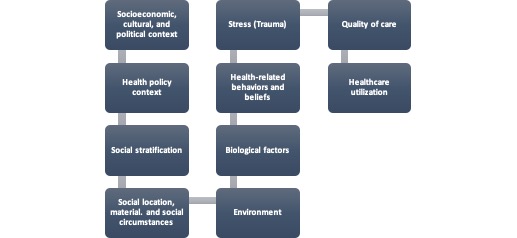
The model was well-intended though had limited substance or strategic action to leverage the intent. This effort was reminiscent of the Quadruple Aim; little data drove the model and obstructed full industry acceptance. By contrast, Dover and Belon’s (2019) Health Equity Measurement Framework (HEMF) is worthy of exploration. Based on the World Health Organization’s Social Determinants of Health model, HEMF vast evaluation areas to measure health equity at macro, meso, and micro levels, as shown in Figure 2. 

Figure 2: HEMF Framework Elements (Dover & Belon, 2019)

Dover, D.C. and Belon, A.P.  (2019. The health equity measurement framework: a comprehensive model to measure social inequities in health. Int J Equity Health 18,36 https://doi.org/10.1186/s12939-019-0935-0

The HEMF model is worthy of a test drive to gauge its true merit. Use of the wide-scope of theoretical and evidence-based industry elements is an asset. Population diversity and complexity are accounted for through power-related and disparity measures. Health beliefs, behaviors, and values are acknowledged with stress factored in; the traumatic-response across circumstances is embedded. My desire to keep this post brief limits further elaboration on the HEMF model. However, know it poses strong value as a robust quality model to address health, behavioral, and racial health disparities across populations exposed to trauma’s diverse lens.  

Have other integrated care quality models that account for wholistic health equity? Add your considerations and comments below!

12 Ways to Bust Brain Fog

Brain fog has become a common occurrence across age groups. Clear strategies can ease the stress and bust those brain fog symptoms.

As colleagues and peers know, I’m in a Doctorate of Behavioral Health program. My quest for learning is insatiable, especially in a curriculum focused on integrated care, medical literacy, leadership, healthcare quality, and entrepreneurship. Amid my zest to gain knowledge, my brain and I can be at odds. This precious organ periodically reminds me it will only absorb so much information. My critical-thinking is challenged by episodes of brain fog: a collection of symptoms impacting the ability to think, such as distraction, memory lapses, word-finding, and utter frustration.

Activities that would previously take me 30 minutes, took hours. Anxiety kicked in, then rapidly escalated. I worried my brain fog was caused by a medical condition. At times, I thought it was due to being a post-menopausal women on a rigorous academic journey. Instead, I learned there was another explanation. I was among a new generation of persons dealing with the condition. Brain fog has become a common occurrence across age groups, impacting hundreds of millions of persons around the globe.

Brain Fog More Norm Than Exception

A variety of medical conditions are associated with brain fog (e.g., anemia, autoimmune disorders, COVID, diabetes, migraines, pregnancy), as well as stress. In fact, brain fog and stress are in a synergistic dance. We become easily overwhelmed by daily tasks. We struggle to remember the name of the last movie we watched, our beloved actor, favorite restaurant, or just the last thing we ate. Studies have addressed the traumatic impact of the recent waves of chronic, pandemic-related stress on populations: fear of virus transmission and personal/family safety, grief and loss, job and economic security, increased isolation, profound fatigue. Simultaneously occurring societal tensions have meant an added psychological hit for the population. 

Stress and the Brain

Prolonged stress and associated allostatic overload amplify cortisol production. This can lead to behavioral health manifestations, such as anxiety, depression, and insomnia. It can also exacerbate co-occurring chronic illnesses (e.g., asthma, cardiac issues, diabetes, lupus, multiple sclerosis). Our pre-frontal cortex is in peril, as continuous stress impacts the ability to engage in mental calisthenics necessary for normal cognition. Carry-over of new learning, concentration, focus, and memory are all at risk. We become stressed about being stressed, which sends us spiraling further. Neural plasticity falters as the brain loses its ability to rewire itself. Fear reigns as we worry brain cells are leaking out faster than they can ever regenerate! 

Take Control to Bust the Block

Managing our stress is key to busting brain fog! Here are 12 ways to bust those brain blocks:

  1. Breathe: 4,7,8 breathing is a must: breath in for 4 seconds, hold the breath for 7 seconds, then exhale for 8 seconds. It can be done anywhere, anytime, and any frequency. 4 cycles work, 3 times a day works wonders.
  2. Take a break: We can become too committed to finishing tasks at any expense, even if our brains don’t wish to cooperate. This floods our system with stress and cortisol. Even a brief break will enhance your efforts to regroup and refocus.
  3. Exercise: Physical activity increases blood flow, brain activity, and motivation.
  4. Get rest: Good sleep hygiene, promotes restful sleep, which is a priority. The Sleep Foundation has a lengthy list of easy ways to achieve this goal. 
  5. Monitor your diet: Hydrate, nourish, rinse, repeat. Also, watch caffeine and spicy-food intake, particularly late at night or close to bedtime.
  6. Engage in at least one peer interaction daily: Don’t let too much time go by without a quick text or meet-up with friends. They enhance your spirit!
  7. Monitor internet and social media use: ‘Doom-scrolling’ is an energy-drainer, so set limits on social media use!
  8. Engage in one positive activity daily: What one thing do you engage in daily that is energy replenishing versus depleting?  Cooking, gardening, meditation, journaling, taking a drive with the music blaring, or solo dance parties are all considerations.
  9. Set limits and SAY NO: Toss those tasks that stress you out. Ask for extensions of deliverables. These actions ease those pressures on you!
  10. Give yourself grace: Accept that you may not get a task done when you want: Ease the stress by taking 10, whether seconds, minutes, or hours. Give your brain permission to stop. This allows you time to regenerate, restore brain activity, and ready yourself for other cognitive conquests to come. 
  11. Be the master of one versus none: We all multi-task and simultaneously juggle activities, yet there are limits. Even the highest functioning brains hit a wall! Instead, take charge by approaching activities one by one. This relieves those internal and external pressures, while reducing your cortisol levels.
  12. Seek support: It is easy to isolate, but don’t give in! Reach out to friends and family, but also behavioral health professionals, as needed. Use employee assistance programs (EAP), organizational and community therapy resources, whether in-person or virtual. 

***This blog post is not meant to replace a medical evaluation. Scheduling an evaluation with a trusted primary care provider may be your first step!

RELAX, REPLENISH, RECHARGE, RENEW, then REFOCUS to RESTORE YOUR RESILIENCE! 

Get going! What are you waiting for?

I’ll look forward to seeing what other suggestions you have to bust brain fog; add them in the comments space below!

Are Safety Net Programs Losing Their Safety Net?

A far bigger safety net must be in place to support these essential facilities, programs, providers, and the communities who rely on them. More must be done quickly to ensure safety net sustainability.

The nation’s 56 official safety nets strive to provide quality health and mental health to the nation’s most in need populations. Yet, new struggles to do so are endangering the lives of patients and mandate swift action.

Safety Net Realities 

A quilt of >14,000 sites comprise the safety net system: disproportionate share hospitals, federally qualified health centers (FQHCs), rural, and community health centers. Location maps and listings are accessible at HRSA’s FQHC with a safety net hospital list at their trade association website (America’s Essential Hospitals). These sites provide care:

  • Independent of patient ability to pay and immigration status
  • To the highest share of Medicaid and uninsured patients: 75% and 60% of the population respectively!
  • Across rural and urban regions and both, public and non-profit entities 

Pandemic-related financial headaches continue for the industry, safety net hospitals shouldering more than their share of this burden. Rural regions have seen a waning hospital presence, adding pressure to remaining FQHCs. The Sheps Center displays >100 closures in the past decade50% of 2020 closures for safety net facilities alone.

A recent Kaiser Family Foundation issue brief reviewed COVID’s disproportionate impact on populations covered by Medicaid and Medicare, including people of color and those who use long-term services and supports. Providers serving these patients were less likely to have received monies from the $178 B in pandemic federal provider relief funds; barely $13.1B went to safety net hospitals with a mere $11B to rural providers. This reality contributes to national health expenditures soaring to $4.1 Trillion dollars. The amount accounts for early 2020 through the pandemic’s first wave, which hit safety net facilities hard. Pandemic-related losses for the largest safety net hospitals (e.g., 1000 beds) are as high as 50% of their quarterly revenue. 

Loss of 340B Drug Discounts

Recent loss of 340B drug discounts has meant major fiscal challenges for safety-net programs. The legal battle against drug makers wages in the courts. HRSA has stepped up, imposing fines against drug makers when possible. A study of 510 urban facilities identified losses at 23% of savings from due to loss of 340B, a median of $1 M. Critical access hospitals saw 40% of savings lost, roughly $220,000. While that amount seems small, it is a major hit to these rural hospitals with a max of 25 beds, located 10 miles from other providers. While dollars and losses are relative to each organization, the bottom line is the same; patient endangerment from cuts and closures of needed programs, potentially the only facility or service provider for miles.

How to Save the Safety Nets

7 ideas are posed by experts to strengthen the safety-net foundation: 

  1. Increase federal funding: Target funds to hospitals that qualify for Medicaid disproportionate-share hospital (DSH) payments. Use hospital census data to more equitably distribute payments to facilities that primarily treat uninsured and Medicaid patients (and not Medicare patients). 
  2. Clear Guidance: Federal agencies, as the CDC should use hospital census data to more equitably distribute payments to facilities primarily treating uninsured and Medicaid patients. This action is a sound public health reimbursement strategy moving forward. 
  3. Streamline Regulation: Reduce regulatory burdens to foster reimbursement, such as ongoing expansion of telehealth and virtual requirements and reimbursement, lengthen quality reporting programs, and extend leniency with value-based purchasing programs. These will help hospitals to recover financially from pandemic-related losses.
  4. Loan Forgiveness: Expand programs that incentivize new clinicians to accept positions in safety-net programs. This action will bolster the workforce of providers who accept new Medicaid patients.
  5. Expand Coverage Options: Advance these options to limit growth of uninsured patients and uncompensated care
  6. State And Local Initiatives: Enact policies to mitigate effects of hospital closures. Keep public and surrounding healthcare systems informed so regions can best plan for, and provide necessary outreach to service shortage areas. This will also minimize service gaps, providing safer transitions of care.
  7. Community and Volunteer Efforts: Target corporate and community investing to bridge gaps in care: create grants, fundraising campaigns, horizontal mergers, to build satellite clinics, services, and programs. 

A far bigger safety net must be in place to support these essential facilities, programs, providers, and the communities who rely on them. More must be done quickly to ensure safety net sustainability.

I know there will be other suggestions, so add them in the comment area below.

#safetynet #accesstocare #bridgethosegaps #340B #funding #interprofessionalimpact #interprofessional insights 

Follow Ellen’s Interprofessional Insights to stay, in the know with the State of the SDoH & MH

5 Ways to Use SDoH and MH Data to Advance Your Advocacy

All that health disparities data gets overwhelming. Here are distinct ways to use and leverage the data to your advantage

What don’t the SDOH and MH impact?

This last few weeks has seen the usual litany of published research on how the social determinants of health and mental health (SDoH & MH) impact health and mental health outcomes. All denote significant care disparities across disease states and populations, including but not limited to the following embedded studies:

I’m a research nerd; my colleagues, mentees, and students are most likely breaking into big smiles about now. If there is relevant literature on a topic, I’ll find it. While I’m not a researcher, I will use any metrics and outcomes to craft sustainable solutions, and motivate others to do so. 

Data is Overwhelming, BUT

Many persons share their frustration with me about the abundance of SDoH & MH data. It can feel like the massive data speaks to a worsening state of affairs. However, the data is meaningful; you can’t fix what you don’t know! Remember, each piece of literature provides vital validation for necessary legislation, funding, and reimbursement to bridge those identified gaps in care. Here are 5 ways to use the data to advance your SDoH & MH advocacy:

  1. Stay current on relevant legislation: A flurry of federal and state legislation is on the horizon, all driven by dedicated research. My friends at Aligning for Health maintain an updated roster of SDoH legislation on their site that can be accessed here; current heavyweights include the Social Determinants Accelerator Act of 2021 and Leveraging Integrated Networks to Communities (LINC) to Address Social Needs ActI’d encourage those interested to sign up for weekly bi-weekly notifications on these, and other laws.
  2. Follow the Funding: Dollars are available to build services and programs that bridge health equity gaps.
  3. Join relevant advocacy efforts: Along with RISE Association and Aligning for Health mentioned above, Root Cause Coalition is a national group of organizations committed to reverse and end systematic wholistic health inequities. 
  4. Prioritize the data important to you!: That research churns fast and furiously; follow and sign up for notifications from sites and entities covering the SDoH & MH that matter to you and your organization. This may be research from JAMA or LancetHealth Affairs, Brookings Institute, Hastings Center, or the CDC. This recent issue brief from the Kaiser Family Foundation hones in on current pandemic priorities; scroll down to a stellar graphic detailing the wholistic health landscape. The Satcher Institute has updated their Health Equity Tracker with SDoH and PDoH (political determinants of health) by state; they’ve also added behavioral health to the mix!
  5. Sign up for notifications from those, in the know: That inbox gets busy, so take charge by signing up for notifications from key players in the SDoH space. If you liked this blog post, click on the, Follow Ellen’s Interprofessional Insights button in the sidebar of this page to receive my bi-weekly blog and vital health equity information.

I look forward to your comments on this blog post, and other strategies you use to keep your finger on the pulse of wholistic health equity priorities. 

#SDoH #SDoMH #Healthequity #funding #interprofessionalimpact #accesstocare #bridgethosegaps  

Trauma-Informed Leadership: The Antidote for Collective Occupational Trauma

Workforce sustainability, retention, and quality of care are among the adverse side effects of the current interprofessional emergency

The healthcare workforce is amid a unique epidemic, coping with the ravages of collective occupational trauma. Physicians and nurses have been heavily impacted, but also an endless list of behavioral health professionals (behavioral analysts, counselors, social workers, psychologists), case managers, community health workers, medical assistants, nutritionists, pharmacists, phlebotomists, public health workers, rehabilitation professionals, respiratory therapists, not to mention those professionals employed in other sectors (e.g., school and occupational health nurses). Workforce sustainability, retention, and quality of care are among the adverse side effects of this interprofessional emergency.


An Emotional Plea

A recent article by the Hastings Center posed an emotional plea; “the pandemic has laid bare the significant shortcomings of a health system rooted in an unsustainable financial model that exploits the physical and emotional labor of its nurses”. A Time Magazine cover story, was equally riveting with a focus on physician suicide that brought me tears; the respected workforce is concerned for its ability to “emotionally, physically, and mentally face the tsunami of patients” who need care. Data out of Canada reveals prevalence of physician burnout, upwards of 68%. Succinctly stated, the healthcare workforce is under attack with unparalleled rates of mental health, substance use, and post-traumatic stress disorder. The daily deluge of data is overwhelming with the severity of workforce trauma evident; the recent report out of the CDC focused on public health workers and was my breaking point: high incidence of depression, anxiety, PTSD, and suicidal ideation all detailed. The research is validating and valued, though yields a chilling reality: organizations and employers must implement trauma-informed leadership (TIL) models to bolster their staff, before they have none left.

Collective Occupational Trauma in High Gear

We are past the point of no return, 80% of healthcare professionals are ready to exit the industry. Practitioner burnout from vicarious trauma is a long-standing dynamic that has only intensified amid the pandemic. Earlier this year, I published a blog post, 10 Ways to Tackle Collective Occupational Trauma and Restore Resilience. I remain alarmed about the ongoing pandemic pressures and their impact on the workforce. A fierce dynamic is in motion, the Cycle of Collective  Occupational Trauma (the graphic viewable on the original blog post, click the embedded URL above). Intense levels of collective induced stress are experienced by the population and passed to involved practitioners as collective infused trauma. In addition, these personnel are exposed to a wide range of all-encompassing professional and personal stressors. Collective occupational trauma results, and ultimately leads to PTSD if not addressed: acute and chronic sleep disruptions (e.g., nightmares, insomnia), diet challenges (e.g., gastrointestinal upset), physical health issues (e.g., headaches, back or joint pain, psychophysiologic disorders), and behavioral health symptoms (e.g., brain fog, motivation, depression, anxiety, substance use, suicidal ideation and action). Academic, occupational, and social activities of daily living become impaired and imperiled.

Trauma-Informed Leadership as Antidote for Collective Occupational Trauma

I’m confident most readers of this blog know the value and success of Trauma-informed care (TIC). For those less familiar, five principles are intentionally woven into each interaction, bolstering intervention with individuals who have experienced or perceived trauma, whether single event or ongoing experiences: safety, choice, collaboration, trustworthiness, and empowerment. The intervention can be implemented in any setting with patients, their support systems, as well as those persons rendering their care.

TIC also serves as an antidote to mitigate collective occupational trauma, and can be aligned through Trauma-informed leadership (TIL). This unique approach expands on Servant, Transformational, and other leadership models that encourage managers “step-up and in” to support staff. TIL shifts the long-held “process and roll” culture of healthcare organizations. Instead, a new atmosphere is created where leadership and staff relationships are nurtured with actionable efforts: partnering toward meaningful, reciprocal interactions that empower (staff) resilience. TIL strategies include, but are not limited to these 10 tactics:

  • Encouraging staff to “Take 10”, whether:
    • 10 seconds to breathe
    • 10 minutes for fresh air, grounding, or use of the Calm App
    • 10 hours, or a mental health day to restore resilience
    • 10 days, yup, it’s vacation time
    • 10 weeks or 10 months means a whole different conversation, and potentially a job change
  • Providing attention to staff health, mental health, and well-being:
    • Monitor for signs and levels of stress: from agitation, sadness, frustration, to more profound forgetfulness, chronic illness exacerbation, depression, or anxiety.
    • Decrease behavioral health stigma through discussion & referrals for intervention, as needed
    • Support and model self-care
  • Engaging in 2-way communication:
    • Don’t just tell staff what to do, but also why
  • Staying visible and accessible to staff
  • Recognizing not only staff limits and vulnerability, but acknowledging those as the leader
  • Building team camaraderie vs. opposing fronts of leadership and staff, or among staff
  • Providing encouragement when, and where possible
  • Establishing and addressing the root cause of retention issues
  • For virtual roles, ensuring visual interactions where leaders “see” staff several times during the week; cameras and webcams on!
  • Recognizing culture shifts are not achieved by a “one and done” approach; stay consistent for the long-term win.

Let these times inspire your opportunity to rebuild, fortify, and sustain the workforce. TIL is a solid means to accomplish this endeavor. Feel free to reach out to me with questions at efssupervision@me.com.

This blog post originally appeared on PACEsConnection

Workforce Trauma, Shortages, and Retention are Interprofessional Challenges: Resolution Tactics

Disregard for the health, mental health, and well-being of all members of the workforce is a grave concern. What tactics can be implemented?

The full scope of professionals must be recognized for their sacrifices and dedication to patient wellness; anything less is unacceptable.

 One year ago, I wrote how the pandemic, and other societal narratives prompted a new dimension of collective occupational trauma; an already worn workforce was forced to wrestle with constant and intense levels of suffering. As we enter 2022, and year 3 of COVID’s wrath, this trauma remains unrelenting. Pervasive burnout, retention issues, and staff shortages are ravaging disciplines and settings, cumulative costs into the billions. These realities put quality patient care at severe risk.

     Global data emphasizes the impact of chronic and recurrent COVID-waves for front-line physicians and nurses; no doubt these disciplines have endured, and continue to take a powerful hit; >80% ready to leave the industry. The ‘Great Resignation’ is decimating healthcare, the sector experiencing the largest job transition rates and among the highest number of job openings. Concern exists whether there will be enough practitioners to render care. However, what of other disciplines? Disregard for the health, mental health, and well-being of all members of the workforce is a grave concern.

The Entire Workforce Mandates Attention

     The health and behavioral health workforce is vast and comprises many professional disciplines: behavioral health professionals (behavioral analysts, counselors, social workers, psychologists), case managers, community health workers, medical assistants, nutritionists, pharmacists, phlebotomists, psychiatrists, public health workers, rehabilitation professionals, and respiratory therapists, etc. Valued personnel are also employed by other sectors (e.g., schools, businesses, prisons), such as teachers, occupational health, and school nurses, to name a few. Each of these groups have suffered more than their share of deaths, illness, and long-haul syndrome disability; the mental and emotional toll of their work yielding intense emotional trauma across:

Despite these graphic realities, too many personnel are excluded from industry/employer recognition for their contributions to the pandemic, whether awards or merit raises. Even media focus on these individuals is limited. A recent article discussing, hazard pay, focused on nurses and doctors alone; why are others not deserving?

     A vicious cycle unfolds where stressed, underappreciated team members experience a higher incidence of negative mood, emotional exhaustion, and thus, increased medical errors. More than 250,000 medical errors and 100,000 deaths annually were attributed to workforce frustration pre-pandemic; poor team member communication and fragmented care ensued with a ripple effect of order entry mistakes, medication, and treatment missteps, among other occurrences. Considering all the disciplines to interact with patients, at what point does the risk to patient care become too great?

Professional Advocacy is a Mandate

     There must be greater advocacy and action to acknowledge the vital interprofessional contributions rendered by entire workforce. Professional associations, their leadership, and those in positions to do so, must assert influence to promote the value of their requisite members. Language promoting self-care and professional advocacy has started to appear in standards of practice and ethical codes. However, these efforts must continue to amplify. Many colleagues actively use their social media presence to write articles, blogs, and other messaging to lead this charge; more must join the discussion and advocate for action through employers, and the industry overall. Media attention to this cause must be swift, fierce, and consistent.

There must be collective accountability across the professional landscape to acknowledge, and reconcile this issue, spanning academia, credentialing and regulatory entities, professional associations, and of course, employers. Workforce sustainability directly impacts quality health and behavioral healthcare, ultimately saving lives and dollars. Reaching this goal takes the expertise and contribution of each interprofessional team member.

How this goal is accomplished varies across each setting and far from a cookie-cutter approach, spanning:

  • tangible acknowledgements and recognition (e.g., free staff meals, merit raises or other benefit enhancements, staff appreciation awards, weekly formal and informal “shout-outs” of workforce contributions)
  • investment in staff professional development, as in payment for professional association dues, credentialing, continuing education
  • implementation of on-site mental health programming
  • scheduling teamwork celebrations
  • flexible scheduling as possible
  • plan departmental/organizational townhall meetings with actionable items and follow-up on deliverables
  • ensure staff mentoring and support programs
  • have informal staff-check ins
  • effective communication by leadership with staff (include the why of each action)
  • provide a culture where all persons, and their input are valued and respected
  • deliver and demonstrate consistent verbal appreciation
  • ensure professional regulations, credentialing entities, and associations highlight professional self-care and advocacy in all standards, and hold requisite workforce members and employers accountable to uphold the language
  • set a tone of mutual respect in academia and education programs through collaborative programs, events, and classroom activities (e.g., co-teaching across disciplines and programs) that empower interprofessional learning
  • implementation of Trauma-informed Leadership models and strategies (PS: my last blog post will jump-start this action)
  • Have other ideas? Add them below in the comments section

The full scope of professionals must be recognized for their sacrifices and dedication to patient wellness; anything less is unacceptable.

This blog post originally appeared on PACEsConnection

Bio: Ellen Fink-Samnick is an award-winning industry subject matter expert on interprofessional ethics, wholistic health equity, trauma-informed leadership, and supervision. She is an esteemed professional speaker, author, and knowledge developer with academic appointments at George Mason University and the University of Buffalo. Ellen is a clinical supervision trainer for NASW of Virginia, and serves in national leadership and consultant roles. She is also a Doctoral in Behavioral Health Candidate at Cummings Graduate Institute of Behavioral Health Studies. Further information is available on her LinkedIn Bio and website