
I traditionally avoid posting on social media about anything that might be viewed as “political”. However, my view has changed amid the latest string of Executive Orders and related actions. Each of these EOs seeks to deny the presence of certain populations, restrict equitable care access for historically marginalized and minoritized communities, as well as obstruct educational and professional pathways to career opportunities for all persons.
Colleagues have authored countless articles and blogs on the intent and reach of Executive Orders, impact on DEI efforts, and related themes. The resources are worth a deeper dive for those with interest. My focus for this article is on how the issue puts healthcare professionals directly in ethical, legal, and regulatory crosshairs, and especially my colleagues in case management.
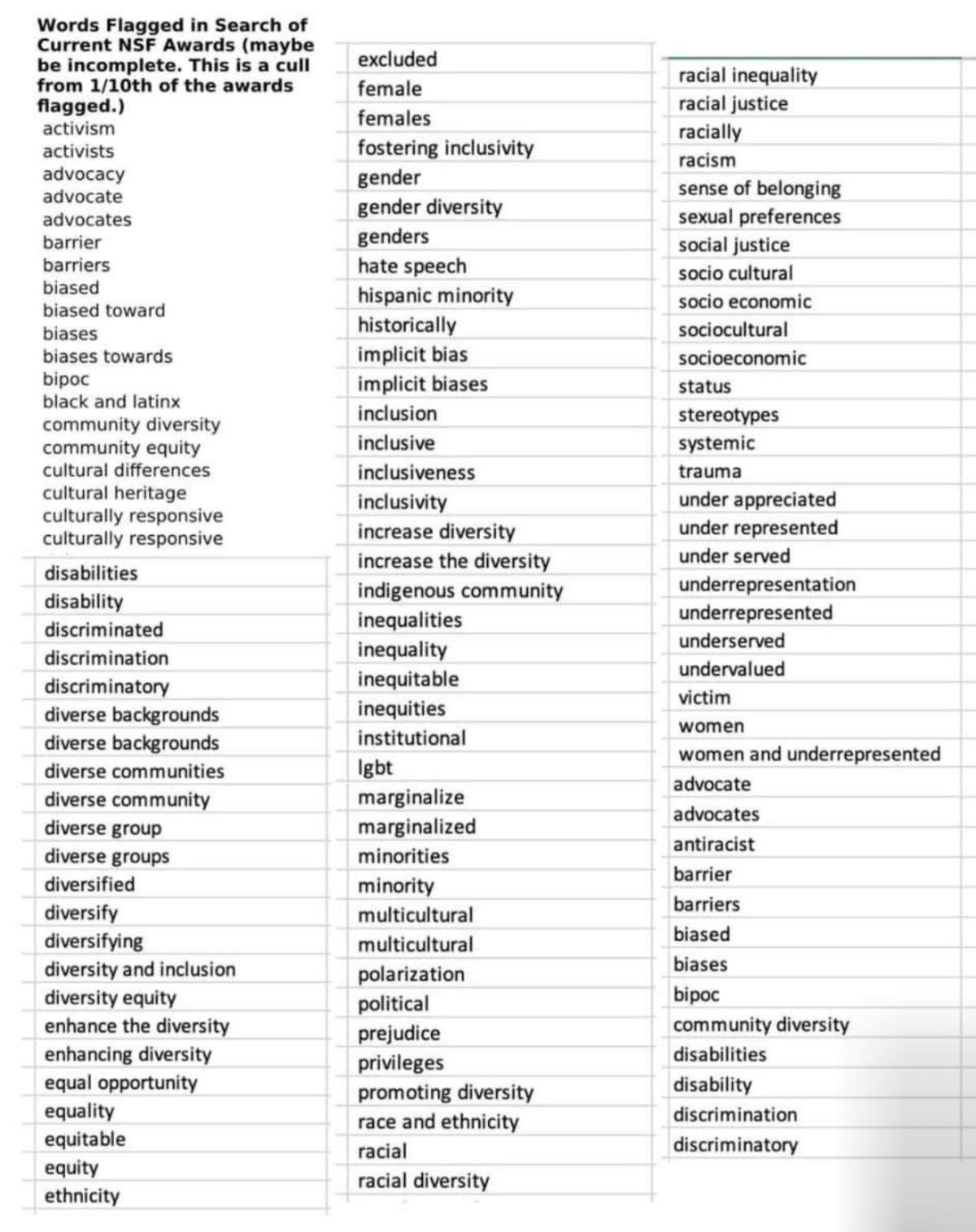
The “Flagged Words” and Existing Regulations and Requirements
The lengthy and growing list of “flagged words” to avoid in grant requests, professional references, education, and continuing education is concerning. Most of the included terms appear in rigorous CEU-requirements for the healthcare workforce, and across more than half of the U.S: accessibility, anti-oppressive practices (implicit) bias, cultural competency and/or humility, discrimination, diversity, equity, immigration, inclusion, and social justice, to name a few. For CEU-approval, these words are required to appear in presentation and training abstracts or their learning objectives. Among other cautionary words are advocate, female, gender, political, socioeconomic, status, trauma, women, and victim.
Much of the terminology is embedded within our established resources of guidance: regulatory language for licensure practice acts, federal mandates, academic and organizational accreditation, case management and other individual exam-based certifications, ethical codes of conduct, and professional standards of practice. Examples of these include:
- Federal regulation includes but is not limited to The Americans with Disabilities Act (ADA), The Civil Rights Act of 1964, the Fourteenth Amendment. Each of these laws and acts assures basic human rights and protections for all Americans. They speak to equitable accessibility for all persons, and independent of visible and invisible disabilities; they prohibit discrimination in public places, provided for the integration of schools and other public facilities, and made employment discrimination illegal; they provide citizenship for all persons who are born or naturalized in the U.S.
- Accreditation requirements for higher education defined by the Council on Social Work Education, Commission on Accreditation in Physical Therapy Education, the American Association of Colleges of Nursing, Accreditation Council for Graduate Medical Education, Accreditation Council for Occupational Therapy Education
- Organizational accreditation requirements under Joint Commission standards, ANCC’s Magnet Status Recognition, and health equity accreditations under NCQA and URAC for my health plan peeps. CARF standards require accredited programs to examine the unique needs of any community when developing services.
- CMS requires screening of patient health-related social needs (HRSNs) and social determinants of health (SDoH) under their in-patient and out-patient prospective payment systems (IPPS and OPPS).
- CCMC’s Code of Professional Conduct for Case Managers prioritizes the standards, rules, procedures and penalties for CCMs. The 8 principles align with discipline-specific ethical standards (e.g., counseling, medicine, nursing, social work) to respect the rights and inherent dignity of all clients, act with integrity and fidelity, plus maintain objectivity in those relationships.
- Each of CMSA’s (2022) Standards of Practice emphasize the importance of robust case management process that prioritizes the patient and their family, identification of their needs, and ethical and legal attention to all obligations at the core of their actions. Standard Q: DEIB and Health Equity was added in 2024, while ANA’s newest Nursing Code of Ethics (2025) emphasizes the respect for human dignity across its expanded 10 provisions.
Licensure Renewal or Not?
Many of the terms at issue appear across professional practice acts and regulations. I’d cue my colleagues to check their current CEU-requirements for any state(s) of licensure or certification; the language is crystal clear. There are large consequences for persons unable to fulfill their renewal requirements, including fiscal costs by loss of employment. There are also potential sanctions or reprimands should one choose to abandon, refuse, or rescind care (without an alternative provided) to patients in need of emergent treatment and intervention.
Ethical and Legal Exclusions
It is understood that not every professional shares the same belief system and mores. Yet, caveats have long been written into the established resources of guidance for religious or moral exclusions and other acknowledged beliefs that could bias or obstruct a person from rendering the acceptable standards of care delivery. All professionals are accountable to complete a safe and appropriate transfer of care to minimize the potential for patients to be put at risk of physical or emotional harm. This language, or some similar verbiage, appears across professional standards of practice and ethical codes for all disciplines and advanced specialty practices, including those for my case management colleagues.
It is also understood that some professionals reside in states where certain language has been excluded under federal law. However, our professional and ethical obligations to patients, their families, and other support systems remain paramount.
In a concerning move, the Texas Behavioral Health Executive Council voted to give preliminary approval for removal of language that requires cultural competence as a CEU-requirement for several licensed mental health professions, including counseling, marriage and family therapists, psychologists, and social workers. Prior requirements for renewal were for 24 total hours of CEUs, of which 6 were dedicated to ethics and 3 for cultural diversity or competence. The proposed revision is to “ensure competency when providing services to a distinct population, defined as a group of people who share a common attribute, trait, or defining characteristic of the licensee’s choice.” The term cultural competence has long been challenged due to its implication that every professional should be competent in every culture, which is not possible. However, other terminology has been recommended from intercultural effectiveness to cultural humility. The latter term is focused on practitioner awareness of distinct cultural nuances across populations and communities with a dedicated commitment to ongoing learning that advances their practice.
The action by Texas has prompted considerable pushback with concerns by other states on how the new rule could allow practitioners to bypass cultural diversity training about marginalized communities. This action de-emphasizes the topic’s importance to the workforce, as a critical component of providing and assuring ethical and responsible care and intervention to each person. Further actions of this type will lead to gaps in the knowledge and skills needed by the workforce to effectively engage and serve clients from diverse backgrounds, cultures, and genders. Respect for the unique experiences, beliefs, and values that distinguish populations and communities will surely be at risk.
Our Quality North Star is Under Attack
Excluding words or erasing populations does not dismiss the inequities and injustices faced by those communities. Quality-driven patient-inclusive care is an industry mandate for anyone in healthcare and its associated sectors.Colleagues have even shared how content referencing the Quintuple Aim has come under fire. This construct is the long-respected Quality North Star of our industry: population and patient-inclusive care rendered at the right time, for the right cost, by those who embrace the work, and is accessible by all persons. With National Health Expenditures slated to be at over $5.3 Trillion dollars for 2025 and hit over $7 Trillion by 2031, too much is at stake for any lesser of a quality vision.
Our Enduring Professional Obligations
Advocacy is another “forbidden word”. Yet, that word remains an enduring ethical mandate and legal obligation for all licensed and/or certified healthcare professional and disciplines. All persons deserve to feel safe, seen, heard, valued, and respected. Equally included in this mix is each practitioner, our families, as well as any friends who are patients receiving care. I have no intention of waiving these obligations or shifting my professional focus of the past 42 years.
What about you?
 Ellen's Interprofessional Insights