And to All a Space Where They Feel Safe, Seen, Heard, and Valued…

2023 saw grand movement in the health equity space, especially in terms of accreditation, regulations, reimbursement, and programming. However, despite the best intent, there are miles to go before we sleep.

A flurry of recent headlines came to mind as I sat down to craft this last blog for 2023. Each of them were noteworthy for commentary:

At a time when society, and especially the health care industry have fixated their attention on policies and programs to advance diversity, equity, inclusion, and belonging, it appears that there is still much work to do. Despite the wins that we have seen in 2023, my fellow health equity warriors and I have miles to go before we sleep.

2023 Was Not For Naught

Now, we’ve seen some big wins in the health equity space this past year, including but not limited to:

There is a robust list of legislation and funding action that has occurred across the macro- , meso-, and micro-level arenas of care. However, I’m one of those who is impatient with the progress heretofore, despite the well-intended actions. It often feels that there so many gaps and chasms in care to address, that we’ve barely scratched the surface.


Moving Forward and My Commitment to You

Every step I walk in the health equity arena ignites my passion, purpose, and the promise of all that is possible for our industry and every stakeholder. I am appreciative of those who have followed and read my blog, attended presentations, and read the content that I’ve authored, whether books, chapters, scholarly articles and other continuing education content. Your enthusiasm for my innovative work in this space has meant so much.

My Top 5 blog articles for 2023 have been:

1. Health Equity and the SDoH Are NOT Synonyms

2. The U.S. Playbook to Address the SDoH: Launchpad vs. Final Comprehensive Strategy

3. Patient Compliance vs. Adherence: Advancing the Health Equity Mandate

4. Workplace Bullying’s Wrath Continues

5. Job Search Lessons for Health, Behavioral Health, and Public Health Students

I’m taking a rest to restore my resilience over these next few weeks. But as we embark on 2024, know how much your support fuels me to keep advancing our healthcare industry.

Every effort is meaningful, no matter how big or small. Only through our collective energies will we achieve that coveted wholistic health quality compass of the Quintuple/Quintile Aim. Only in this way will we forge a safe and ethical space for practice where every patient, population, provider, practitioner be able to feel safe, seen, heard, and valued.

The U.S. Playbook to Address the SDoH: Launchpad vs. Final Comprehensive Strategy

The White House released the inaugural U.S. Playbook to Address the Social Determinants of Health. The document serves as an important cross-sector guidepost for application, implementation, and action by all involved stakeholders to best serve their patients and communities. But, does the Playbook go far enough to fully address the SDoH? What other opportunities loom?

It’s been another exciting week for those of us taking our daily walk down Social Determinants of Health Lane. The White House released their U.S. Playbook to Address the Social Determinants of Health. The document has captured the industry’s attention, though also yielded some scrutiny.

The Lowdown

The Playbook is a bold undertaking. The document level-sets the massive work engaged in so far to address the health disparities and barriers to care engaged in across the industry. It quotes research and seminal reports citing the clinical and fiscal impact of health inequities faced by society’s minoritized and marginalized populations and providers. This vital foundation also highlights the importance of patient- and family- centric care that heeds the Quintuple and Quintile Aims at micro, meso, and macro levels, and across involved sectors.

For those who want the Cliff Notes version, here you go. Pages 1-18 provide critical information for persons and organizations who seek foundational information on SDoH (e.g., research, definitions, models) and context for them. This is especially valuable knowledge for students, as well as those who might not be as informed on this topic.

For my colleagues who have been in these trenches, pages 18-35 detail the three Playbook pillars with numbered strategic actions to advance each pillar. There is a candid and comprehensive review of the context for each pillar and potential challenges for implementation. Opportunities for Congressional Action are also detailed.

1. Expand data gathering and sharing: Advance data collection and interoperability among health care, public health, social care services, and other data systems to better address SDOH with federal, state, local, tribal, and territorial support.

2. Support flexible funding for social needs: Identify how flexible use of funds could align investments across sectors to finance community infrastructure, offer grants to empower communities to address HRSNs, and encourage coordinated use of resources to improve health outcomes.

3. Support backbone organizations: Support the development of community backbone organizations and other infrastructure to link health care systems to community-based organizations

The Appendics (pages 36-46) discuss how aspects of the Playbook are currently being operationalized using the Whole of Government approach. This section is a ‘must read’ for it provides specific examples to operationalize each action, with further guidance and information for readers on funding opportunities, toolkits with existing screening and assessment resources, and other critical community activities.

To Be Clear

Like most Federal reports and position papers, the Playbook was not developed as a ‘be all to end all’ document. This valuable resource highlights the mandate for all stakeholders and sectors of health and behavioral health services to ensure the most robust and sustainable approach to inclusive care for all populations possible.

How each organization accomplishes this critical priority is on them. Some might have preferred a greater Playbook focus on expanded funding and reimbursement, and that’s one clear opportunity. My take for ensuring organizational success in addressing the SDoH involves ten elements:

1. Take an honest and critical look at their current SDoH priorities.

2. Identify their target populations most impacted and develop means to ensure equitable and accessible care for all persons. This also includes incorporation of quality metrics and relevant outcomes that go beyond length of stay and readmissions to population-specific health priorities (e.g Patient-reported Outcomes Measures).

3. Align all existing inter- and intra-organizational resources and community partners.

4. Utilize and partner on funding access and opportunities; this includes ongoing investment in their communities served, advocacy for appropriate reimbursement (yup, those ICD-10-CM Z codes), and other fiscal imperatives.

5. Ensure appropriate mechanisms for data-gathering, interoperability, and use.

6. Heed industry compliance requirements (e.g., CMS, the Joint Commission, NCQA, NQF) to implement formal patient assessment (or Health-related Social Needs (HRSNs)) intervention, and direct referral linkage.

7. Ensure diverse and sufficient interprofessional staffing who can provide concordant and respectful whole-person care to all populations, which leverages integrated care frameworks and integrated behavioral health models of treatment.

8. Prioritize workforce training on trauma-informed approaches to care, eliminating implicit and explicit biases and microaggressions, and maximizing ethical engagement to enhance patient engagement and treatment adherence versus compliance and resistance.

9. Ensure the alignment and application of Diversity, Equity, Inclusion, and Belonging (DEIB) policies, whereby all patients and the industry workforce feel safe, seen, heard, and valued.

10. Commit to long-term strategic solutioning of the SDoH rather than short-term reactive response.

In Closing

“The Playbook is a launchpad, and not a final comprehensive strategy for addressing the SDoH”. It may not go as far as all stakeholders would like. Yet, the Playbook serves as an important guidepost for necessary cross-sector application, implementation, and action by all entities and individuals to best serve their patients and communities. I trust readers of this post will weigh in with other suggestions, and that input is encouraged. Just remember, final accountability for advancing these efforts is on us all.

Patient Compliance vs. Adherence: Advancing the Health Equity Mandate

Use of the term “compliance” instead of “adherence” by healthcare regulatory entities and organizations, plus practitioners, health systems and their and employees condones the blaming of patients for poor outcomes. It’s time to change this practice!

First, big thanks to all who read my last blog post Health Equity and the SDoH are Not Synonyms. That article has quickly become my top blog post with thousands of views across social media platforms and other news outlets. Ellen’s Interprofessional Insights is free access to all who value its messaging, so please share the link. Now, onto my latest fierce focus. 

I was reminded last week of a long-standing pet peeve: (mis)use of the terms compliance and adherence. I participated in RISE’s Annual Population Health Summit with vibrant conversations int he space about patient engagement. Through a number of sessions there was THAT framing that makes me vibrate with frustration. My brain went into overdrive! 

When will the industry stop blaming patients for treatment inactions? Has there not been enough focus on DEI strategies to enhance practitioner and provider cultural awareness and humility? How much emphasis has there been to advance assessment of health-related social needs (HRSNs) or social drivers of health, patient health literacy, and decreasing biases? (Psssst: Remember, the CMS penalties and Joint Commission standards (TJC) are real!). Despite a resounding YES to the above questions, we’ve got miles to go before we sleep. Use of the term “compliance” instead of “adherence” by healthcare regulatory entities and organizations, plus practitioners, health systems and their and employees only condones the blaming of patients for poor outcomes. It’s time to change this practice!

Compliance Conveys Power Not Partnership

I’m notorious for level-setting and wanted to start with a review of definitions. Compliance refers to regulatory enforcement of applicable requirements whereby organizations and their providers are expected to meet or exceed the defined legal, ethical, and professional standards.Their explicit goal is to reduce fraud, abuse, and waste, with the implicit intent to ensure patient and occupational safety. Yet, there is a concerning power dynamic imposed by this definition as regulatory entities (e.g., NCQA, NQF, TJC) possess legitimate power by virtue of their role in the industry.

Compliance also implies power verses partnership. The term speaks to an assumption that patients must be subservient to a practitioner’s authority, a troublesome concept for this clinical professional. What happens when a patient’s voice is not heard or dismissed by practitioners? What about when a patient doesn’t feel seen?  These situations emerge with increasing incidence across every population, with who are marginalized and minoritized experiencing this reality in unacceptable numbers.

Compliance suggests passive behavior, as when a patient is expected to follow treatment instructions. It may be the patient who is comfortable doing what the physician tells them to, whether take a prescribed medication in a defined dose or follow-up for counseling with a behavioral health provider. Some patients may heed this guidance as the norm, not daring to question their provider, while others will seek to clarify the rationale. This approach should not be surprising in an era where patients are consumers of their care. However, questioning, challenging, or ignoring provider recommendations is too often viewed as a negative. 

Power and misused power yield trauma, whether historical, experiential or event in scope. Acute, chronic, and complex trauma share misused power and/or oppression at their source.  Blaming patients is laden with stigma and accusatory messaging. It gets me wondering how much attention is paid to a patient’s health literacy, language proficiency, or any of their concordant preferences. 


By contrast, adherence is the active choice of patients to follow through with prescribed treatments, while taking responsibility for their well-being. This term signifies that patients and practitioners collaborate to improve their health behaviors toward overall a higher state of wellness. Successful outcomes are achieved through a blend of clinician expertise with patient choice incorporating lifestyle, values, and care preferences. Shared decision-making and personal integrity leverage meaningful therapeutic relationships.

Sync for Social Needs, Z-Codes, Yet Being Out of Sync

I was excited when NCQA, NQF, and the TJC joined the Sync for Social Needs Coalition. Yet, these entities present as out of sync with their views on how to best assess and address exactly what drives patient motivation and engagement in treatment. NCQA still uses the term adherence on their resource pages and metrics. TJC echoed emphasis on patient activation and adherence in recent issue briefs.

My beloved Z-Codes are not so in sync either. ICD-10-CM Z codes for Patient Noncompliance were expanded in 2023 to my disappointment. To be fair, I’m a member of the Gravity Project and tout their work at every opportunity. However, I took a brief break from my involvement to finish my Doctoral Culminating Project. The mantra, you snooze, you lose applies!

Z-Code Z91.1 of patient noncompliance with medical treatment and regimen made me shiver. How is this concept objectively evaluated in the current care climate? Hearing colleagues refer to “non-compliant patients” always felt subjective. The terminology stirred thoughts of misbehaving children or those unable to follow traditional societal norms. 

My clinical training aligns with psychodynamic theory, thus there are always reasons for all behaviors, whether conscious or unconscious. This approach explains why a person may present as unable or unwilling to follow medical treatment. If we don’t ask why, we can’t properly assess the reasons for these behavioral manifestations. Expanding these codes gave the industry license to label patient actions as “noncompliance” with their dietary regimen and medical treatment. Caregivers of patients are also subject to these same biasesfor their “noncompliance “with an expansive list of codes under Z.91. These codes can be viewed here.

This terminology use is shocking given how the workforce is readily cued to manage their biases, stay informed of microaggressions, and participate in continuous learning to decrease missteps. Training on cultural awareness to promote patient engagement and satisfaction with care is emphasized at every turn. Yet, I am disappointed that practitioners are empowered to code, and thus blame, patients and caregivers for treatment disparities and misunderstandings.

Activating Change

Industry prioritization of health equity mandates a cultural shift in treatment language and perspectives. Here are tangible recommendations:

1Shift the narrative and power dynamic: Practitioners and providers must shift from viewing compliant and “obedient” patients to persons provided the respect and space to partner in their treatment decisions. Autonomy and self-determination remain enduring ethical principles and amplify attention to cultural perspectives.

2. Coping with the human condition is universal: Most patients and their caregivers experience fear and anxiety about their health conditions and those of their loved ones. A majority worry about diagnosis, prognosis, and quality of life. Everyone uses some defense mechanism to cope or not (e.g., denial, isolation, projection, displacement). The reality of the health experience often occurs without warning, and usually when least expected. We must give people the grace and space to cope with it.

3. Engage to understand patient and care giver rationale: To embrace cultural awareness and humility we must seek to understand patient and caregiver behaviors. We must eliminate implicit biases rather than empower them through quality metrics and measures; “these biases reinforce blame on the patients rather than look to the system and/or the competencies of the clinicians”; big nod to my friend Michael Garrett for this quote!

4. Assess for Psychosocial Needs: This arena is a top priority for organizations and most I know are on the case to integrate reflective screening tools into their efforts. I appreciate that far more resources are needed for all of those who need them. However, let’s make sure the right team members are employed for assessment and referral of patients, including community health workers, case management assistants, and health service coordinators. The outcomes are clear about their merits to assess across the touchpoints of care for:

  • Health and digital health literacy
  • Cultural preferences for treatment (e.g., medication, provider gender)
  • HRSNs, financial, and other impediments to care (e.g., co-pays, medical debt, lack of family support, isolation, transportation, incarceration, techquity) 

5. Use Non-Judgmental Communication: It is critical we set an inclusive tone to care, including but not limited to:

  • Maintain an affirming presence to establish trust 
  • Ask the patient to verify their gender and pronouns 
  • Ask the patient to verify their race and ethnicity
  • Ask the patient to identify their family or support system, regardless of blood relation
  • Demonstrate empathic and reflective listening 
  • Respect client autonomy by allowing the person to speak 
  • Empower patient through use of open-ended questions, such as, ‘What matters most to you?” or “What can I do for you today?”
  • Respond, clarify, and confirm, instead of reacting
  • Honor the patients religious and cultural beliefs, values, and choices

(Fink-Samnick & Garrett, 2023

Unconditional respect between patients and providers is difficult, but not impossible. Little will change toward engaging patients in their needed care until we stop blaming them for the industry’s shortcomings.


Part 2: Wholistic Health Equity Determinants and the LGBTQIA++ Community

This Part 2 post continues exploring the pervasive impact of Wholistic Health Equity Determinants (WHED) on the LGBTQIA++ community. Focus is on the rising incidence of trauma and mental health conditions across the community and the expanding advocacy, funding, as well as resources to mitigate the WHED.

I appreciate the buzz about my last blog; it’s a quick read if you missed it. To catch you up, the LGBTQIA++ community face pervasive Wholistic Health Equity Determinants (WHED): SDoH, SDoMH, PDoH, and the systemic racism that perpetuates them. Discrimination, dismissal, and rejection trigger trauma across every demographic, and intensify integrated health incidence across this population. This Part 2 post explores the unprecedented exacerbation of behavioral health conditions and escalation in mental illness for the the LGBTQIA++ community. Additional focus is placed on novel resources to mitigate the physical, behavioral, and psychosocial health disparities faced by this population.

The Behavioral Health Landscape

     Let’s be clear, the LGBTQIA++ community is a marginalized population with morbidity and mortality rates that are worse than other groups. Increasing attacks on the community’s legal rights have amplified the impact of historical, experiential, and event traumas for the population. 

The following data sources span The Trevor Project’s 2023 U.S. National Survey on the Mental Health of LGBTQ Young People, the 2020 National Survey on Drug Use and Health, and other research.

Suicide

There has been a dramatic uptick in suicidal ideation and gestures among LGBTQIA++ individuals, especially for the community’s youngest members:

  • 41% considered attempting suicide:
    • 46%: Ages 13-17 and 34%: Ages 18-24
    • Of those who attempted suicide: 
      • 17%: Ages 13-17
      •   9%: Ages 18-24
      • 22%: Native/Indigenous 
      • 18%: Middle Eastern/N. African
      • 17%: Multiracial
      • 16% Black
      • 15%: Latinx
      • 11%: White
      • 10%: Asian American/Pacific Islander

Mental Health and Access to Care

The incidence of mental health faced by the community is alarming with higher rates for depression and anxietycompared with non-community members. The prevalence of post-traumatic stress disorder impact upwards of 47% of the community.

Yet, the rates for mental health realities faced by LGBTQIA++ youth concern me greatly:

  • 67%: symptoms of anxiety
  • 25%: symptoms of depression
  • 56% who wanted mental health care were unable to get it:
    • 47%: afraid to talk about their mental health with someone else
    • 41%: didn’t want to get their parent’s/caregiver’s permission
    • 40%: afraid that they wouldn’t be taken seriously
    • 38%: couldn’t afford it
    • 27%: were not out about their authentic self and were afraid of being outed
    • 23%: didn’t feel they would understand their sexual orientation or gender identity
    • 20%: parent/caregiver didn’t allow them to go
  • <50% of transgender and nonbinary youth found their school to be gender-affirming
  • 30% said their mental health was poor most of the time or always from anti-LGBTQ policies and legislation.
  • Nearly 66% affirmed how hearing about potential state or local laws banning people from discussing LGBTQ people at school made their mental health worse.

Persons with Disabilities

Members of the LGBTQIA++ community have a higher likelihood of disabilities, whether physical, cognitive, or intellectual. Incidence is upwards of 40% of persons, though fewer of these disabilities are often expressed by individuals or formally identified.

As an already marginalized group, individuals with disabilities may feel “unseen” and experience more profound stigma and discrimination. Cumulative effects of this marginalisation can occur over the life course, with older members of the community experiencing higher rates of disability, depression, anxiety and isolation than the general community, and decreased social support. They are less likely to advance academically, with fewer persons attending college or attaining beyond a 2 or 4-year degree.

Transgender, non-binary, or gender non-conforming people with disabilities can often feel silenced. Abundant literature affirms they are more likely to experience chronic illnesses, including cardiac disease, high blood pressure, high cholesterol, diabetes, stroke, arthritis, and asthma compared to persons living without disabilities.

Substance Use

The community experiences substance abuse at higher rates than their heterosexual counterparts:

  • LGB Adults: 2X as likely
  • Trans Adults: 4X as likely

21.8%: Diagnosed with an alcohol use disorder vs. 11% of the general population

Advocacy and Action

Advocacy and action have ramped up for dedicated funding, legislation, and program development. Educating industry stakeholders is vital, as is ensuring mentoring and support for LGBTQIA++ youth, adults, and their families. Registries of providers, practitioners, and treatment specialists who offer concordant care are essential. Here is a list of novel community-focused efforts:

  • The Department of Housing and Human Development has launched a new LGBTQIA++ Youth Housing initiative. HUD will partner with local communities, service providers, and young people directly impacted by residential insufficiency to address barriers to housing and shelter access. The recent press release lists further details
  • GLADD provides a clearinghouse of population-specific resources for advocacy, legal, and other general information across the life span. Military members and veterans can access specific linkages to various entities such as OutServe and the Service Members Legal Defense Network.
  • The Human Rights Campaign strives to advocate and promote equity for all persons within the movement. Their massive resource database encompasses topics to empower allies and other community stakeholders from coming out to maneuvering college, elections, hate crimes, health and aging, parenting, religion and faith, and workplace support. 

HRC’s Foundation supports the National LGBTQIA++ Health Education Center, which provides educational programs, resources, and consultation to healthcare organizations to optimize quality, cost-effective care for the population. Accessible webinars span topics as behavioral health, population-based health, trauma-informed care for Trans and Gender Diverse Patients, reproductive health.

  • NAMI offers general guidance on mental health issues faced by the community, and considerations for seeking LGBTQIA++-competent care.
  • Rainbow Labs in Los Angeles, addresses the bullying, isolation, and lack of support often faced by Queer and Gender non-conforming youth (QGNC). The organization provides mentorship, support groups, and linkage with safe individuals, advocates, and programs. One Bold Summer is a free 8-week summer mentoring initiative for QGNC youth (ages 12-18) that pairs QGNC youth with mentors. 
  • SAGE is the largest and oldest U.S. organization dedicated to improving the lives of LGBTQIA++ older adults. The group has been on the forefront of advocacy for elders, quality of long-term care, housing, and other resources. Their National Resource Center on LGBTQ+ Aging hones in on the unique needs of community older adults such as caregiving, elder abuse and neglect, benefit programs, financial, and other health-related social needs.  
  • SMYAL is among a growing number of locale-based housing programs that ensure safe, LGBTQ-affirming support, through tiered residential options: transitional housing, extended transitional housing, and rapid re-housing. Residents can access a range of courses and community engagement opportunities including nutrition and cooking classes, financial literacy, healthy relationships and communication, and resume workshops.
  • The Trevor Project provides 24/7 information, support, and resource connection for LGBTQIA++ Youth around the world. Mechanisms allow for immediate access to trained counselors via call, text, or chat, and linkage to an international community for LGBTQ young people

What’s Next?

I have been a fierce ally of the LGBTQIA++ community for well over 45 years, with countless family, friends, and colleagues in this space. Despite efforts to address the massive WHED faced by the community, innumerable challenges remain. The list of resources in this post is a broad swipe of efforts on the move.

Blog readers are encouraged to contribute resources as they know of them. The work to mitigate WHED for this population will take the collective and concerted action of us all!

Income Insecurity Impacts Access to, Affordability of, and Outcomes for Men’s Wholistic Health

Men’s access to, use and affordability of physical and behavioral health care is at issue. They have the highest rates of avoidable deaths worldwide and are the most likely to skip care due to costs.

This blog has focused on varied population health and access to care challenges for racial and ethnic minorities, among other vulnerable and marginalized communities. Recent blogs addressed the dismal state of Maternal mortality and mental health, escalating women’s reproductive health crisis, and disappearing birthing centers across rural regions. The impact of systemic racism and other realities, such as trauma, on quality of care has also been of note. Considerable research identifies their influence on exacerbation and emergence of chronic physical and mental illness; every age group, gender, and individual across the cultural landscape is at risk. 

The 2020 International Health Policy Survey from the Commonwealth Fund and Organisation for Economic Co-operation and Development (OECD) highlights a plight worthy of notice: health care habits of American Men faced with financial insecurity. The report compares the access to, use, and affordability of care for males in the U.S. compared to 11 high-income countries. 

Startling Outcomes

The report summary focused on overall demographics by gender versus among racial and ethnic groups. The wholistic health triad of physical, behavioral, and psychosocial health gets primary attention yet again with troubling outcomes:

  • At least, 16 M men in the US lack health insurance:
    • Affordability of health plans remains the primary reason 
  • 45% of men have problems paying medical bills:
    • 67% of these men are frequently stressed about employment and/or financial security

Men in the U.S with income insecurity:

  • Are least likely to have a regular physician
    • They have the highest rates of Emergency Department use, especially for conditions that could have been treated in the Doctor’s office (e.g., asthma, diabetes, hypertension) 
  • Skip necessary care due to costs
  • Incur medical bills at the highest rates
  • Are least likely to access preventative care
  • Have the highest rates of avoidable deaths: 337/100,000
  • Are more likely to have integrated health issues, especially chronic conditions
    • Almost 30% have two or more chronic illnesses
    • Have significantly higher rates of smoking and alcohol use, and increased likelihood of having multiple chronic conditions:
      • 4X greater likelihood of being in fair or poor health
  • Have among the highest rates of mental health care needs: 35% of men

The Bottom Line and Mandate

At this point in time, the data affirms that rates of avoidable deaths, chronic conditions, and mental health needs for U.S. men remain the highest in the world; wholistic health equity quality is at a crossroads. Decreased access to routine preventative primary physical and behavioral health care is compromised by financial insecurity, as readily as traditional behavioral or cultural norms; this includes male resistance to appear vulnerable, weak, or infirmed. The cycle of reactive, emergent, and costly care has an identifiable cause that can be mitigated through a proactive means, encompassing:

  • Expanded access to affordable, comprehensive health coverage. 
  • Targeted person-centric and concordant care, including but not limited to:
    • increased access to racially, culturally, and ethnically-diverse providers and practitioners, as well as those trained in and sensitive to LGBTQIA wholistic health
    • Increased emphasis on integrated care frameworks that leverage patient engagement through comprehensive visits, concordant treatment approaches, and clinical expertise
      • Funding and reimbursement are also enhanced
    • Implicit bias training to debunk stigma and systemic racism, and also builds patient-provider trust
  • Collective efforts of providers, health plans, systems and organizations, and communities to promote preventive care and healthy behaviors, through targeted population-based engagement, psycho-education, and outreach

For my fellow wholistic health equity quality warriors, we’ve got miles to go before we sleep. Feel free to add further strategic recommendations and resources below.  

Trauma Amid Roe v. Wade Despair 

Amid my concern of the massive societal impact from overturning Roe v. Wade, lies the intersection of this decision’s havoc with every iteration of trauma.

Roe v. Wade has been overturned, and like many, I’m devastated. There will be mass impact of this decision across systems and sectors for generations to come. As I pondered a unique way to approach this blog post, one chronic theme came to mind. Amid my concern for all populations, lies the intersection of this decision’s havoc with every iteration of trauma.

Here are the facts: There is Pervasive Trauma

  • Vulnerable and marginalized populations live with rampant access to care obstacles; historical, experiential, and medical trauma are embedded within in the DNA of each person. 
  • The Turnaway Study released last Spring revealed stark facts of trauma’s wrath for women denied an abortion.
    • They are 4X as likely to end up living in poverty, stay with abusive partners, suffer from poor physical and mental health, plus have decreased aspirations. 
  • Collective Occupational Trauma for practitioners will further escalate as they reconcile:

There Will be More Trauma to Come

We can also expect:

  • Thousands of unplanned births and the potential for increased maternal morbidity and mortalityThere will be trauma.
  • Increased mental health challenges for persons dealing with unwanted pregnancies; There will be trauma.
  • High rates of suicidal ideation, gestures, and action for victims of rape, sexual assault, and interpersonal violence who are forced to carry a pregnancy to full-term; There will be trauma.
  • A ripple effect for college-aged students facing an unwanted pregnancy, and forced to raise children on college campuses, delay, or give up hopes of earning a degree; There will be trauma.
  • Persons with chronic conditions, medical, psychiatric, and intellectual disabilities often face often life-threatening conditions when forced to maintain a pregnancy. “Abortion restrictions do not only endanger people who don’t wish to be pregnant. Many people who want biological children have conditions that put them at higher risk of adverse outcomes and miscarriages…this poses clear psychological risks, as well as physical ones”; There will be trauma
  • A rise in adverse childhood experiences scores for children born of unintended pregnancies, and for persons exposed to adverse life experiencesThere will be trauma.
  • Threats to other rights and freedoms of ALL vulnerable and marginalized populations across the diversity, equity and cultural inclusion landscape; There will be trauma.

Moving Forward

Many associations and entities have already published position statements opposing the overturning of Roe V. Wade. This list of resources will fuel your advocacy energies:

ACLU

Center for Reproductive Rights

Center for Trauma-informed Policy and Practice

Guttmacher Institute

Human Rights Campaign

International Partners for Reproductive Justice (Ipas)

Keep Our Clinics

NARAL Pro-Choice America

National Abortion Federation

National Black Women’s Reproductive Agenda

National Latina Institute for Reproductive Justice

National Network of Abortion Funds

PACEs Connection

Planned Parenthood

Rape, Abuse, Incest National Network (RAINN)

Women Have Options

There are other countless other resources, and I invite all to add resources to this list. In the meantime, seek support by reaching out to each other: family, friends, colleagues, and counseling. Stay fierce, advocate, and ensure appropriate care for those in need. There will be ongoing emotions to reconcile as society contends with the new reality. We must be ready to ensure necessary health and mental health intervention, and for every person. After all, There will be trauma.

What Good Is Health Plan Cost-Sharing When Persons Can’t Afford to Access Care?

Increasing numbers of persons challenged by cost-sharing options only adds to the growing tally of persons struggling with social determinants of health and mental health; this counters efforts to attain wholistic health equity.

Outcomes
Researchers analyzed data from the 2019 Survey of Consumer Finances with telling results:
• High percentages of non-elderly households lack sufficient assets to meet typical plan cost-sharing amounts.
-45% of single-person non-elderly households unable to pay average cost-sharing amounts of $2,000 annually; low income households were in the same boat
-63% could not pay over the higher plan amounts of $6,000.
• Available liquid assets for single-person non-elderly households with incomes <150% of the federal poverty level (FPL) were limited; available assets averaged $577 vs $1,753 for those between 150% and 400% of FPL, and $13,243 for those above 400% of FPL.
• Median available liquid assets among multi-person households were $698 for those below 150% of poverty compared to $2,996 for households between 150% and 400% of poverty, and $23,439 for households with incomes of 400% of poverty or more.
• 84% of multi-person households with incomes <150% of the FPL lack $4,000 in liquid assets
• 50% of households could not afford a basic employer insurance plan deductible ($2000)
• 2:3 households lacked funds to covered a high-end deductible ( $6000)

Deductibles, co-pays, co-insurance are common means of health plan cost-sharing. However, what happens when healthcare consumers are unable to pay them? A recent study by the Kaiser Family Foundation revealed the sorry truth: health plan enrollees are too often unable to access the care they need, or forced into medical debt and bankruptcy to do so. In a time when strong efforts are in play to bridge healthcare disparities and ease access to care, that reality remains an elusive butterfly for too many individuals.

Most households lack sufficient liquid assets to meet an out-of-pocket maximum. Some might recall that the Affordable Care Act limited out-of-pocket maximums for most private health insurance plans: $8700 for single coverage, $17,400 for family coverage. This is appalling considering the Affordable Care Act set out-of-pocket minimums, yet the average out-of-pocket maximum for single coverage in 2021 was $4272.

Rising Medical Debt
Amid the pandemic, high numbers of persons faced emergency medical bills from care, whether related to COVID-related costs, or deferred health and behavioral issues. Roughly 62% of households with incomes between 150% and 400% of the poverty level were unable to afford care or access the approximately $3000 needed to cover urgent care costs.

Recent reports show dismal results for persons dealing with psychosocial challenges, as well as rising medical debt:
• >50% of Americans experience medical debt
• >57% owed over $1000
• 40% had problems paying medical bills or affording premiums
• 65% who earned <$40,000 and 51% earning $40,000 to $75,000 could not afford premiums despite having employer-sponsored coverage.

• >51% of persons with employer-sponsored plans reported someone in their household delayed or skipped care, or filling a prescription due to the associated expense
• 26% of adults with an employer-sponsored plan had to cut spending on food, clothes, or other household items to pay their health-related expenses.
• 20% took on an additional credit card debt to pay their expenses

The rising numbers of persons challenged by cost-sharing options must be resolved. This reality only adds to the growing tally of persons struggling with social determinants of health and mental health, countering efforts to attain health equity. More must be done to enhance access to care for every person across the wholistic health landscape of physical, behavioral, and psychosocial health.

The Impact of Trauma and Systemic Racism on Wholistic Health Equity

Abundant data on wholistic health disparities mandates intentional, sustainable quality improvement action. Will the next generation of metrics account for this reality?

There is an industry priority to right the societal wrongs associated with historical trauma and systematic racism. These long-standing realities are key drivers of wholistic health disparities: physical, behavioral, and psychosocial health.. A fluid stream of outcomes mandate concordant approaches to racial, ethnic, and other cultural contexts of treatment (e.g., disability, familial choice, gender orientation, regional influences). Yet, despite research to validate data wholistic health outcomes, reflective quality metrics have not been developed.

What Are We Talking About?

            Abundant data assesses the impact of historical, racial, and other types of trauma on health and behavioral health outcomes. Increased healthcare utilization has been identified for survivors of physical and sexual trauma, primarily minority women. Campbell et al. (2002) studied 2,355 females, 21-25 years old, enrolled in a large health maintenance organization (HMO). Patients who experienced intimate partner violence had a far higher prevalence (>50%-70%) of gynecological and central nervous system complaints (e.g., back and pelvic pain, fainting, headaches, seizures), plus other stress-related health issues (e.g., hypertension, insomnia, susceptibility to viral/bacterial infections). Purkey et al. (2020)identified trauma survivors as frequent users of primary, urgent, and emergency care for acute and chronic symptoms. Clarke et al., (2019) discussed the presence of vague somatic complaints by patients who endured traumatic experiences (e.g., ACEs, bulling, pressures to excel in school and career). Costly emergency department visits and ambulatory diagnostic tests are frequently used to identify etiology for chronic and diffuse pain, digestive problems, headaches accompanied chronic illness exacerbation, yet to no avail.    

Another vital dyad for attention involves chronic pain management and stigma experienced by patients from marginalized communities. Wallace et al. (2021) completed a recent study; participants were trauma survivors (e.g., historical, racial, sexual) and members of indigenous, LGBTQIA+, or refugee communities. The results were telling. When physical and emotional pain were expressed to providers, they was minimized or dismissed. If acknowledged by providers, short-term prescriptions were given versus referrals to behavioral health and other specialists.

What Does it Imply?

Data mandates the need for intentional, sustainable quality improvement in this arena. Will the next generation of metrics account for this reality? Racism remains a major factor to drive racial and ethnic inequities in health and mental health, though fails to be addressed in healthcare’s quality proposition. Of the articles reviewed for this blog post, trauma-informed quality analysis of care remained elusive. 2021 saw a fresh generation of industry health equity measures, yet few addressed integrated care, let alone assesses wholistic health equity. Existing metrics continue to silo health or behavioral health. Insufficient focus has been on industry-vetted quality models addressing population-focused, concordant, trauma and equity-focused interventions. 

Where Will Health Equity’s Quality Compass Point?

This author is developing a Quintile Aim for consideration, which adds the pivotal domain of Wholistic Health Equity to the industry’s seminal quality compass. NCQA continues to push this agenda in evolving new metrics. Public comment is open (until 3/11/22) for new HEDIS measures targeting the SDoH. Wyatt et al. (2016) posed a 5-step quality model for organizations to advance health equity delivery to the communities they served, addressed in Figure 1. 

Figure 1: A Framework for Healthcare Organizations to Achieve Health Equity (Wyatt et al., 2016) 

Wyatt R, Laderman M, Botwinick L, Mate K, Whittington J (2016). Achieving Health Equity: A Guide for Health Care Organizations. IHI White Paper: Institute for Healthcare Improvement 

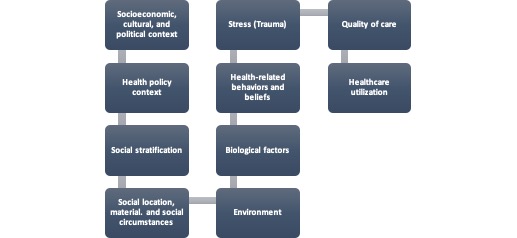
The model was well-intended though had limited substance or strategic action to leverage the intent. This effort was reminiscent of the Quadruple Aim; little data drove the model and obstructed full industry acceptance. By contrast, Dover and Belon’s (2019) Health Equity Measurement Framework (HEMF) is worthy of exploration. Based on the World Health Organization’s Social Determinants of Health model, HEMF vast evaluation areas to measure health equity at macro, meso, and micro levels, as shown in Figure 2. 

Figure 2: HEMF Framework Elements (Dover & Belon, 2019)

Dover, D.C. and Belon, A.P.  (2019. The health equity measurement framework: a comprehensive model to measure social inequities in health. Int J Equity Health 18,36 https://doi.org/10.1186/s12939-019-0935-0

The HEMF model is worthy of a test drive to gauge its true merit. Use of the wide-scope of theoretical and evidence-based industry elements is an asset. Population diversity and complexity are accounted for through power-related and disparity measures. Health beliefs, behaviors, and values are acknowledged with stress factored in; the traumatic-response across circumstances is embedded. My desire to keep this post brief limits further elaboration on the HEMF model. However, know it poses strong value as a robust quality model to address health, behavioral, and racial health disparities across populations exposed to trauma’s diverse lens.  

Have other integrated care quality models that account for wholistic health equity? Add your considerations and comments below!