The Smallest Advocacy Actions Can Yield the Greatest Reward

My recent travels reminded me how much satisfaction can be gained by advocacy on behalf of a larger group of individuals.

The universe provides us interesting lessons, and usually when we least expect them. That mantra about the journey being as meaningful as the destination applies to this blog, but in a different way than you might expect. While the theme of this post alludes to the importance of equity and response to trauma, it is not my traditional fierce messaging. Instead, this post offers my reflections on the rewards that can come from contributing to the greater good.

Where it Started

This last month has been full of conference travel, with my usual array of presentations and panel discussions. I was honored with the publication of my fifth book (The Ethical Case Manager: Tools and Tactics) and also inducted as a Case Management Fellow (FCM™) by the Case Management Society of America (CMSA), and the first social worker to do so. These accolades are important career milestones for which I’m grateful. Yet, these milestones paled in comparison to one experience that occurred around the same time. That event reminded me how much satisfaction can be gained when one small action is taken on behalf of a larger group of individuals.

These past weeks saw travel challenges for much of the population. The experiential trauma for all traveling during this timeframe was palpable, and due to events that were usually beyond each person’s control. This loss of power left travelers reeling. There were flight delays courtesy of extreme weather conditions, workforce shortages, and flight cancellations. There was even a substation fire that prompted a lengthy hold on flight departures and arrivals at one large international airport.

Who sat at airports for endless hours or days, in hopes of getting to their anticipated destination? How many slept on airport furniture or even floors? Who missed conferences, business meetings, family, or other long-awaited celebrations? Who missed flight connections by a matter of minutes? How frustrating to see your connecting flight at the neighboring gate upon landing, but unable to sprint off the plane quickly enough to get on board!

Where it Went

I was among the lucky ones. While several of my flights were delayed, I always got to my destination. Yet, the experiences for one flight impacted me greatly. I was heading home from a conference in Miami. That event fell during the initial, and often chaotic, June vacation week. The flight was loaded with travelers embarking on international trips, and catching connections at my destination, Dulles Airport in Herndon, Virginia. 

A large band of thunderstorms delayed our departure from Miami by 90 minutes and threw passengers into a panicked state. Some individuals had planned their trips for months, while others had sudden family and business emergencies to manage abroad. Even once we were in the air, flight attendants worked continuously to calm upset passengers throughout the aircraft and contact various airlines to hold connecting flights, as possible. Some of these flights were also delayed, which somewhat eased the worry of already tired and, in some cases, traumatized passengers.

Upon landing at Dulles, an announcement was made by the flight attendant to allow travelers with connecting flights to disembark first. I had a sneaking suspicion that this action would be hard to implement and wasn’t wrong. Everyone stood up to grab their bags and deplane. Here was my opportunity to help! I was close to the front of plane and in a pivotal position to be an enforcer of this one simple and logical request. Little did I know that I had a collaborator seated nearby who was equally committed to doing the right thing, and for all passengers.

My collaborator sat directly across the aisle from me, and spent most of the trip consoling the passenger next to her. This person was visibly upset about the disruption to her travel. The flight attendants were able to confirm that this passenger’s connection flight was three gates away and being held for her arrival. Yet, her worry remained at a fever pitch.

My collaborator and I stepped up simultaneously and into action. We realized that some people might not feel empowered to get off the plane, especially those persons sitting toward the back. We directed passengers who did not need to run for a flight to stay in their seats. There were some interesting expressions and explicatives shared, though everyone ultimately got our drift and pitched in to support the efforts. Within minutes, close to 180 passengers successfully (and gratefully) deplaned. My aisle-mate and I were among the last passengers to leave, and with appreciation of the flight crew.

How it Mattered

I slowly walked to the airport shuttle, then turned around to see my collaborator behind me. We smiled at each other and chatted about our actions. We treated others as we would want to be treated if in the same situation. We advocated for the human condition, which was what I was trained to do as a board-certified case manager and clinical social worker. She and I were also in agreement about one key takeaway from this experience, which more than equaled, if not exceeded any of my recent accolades. Our advocacy takes all forms. Yet, even the smallest advocacy actions can make the biggest difference to others, and in turn, can provide us the greatest reward.

Part 2: Wholistic Health Equity Determinants and the LGBTQIA++ Community

This Part 2 post continues exploring the pervasive impact of Wholistic Health Equity Determinants (WHED) on the LGBTQIA++ community. Focus is on the rising incidence of trauma and mental health conditions across the community and the expanding advocacy, funding, as well as resources to mitigate the WHED.

I appreciate the buzz about my last blog; it’s a quick read if you missed it. To catch you up, the LGBTQIA++ community face pervasive Wholistic Health Equity Determinants (WHED): SDoH, SDoMH, PDoH, and the systemic racism that perpetuates them. Discrimination, dismissal, and rejection trigger trauma across every demographic, and intensify integrated health incidence across this population. This Part 2 post explores the unprecedented exacerbation of behavioral health conditions and escalation in mental illness for the the LGBTQIA++ community. Additional focus is placed on novel resources to mitigate the physical, behavioral, and psychosocial health disparities faced by this population.

The Behavioral Health Landscape

     Let’s be clear, the LGBTQIA++ community is a marginalized population with morbidity and mortality rates that are worse than other groups. Increasing attacks on the community’s legal rights have amplified the impact of historical, experiential, and event traumas for the population. 

The following data sources span The Trevor Project’s 2023 U.S. National Survey on the Mental Health of LGBTQ Young People, the 2020 National Survey on Drug Use and Health, and other research.

Suicide

There has been a dramatic uptick in suicidal ideation and gestures among LGBTQIA++ individuals, especially for the community’s youngest members:

  • 41% considered attempting suicide:
    • 46%: Ages 13-17 and 34%: Ages 18-24
    • Of those who attempted suicide: 
      • 17%: Ages 13-17
      •   9%: Ages 18-24
      • 22%: Native/Indigenous 
      • 18%: Middle Eastern/N. African
      • 17%: Multiracial
      • 16% Black
      • 15%: Latinx
      • 11%: White
      • 10%: Asian American/Pacific Islander

Mental Health and Access to Care

The incidence of mental health faced by the community is alarming with higher rates for depression and anxietycompared with non-community members. The prevalence of post-traumatic stress disorder impact upwards of 47% of the community.

Yet, the rates for mental health realities faced by LGBTQIA++ youth concern me greatly:

  • 67%: symptoms of anxiety
  • 25%: symptoms of depression
  • 56% who wanted mental health care were unable to get it:
    • 47%: afraid to talk about their mental health with someone else
    • 41%: didn’t want to get their parent’s/caregiver’s permission
    • 40%: afraid that they wouldn’t be taken seriously
    • 38%: couldn’t afford it
    • 27%: were not out about their authentic self and were afraid of being outed
    • 23%: didn’t feel they would understand their sexual orientation or gender identity
    • 20%: parent/caregiver didn’t allow them to go
  • <50% of transgender and nonbinary youth found their school to be gender-affirming
  • 30% said their mental health was poor most of the time or always from anti-LGBTQ policies and legislation.
  • Nearly 66% affirmed how hearing about potential state or local laws banning people from discussing LGBTQ people at school made their mental health worse.

Persons with Disabilities

Members of the LGBTQIA++ community have a higher likelihood of disabilities, whether physical, cognitive, or intellectual. Incidence is upwards of 40% of persons, though fewer of these disabilities are often expressed by individuals or formally identified.

As an already marginalized group, individuals with disabilities may feel “unseen” and experience more profound stigma and discrimination. Cumulative effects of this marginalisation can occur over the life course, with older members of the community experiencing higher rates of disability, depression, anxiety and isolation than the general community, and decreased social support. They are less likely to advance academically, with fewer persons attending college or attaining beyond a 2 or 4-year degree.

Transgender, non-binary, or gender non-conforming people with disabilities can often feel silenced. Abundant literature affirms they are more likely to experience chronic illnesses, including cardiac disease, high blood pressure, high cholesterol, diabetes, stroke, arthritis, and asthma compared to persons living without disabilities.

Substance Use

The community experiences substance abuse at higher rates than their heterosexual counterparts:

  • LGB Adults: 2X as likely
  • Trans Adults: 4X as likely

21.8%: Diagnosed with an alcohol use disorder vs. 11% of the general population

Advocacy and Action

Advocacy and action have ramped up for dedicated funding, legislation, and program development. Educating industry stakeholders is vital, as is ensuring mentoring and support for LGBTQIA++ youth, adults, and their families. Registries of providers, practitioners, and treatment specialists who offer concordant care are essential. Here is a list of novel community-focused efforts:

  • The Department of Housing and Human Development has launched a new LGBTQIA++ Youth Housing initiative. HUD will partner with local communities, service providers, and young people directly impacted by residential insufficiency to address barriers to housing and shelter access. The recent press release lists further details
  • GLADD provides a clearinghouse of population-specific resources for advocacy, legal, and other general information across the life span. Military members and veterans can access specific linkages to various entities such as OutServe and the Service Members Legal Defense Network.
  • The Human Rights Campaign strives to advocate and promote equity for all persons within the movement. Their massive resource database encompasses topics to empower allies and other community stakeholders from coming out to maneuvering college, elections, hate crimes, health and aging, parenting, religion and faith, and workplace support. 

HRC’s Foundation supports the National LGBTQIA++ Health Education Center, which provides educational programs, resources, and consultation to healthcare organizations to optimize quality, cost-effective care for the population. Accessible webinars span topics as behavioral health, population-based health, trauma-informed care for Trans and Gender Diverse Patients, reproductive health.

  • NAMI offers general guidance on mental health issues faced by the community, and considerations for seeking LGBTQIA++-competent care.
  • Rainbow Labs in Los Angeles, addresses the bullying, isolation, and lack of support often faced by Queer and Gender non-conforming youth (QGNC). The organization provides mentorship, support groups, and linkage with safe individuals, advocates, and programs. One Bold Summer is a free 8-week summer mentoring initiative for QGNC youth (ages 12-18) that pairs QGNC youth with mentors. 
  • SAGE is the largest and oldest U.S. organization dedicated to improving the lives of LGBTQIA++ older adults. The group has been on the forefront of advocacy for elders, quality of long-term care, housing, and other resources. Their National Resource Center on LGBTQ+ Aging hones in on the unique needs of community older adults such as caregiving, elder abuse and neglect, benefit programs, financial, and other health-related social needs.  
  • SMYAL is among a growing number of locale-based housing programs that ensure safe, LGBTQ-affirming support, through tiered residential options: transitional housing, extended transitional housing, and rapid re-housing. Residents can access a range of courses and community engagement opportunities including nutrition and cooking classes, financial literacy, healthy relationships and communication, and resume workshops.
  • The Trevor Project provides 24/7 information, support, and resource connection for LGBTQIA++ Youth around the world. Mechanisms allow for immediate access to trained counselors via call, text, or chat, and linkage to an international community for LGBTQ young people

What’s Next?

I have been a fierce ally of the LGBTQIA++ community for well over 45 years, with countless family, friends, and colleagues in this space. Despite efforts to address the massive WHED faced by the community, innumerable challenges remain. The list of resources in this post is a broad swipe of efforts on the move.

Blog readers are encouraged to contribute resources as they know of them. The work to mitigate WHED for this population will take the collective and concerted action of us all!

Wholistic Health Equity Determinants and the LGBTQIA++ Community

Too little emphasis has historically been placed on this population’s challenges in addressing these determinants, as in accessing quality concordant health and behavioral health care, managing their psychosocial health and reflective resource needs, and activating action to mitigate their abysmal health outcomes. Systemic racism further perpetuates each of these disparities, triggers trauma that activates physical illness, while also compromising individual safety. It is time to shift this trend.

A number of this blog’s followers expected me to review the recent (May 2023) Federal Reserve Report, The Economic Well-being of US Households in 2022 this week. The report poses interesting implications about the Wholistic Health Equity Determinants discussed in my last post. While this topic is of interest to my health equity lens, a more critical focus beckons.

With PRIDE in full stride, the dire needs of the LGBTQIA++ community will receive prime attention today, and for my next several blog posts. Too little emphasis has historically been placed on this population’s challenges in addressing these determinants and continues to be the norm. The community still struggles in accessing quality concordant health and behavioral health care, managing their psychosocial health and reflective resource needs, and activating action to mitigate their abysmal health outcomes. Systemic racism further perpetuates each of these disparities. It triggers trauma that further exacerbates physical and behavioral health, while also compromising individual safety. Time to shift this trend.

Recent Realities

The recent article in Health Affairs by Auerbach & Fox nailed it: “significant evidence suggests that virtually all LGBTQ++ populations are at elevated risk of preventable illness, injury, and death.” This article and previous works by the Kaiser Family FoundationUniversity of Wisconsin’s Institute for Research and Poverty, and HRC arm us with considerable data to advance action!

Poverty and Food Insecurity

An increasing incidence of the LGBTQIA+ community live close to the federal poverty level:

  • 34% have incomes below 200% (of the FPL) vs. 25% of non-LGBTQIA++ people.
  • 39% earn $30,000 a year or less annually. 
    • 28% of lesbian and bisexual women compared to 21% of heterosexual women. 
    • 23% of gay and bisexual men compared to 15% of heterosexual men.
  • 32% of transgender persons earned an annual income of under $10,000 compared to 23% of heterosexual persons.
  • Lesbian couples have the highest poverty rates followed by heterosexual couples and male same sex couples.

In general, across the community:

  • 30% are unable to pay their bills.
  • 67% used all or most of their savings for healthcare expenses.
  • 52% had trouble paying medical bills in the past 12 months or had difficulty paying for necessities (e.g., food, heat, or housing) 
  • 41% borrowed money from family or friends.
  • 2x as likely to experience food insecurity than other populations at rates upwards of 30% of the population. One recent study reported female sexual minorities as: 
    • 52% more likely to experience nutrition obstacles, and
    44% more likely to report household SNAP assistance than their heterosexual counterparts. 

Unemployment

Unemployment rates loom large for the community:

  • 22% of adults vs. 16% of straight and cisgender counterparts
  • 29% of transgender adults, 30% of bisexual women

Amid the pandemic these numbers soared with surveys revealing as high as:

  • 28% of LGBTQIA+ report that they, or another member of their household experienced a job loss vs. 23% of the rest of the population, and
  • Close to 50% report their work hours reduced.
  • 45% of the population reported challenges paying their rent or mortgage vs. 32% of the remaining population.

Quality of and Access to Necessary and Concordant Care

The Kaiser Family Foundation yielded concerning results in the context of chronic illness management:

  • 47% have an ongoing health condition that requires regular monitoring, medical care, or medication.
  • 21% have a disability or chronic disease that keeps them from participating fully in work, school or housework.
  • 34% of those on Medicaid with a disability or limiting chronic disease report the following experiences with providers:
  • Not believe they were telling the truth (16% )
  • Suggest they were personally to blame for a health problem (13%)
  • Assume something about them without asking (21%)
  • Dismiss their concerns (29%)

Trauma and Chronic Illness Exacerbation

The community’s higher rates of exposure to psychosocial stressors contribute to higher rates of chronic and autoimmune illnesses. The higher incidence of individuals to poverty, unemployment, homelessness, interpersonal violence, as well as family and peer abandonment, contribute take their toll across LGBTQIA++ populations.

Research notes high incidence and prevalence reported for the onset and exacerbation of migraines, respiratory issues, HIV/STIs, diabetes, heart attacks, hypertension, arthritis, visual/hearing impairment, and stomach/gall bladder trouble, along with substance use and addiction. Neurological symptoms can be especially fierce in response to the expansive psychosocial stressors faced by individuals.

But Wait, There’s More

The pervasive WHED struggles of the community contribute to higher rates of discrimination, trauma, and, ultimately, more intense behavioral health conditions and mental illness. The incidence of suicidal ideation, gestures, and completed actions are at record levels, and for the youngest members of the LGBTQIA++ community. This topic deserves its own blog post and where I’ll go next time.

In addition, there must be defined recommendations for industry action. Reports have noted a variety of recommendations that ensure protective factors are in place for members of the community; these may include having healthcare providers and practitioners promote inclusion and belongingness, as well as expanding access to concordant treatment specialists. Emphasis has also been placed on individuals reducing isolation, leaving rural areas and residing in more urban areas, seeking higher levels of education, being employed, being married, not growing up in poverty or becoming a parent at a young age. 

These  factors make for a nice wish list but may not directly eliminate the immense disparities that have plagued the community for centuries. More can and must be done. Stay tuned for my next bi-weekly post. 

Time to Advance Wholistic Health Equity Quality

In response to this growing price tag the industry has evolved a fresh generation of quality frameworks, metrics, and models to forge a more comprehensive health equity vista. However, all of these efforts fall short of that goal. Every organization and entity still uses different metrics to measure and benchmark their actions. The actions of NCQA, the National Quality Forum, and CMS (through their Health Equity Pillar) are not for naught. Yet, there remains no viable, formal roadmap adopted to align cross-sector efforts and steer a successful course toward wholistic health equity; at least not until now. 

Whole person care is the ideal model to attain health equity across populations, though current quality metrics are not aligned to the wholistic health compass. Despite decades of research and successful outcomes, Integrated care’s domains of physical and behavioral health continue to remain remain siloed. While the social determinants of health and mental health (SDoH and MH) dramatically impact health and behavioral health outcomes across every practice setting, they are inconsistently factored into national quality models. 

What Comprise the WHEDs

Systemic racism, historical, developmental, and event traumas are also well recognized in the literature as correlates of health disparities. The Political Determinants of Health (PDoH) add their fury to the fire by fueling worsening clinical outcomes as a person’s social position decreases. Yet despite these facts, the US health system lacks a unified health equity vision that consistently includes assessment of these fundamental constructs. Add systemic racism, and the PDoH to the SDoH and SDoMH, and we gain a comprehensive lens for addressing health disparities: wholistic health equity determinants (WHED).

The WHED contribute to poor clinical outcomes and fiscal losses across each touchpoint of care though increased chronic illness severity, morbidity, mortality for every life stage. Vast differences appear across rural and urban regions. Safety-net hospitals have profoundly higher hospitalization utilization rates for length of stay, intensity of treatments, and costs, including readmission rates and associated penalties.

ACEs, historical, developmental, and other event traumas increase onset and exacerbation of chronic respiratory illnesses, diabetes, obesity, and mortality. Members of the LGBTQIA++ population are at higher risk than other groups of developing severe mental illness, and for experiencing an exacerbation or new onset of mental illness. Reasons for these disparities include the community’s chronic exposure to implicit bias, discrimination, and racism, as well as increased social isolation and exposure to interpersonal violence.

Given the realities addressed above, anything less than a vantage focused on the WHEDs is short-sighted. This limited gaze will not enhance quality of care for the rising number of vulnerable and disenfranchised populations across the globe.

Mandate for Action

National health expenditures now exceed $4.3 Trillion annually and will further rise. I can hear some of you muttering how this number is related to the pandemic only. Here’s food for thought: pre-pandemic these numbers had already topped over $3.8 Trillion related to chronic illness exacerbation and the SDoH. The incidence of these factors has only intensified and escalated from the pandemic.

In response to this growing price tag the industry has evolved a fresh generation of quality frameworks, metrics, and models to forge a more comprehensive health equity vista. However, all of these efforts fall short of that goal. Every organization and entity still uses different metrics to measure and benchmark their actions. The actions of NCQA, the National Quality Forum, and CMS (through their Health Equity Pillar) are not for naught. Yet, there remains no viable, formal roadmap adopted to align cross-sector efforts and steer a successful course toward wholistic health equity; at least not until now. 

Advancing the Wholistic Health Equity Quality Roadmap©

Imagine an 8-step color-coded roadmap that aligns with a dedicated total quality management process. This novel framework holds organizations across sectors accountable for improving care access and provision, and can be tailored to any organization. Quality data on the front-end is culled from evidence-based screening and assessment of health-related social needs, and uses diagnostic data (e.g., ICD-10CM-Z Codes). Revenue cycle management is as vital as interprofessional intervention, inter- and intra- agency collaboration, DEI priorities, then eclipsed by use of whole-person and inclusive- population health outcomes data. 

You’ve all been patiently waiting for me to unveil my Doctoral Culminating Project, and your wait is over! My Wholistic Health Equity Quality Roadmap© will be formally unveiled in distinct versions at the upcoming industry events, including:

A 2-part article series will also be published in Wolter Kluwer’s Professional Case Management Journal this Fall. 

The industry and its stakeholders are out of options! Implementation of the Wholistic Health Equity Quality Roadmap©  at a national level is a moral, ethical, and financial imperative that will ensure inclusive, quality-driven, patient-centered, and concordant interventions for all populations.

New Book Frames a Vivid Ethics Spectrum for the Interprofessional Case Management Workforce

Case managers strive to be ethical, and can recite the industry’s ethical tenets of autonomy, beneficence, fidelity, justice, and nonmaleficence by heart. Yet, too often case managers get caught in the crosshairs. Enter, Dr. Ellen Fink-Samnick with a timely resource and Amazon’s #1 best seller (Medical Ethics, Nursing Administration & Mgmt.) for all professional stakeholders: student, novice and more seasoned case managers, consultants, and those in leadership roles.

Ethics has long been viewed as not black and white, but rather varied shades of gray. However, these interesting times mandate a novel stance. Ethics now comprise a spectrum of vivid colors that reflect its fierce disruptions to practice, and for every member of the health and behavioral health workforce. Managing this intense reality is a constant struggle for all practitioners, especially those in case management. My latest book and Amazon’s #1 Best Seller in Medical Ethics offers clear guidance; enter The Ethical Case Manager: Tools and Tactics

Case management’s workforce faces many accountability challenges not experienced by other professions. First, case management is an umbrella profession comprised of varied disciplines (e.g., counseling, nursing, occupational therapy, and social work). Each discipline has a distinct code of ethics or professional conduct, as well as dedicated standards of practice. Let’s add another layer of complexity that includes the over 25 case management-related credentials for individuals (e.g., ACM, CCM, CDMS, CMGT-BCTM, CRC), those for organizations (e.g., NCQA, URAC)and their unique requirements. Of course, there are also a lion’s share of professional associations across the industry. The landscape gets even more precarious when including the hierarchy of case management roles that span community health workers, case management assistants, and community based case managers, to board-certified case managers, and those in leadership positions. 

The question beckons: Where should your ethical compass point? The range of established resources of guidance defined by each of the above entities makes the answer to this question challenging to answer. It also yields two confusing conundrums for the workforce:

  1. Defining the ethical and legal parameters for case management practice, and 
  2. Reconciling these parameters with employer policies and procedures across the industry.

Here’s where, The Ethical Case Manager: Tools and Tactics comes to the rescue. The book’s content is written for an interprofessional audience that spans the educational spectrum of degrees held by those in the field. This approach provides a context for accountability, while addressing the most complex ethical dilemmas to date. Attention is paid to workplace bullying, digital healthcare innovation, management of implicit biases, microaggressions, health equity and inclusion, plus interstate practice, and other population health situations. The pandemic’s wrath is woven within chapters where relevant. Didactic knowledge is blended with Federal and state regulations, innovative models, practice templates, and dedicated resources.

Each of the book’s 10 chapters includes real-life case scenarios and contemplation questions that allow learners to dig in and apply the content. 20 Ethical Tactics provide tangible touchpoints for learning. Every reader will reap their own reward, from students, to new or more seasoned case managers, consultants, as well as those in leadership roles.

The Ethical Case Manager’s 318 pages encompass the most vital areas for case managers:

  • Section 1: Essentials of Ethics
    • Chapter 1: Terms and Definitions
    • Chapter 2: Established Resources of Guidance
  • Chapter 3: The Value Proposition for Ethical Case Management
  • Section 2: Realities of practice
  • Chapter 4: Population-based Practice
  • Chapter 5: Diversity, Equity, Inclusion, and Justice (co-authored with Michael Garrett)
  • Chapter 6: Workplace Bullying
  • Chapter 7: Health Information Technology
  • Chapter 8: Interstate Practice
  • Section 3: Activation of Ethical Decision-making
  • Chapter 9: Enduring Models
  • Chapter 10: Case Scenarios and Direct Application
  • Epilogue

The Ethical Case Manager: Tools & Tactics will be your primary resource, whether you seek to:

  • Educate students
  • Onboard new staff
  • Benchmark ethical practice
  • Resolve ethical dilemmas
  • Guide compliance practices 
  • Ensure successful fiscal, clinical, and operational outcomes 
  • Employ ethical decision-making models
  • Leverage interprofessional teams
  • Inform individual practices

***********************************************************

The Ethical Case Manager: Tools and Tactics is only available on Amazon and for a special introductory price of $43.18. Pricing increase to $69.99 on 5/31/23.

Attending the upcoming Case Management Society of America Conference in Las Vegas? You will have access to 2 exciting book signing events: 

  • 6/27/23-Pre-Con, Telehealth 2024: Advancing Case Management’s Practice Proficiency, 2:15-3:15 PM
  • 6/29/23-Exhibit Hall book signing at the Case Management Institute table, 11 AM to 2:30 PM. Discounted rates, bulk orders, and bundled specials will be available

#ethicsmatter

#ethicalCM

Trauma 4.0: 30-Day Landscape of the Post-Roe v. Wade Era

Providers, practitioners, patients, and their supports have long dealt with public scrutiny over the decision to terminate an unintended, unviable, if not potentially life-threatening pregnancy. Yet, amid the post-Roe v. Wade era, it has become tougher to receive and render necessary care; a new dimension of trauma is being unleashed for all involved.

Roe v. Wade was overturned one month ago. The flagrant assault on women’s health and their reproductive rights is now at full throttle. My blog post, Trauma Amid Roe v. Wade Despair, addressed the historical, manifesting, and enduring trauma experienced across society from this new norm. Providers, practitioners, patients, and their supports have long dealt with public scrutiny over the decision to terminate an unintended, unviable, if not potentially life-threatening pregnancy. Yet, this intimate choice was a guaranteed right under the law for almost 50 years, that is until June 24th, 2022. 

I introduced the hashtag, #Therewillbetrauma, which has resonated loudly across the globe. It has joined other entries on social media related to this topic, including:

#abortionishealthcare

#freedomofchoice

#mybodymychoice 

#reclaimRoe

#reproductiverights

#righttochoose 

#Roe43

There has been an outpouring of mobilization this last month to counter the Dobbs v. Jackson decision that overturned Roe v. Wade. Struggles to ensure necessary care for women in need have been fierce with ongoing efforts to craft new abortion and reproductive rights legislation. More vulnerable populations, such as women of color, transgender men, nonbinary, and gender-nonconforming persons. and those living in poverty were disproportionally impacted prior to Dobbs v. Jackson; their access to appropriate healthcare often limited. A recent Kaiser Family Foundation analysis identifies these populations are more likely to obtain abortions, yet have limited access to health care, and face systemic inequities that make out of state travel for abortions more difficult compared to White counterparts.

Recent events have occurred amid these struggles that reinforce the impact of trauma’s wrath. Each packs a fierce intensity to challenge ethical tenets across health and behavioral health care. Patient autonomy is compromised, as is beneficence, fidelity, justice, and non-maleficence. What happens when “do no harm” is the antithesis of reality for those reconciling their intimate right to choose, and the inability to do so?


Ethics Matter

#Ethicsmatter is another of my popular hashtags. The following news stories demonstrate how little ethics matter to far too many. Each event activates a trauma response that sends my cortisol levels into overdrive. I am a seasoned clinical professional, but also a woman working hard to maintain balance amid a range of emotions, from anger and frustration, to sheer rage:

  1. Within weeks of Roe v. Wade being overturned, a horrific story surfaced. A 10 year old in Ohio, had been sexually assaulted and raped by a 27 year old man, resulting in a pregnancy. At 6 weeks and 3 days of gestation, the child was denied an abortion in her home state due to the Dobbs v. Jackson decision; she was forced to travel across state lines to receive appropriate health care. The physical and psychological trauma from rape is unthinkable. The thought of a rape victim being forced to carry a resulting pregnancy to full-term against her choice is reprehensible; for a 10 year old child, it is unconscionable. This is trauma.
  2. The 10 year old discussed above was referred by her physician to an OB/GYN in Indiana to terminate her pregnancy. The treating physician, Dr. Caitlin Bernard, has subsequently been harassed and threatened by the public, as well as Indiana’s attorney general; her medical license is now under scrutiny. Reports validate Dr. Bernard complied with state and local laws, such as existing HIPAA privacy rights laws for treating a minor, reporting the case to child protective services, and other regulations. Despite acting with beneficence, fidelity, non-maleficence, and egal due diligence, Dr. Bernard faces “reputational harm and emotional distress”. This is trauma.
  3. Marlena Still and her husband, Abie DeSilva live in Texas and were excited about their pregnancy; the couple have a toddler and had tried conceive a second child for some time. During a routine office visit at 9 weeks, doctors informed the couple that there was no heartbeat, and thus, no viable pregnancy; a fetal demise was their new norm. The emotional intensity of their baby dying in utero was unthinkable and traumatic enough. Yet, this tragic situation took an even, more tragic turn. The events that followed were antithetical to “do not harm”:
  4. Marlena was forced to carry a dead fetus for 2 weeks: This is trauma.
  5. Marlena requested a Dilation and Curettage, also known as a D and C and the traditional care following a miscarriage. Her physician refused to do the procedure, citing the new Texas anti-abortion law as the reason. She noted the patient must have a transvaginal ultrasound before further consideration of the procedure. This is trauma.
  6. Marlena endured this invasive diagnostic procedure, plus, then was forced to hear the words no parent experience, and more than once: “your baby is dead”: This is trauma.
  7. After the second ultrasound, Marlena’s OB/GYN still refused to provide clinically indicated care putting her at grave clinical and emotional risk. The patient endured, yet another, ultrasound: This is trauma.
  8. The literature notes profound risks associated with fetal demise and from carrying a dead fetus for an extended period of time: hemorrhage, infection, infertility, organ failure, mortality. The psychological impact of being forced to experience this reality is unacceptable: This is trauma.
  9. Marlena found another physician to do the D and C procedure. This denial of clinically appropriate miscarriage care and treatment is unethical and immoral. This is trauma.
  10. The couple are considering leaving their home state of Texas, their family and support system. They have also opted to not try and conceive another child. Marlena is fearful of being unable to access appropriate care should she have another fetal demise. She is not prepared to put her life in jeopardy and risk leaving her daughter without a mother and husband without a life partner. This is trauma.
  11. The reality for Elizabeth and James Weller of Texas is gut wrenching and almost too much for, even, this author to fathom. At 18 weeks pregnant, her water broke. Given the length of this blog post, those interested can review the heartbreaking events in an article on NPR. They tell a horrific story no person should have to endure: traditional obstetric care amid a medical emergency obstructed due to state law, a patient’s life at risk as she is forced to endure medical and emotional trauma while awaiting “fetal death”, a physician caught in a legal quagmire and unable to practice medicine in a way that prioritizes, “Do not harm”. This is the grim reality which has been created; THIS IS TRAUMA.

The Current State of Trigger Laws

 The emergence of trigger laws banning abortion has been swift. An interactive map of current laws across the nation appears on Governing.com. As of this writing, abortion is illegal in 10 states, though 13 others limit access. Idaho, Tennessee, and Texas will join the state bans in place as this article is published, on July 24th, 2022; Arizona and Georgia will follow in the coming months with a growing number of states curbing women’s reproductive rights. Providers may refuse to participate in an abortion procedures in 45 states. Those practitioners supporting reproductive rights are being threatened at every turn. They are becoming more reluctant to provide necessary care and treatment to women experiencing fetal demise, or where the termination of a pregnancy is clinical indicated; fear of legal reprimand and sanction may supersede patient care. Waiting periods for abortions are advancing, as are efforts restricting all types of abortions: those received across state lines, telehealth procedures, and mail access to medications that induce miscarriages. The reproductive rights scene for women, their families, and all providers who care for them, is becoming scarier by the minute. This is trauma.

Advocacy Matters

As the first 30 days of our post-Roe v. Wade era draws to a close, advocacy continues to be the antidote. The resource listing from my initial blog post on this topic is posted below for ease of access. Engage in action as you can and vote:

It is unclear what the next 30 days will bring, though there is one certainty. Trauma is now its own epidemic, and will only intensify. Amid the battle to fight for reproductive and women’s health rights, there is, and will continue to be, trauma. How much will be determined by ongoing advocacy toward action.

Income Insecurity Impacts Access to, Affordability of, and Outcomes for Men’s Wholistic Health

Men’s access to, use and affordability of physical and behavioral health care is at issue. They have the highest rates of avoidable deaths worldwide and are the most likely to skip care due to costs.

This blog has focused on varied population health and access to care challenges for racial and ethnic minorities, among other vulnerable and marginalized communities. Recent blogs addressed the dismal state of Maternal mortality and mental health, escalating women’s reproductive health crisis, and disappearing birthing centers across rural regions. The impact of systemic racism and other realities, such as trauma, on quality of care has also been of note. Considerable research identifies their influence on exacerbation and emergence of chronic physical and mental illness; every age group, gender, and individual across the cultural landscape is at risk. 

The 2020 International Health Policy Survey from the Commonwealth Fund and Organisation for Economic Co-operation and Development (OECD) highlights a plight worthy of notice: health care habits of American Men faced with financial insecurity. The report compares the access to, use, and affordability of care for males in the U.S. compared to 11 high-income countries. 

Startling Outcomes

The report summary focused on overall demographics by gender versus among racial and ethnic groups. The wholistic health triad of physical, behavioral, and psychosocial health gets primary attention yet again with troubling outcomes:

  • At least, 16 M men in the US lack health insurance:
    • Affordability of health plans remains the primary reason 
  • 45% of men have problems paying medical bills:
    • 67% of these men are frequently stressed about employment and/or financial security

Men in the U.S with income insecurity:

  • Are least likely to have a regular physician
    • They have the highest rates of Emergency Department use, especially for conditions that could have been treated in the Doctor’s office (e.g., asthma, diabetes, hypertension) 
  • Skip necessary care due to costs
  • Incur medical bills at the highest rates
  • Are least likely to access preventative care
  • Have the highest rates of avoidable deaths: 337/100,000
  • Are more likely to have integrated health issues, especially chronic conditions
    • Almost 30% have two or more chronic illnesses
    • Have significantly higher rates of smoking and alcohol use, and increased likelihood of having multiple chronic conditions:
      • 4X greater likelihood of being in fair or poor health
  • Have among the highest rates of mental health care needs: 35% of men

The Bottom Line and Mandate

At this point in time, the data affirms that rates of avoidable deaths, chronic conditions, and mental health needs for U.S. men remain the highest in the world; wholistic health equity quality is at a crossroads. Decreased access to routine preventative primary physical and behavioral health care is compromised by financial insecurity, as readily as traditional behavioral or cultural norms; this includes male resistance to appear vulnerable, weak, or infirmed. The cycle of reactive, emergent, and costly care has an identifiable cause that can be mitigated through a proactive means, encompassing:

  • Expanded access to affordable, comprehensive health coverage. 
  • Targeted person-centric and concordant care, including but not limited to:
    • increased access to racially, culturally, and ethnically-diverse providers and practitioners, as well as those trained in and sensitive to LGBTQIA wholistic health
    • Increased emphasis on integrated care frameworks that leverage patient engagement through comprehensive visits, concordant treatment approaches, and clinical expertise
      • Funding and reimbursement are also enhanced
    • Implicit bias training to debunk stigma and systemic racism, and also builds patient-provider trust
  • Collective efforts of providers, health plans, systems and organizations, and communities to promote preventive care and healthy behaviors, through targeted population-based engagement, psycho-education, and outreach

For my fellow wholistic health equity quality warriors, we’ve got miles to go before we sleep. Feel free to add further strategic recommendations and resources below.  

The Dismal State of Maternal Wholistic Health for Women of Color

Change is long overdue for this massive maternal health chasm of wholistic health disparities, transcending physical, behavioral, and psychosocial health, and particularly for women of color (WOC)

April 11-17th marks annual Black Maternal Health Week. There will most likely be a flurry of well-intended articles, blog posts and announcements focused on legislation, funding of initiatives and programs, and advocacy. But here’s the lowdown: Black mothers have had higher mortality than White mothers for well over 100 years. They are > 3X more likely to die from pregnancy-related complications and 2X as likely to suffer from mental health issues than their White counterparts. The impact of historical, intergenerational, medical, racial trauma is invasive and enduring. Change is long overdue for this massive maternal health chasm of wholistic health disparities, transcending physical, behavioral, and psychosocial health, and particularly for women of color (WOC)

The recent Commonwealth Fund report on women’s reproductive health reveals how severe the issue remains:

  • U.S. women have the highest rate of maternal deaths among high-income countries. The current maternal mortality ratio of 17.4 per 100,000 pregnancies, equals roughly 660 maternal deaths. This earns the U.S. last place standing overall among all industrialized countries.
  • A woman’s chance of dying in southern states is 2X greater than those in the north:
    • Alabama, Arkansas, Kentucky, and Oklahoma report death ratios of greater than 30:100,000 live births 
    • California, Illinois, Ohio, and Pennsylvania reported death ratios less than half the figures in those states, <15 deaths: 100,000 live births

Data for WOC is beyond alarming: 

  • The maternal death ratio for Black women is 37.1:100,000 pregnancies. The number is 2.5X the ratio for white women (14.7) and three times the ratio for Hispanic women (11.8).
  • Hispanic mothers were 80% as likely to receive late or no prenatal care as compared to non-Hispanic white mothers.
  • Black mother with a college education is at 60% greater risk for a maternal death than a White or Hispanic woman with less than a high school education.
  • Even when WOC verbalize health and mental health concerns to providers, their voice is disregarded:
    • WOC are more likely than White women to express their concerns and preferences regarding births though more frequently ignored
    • Women with Medicaid report inadequate postpartum care and support, where they are:
      • Pressured to have C-sections
      • Not scheduled for postpartum visits
      • Disrespected by providers due to insurance
  • Pregnancy-related mortality rates vary across ethnic groups, yet show a constant disturbing trend:
    • Black (40.8%), American Indian/Alaska Native (29.7%), Asian Pacific Islander (13.5%), and Hispanic (11.5%) compared to Whites (12.7%).
    • Upwards of 60% of these deaths are preventable. A CDC report, reveals the often avoidable causes:
      • Infection (13%)
      • Postpartum bleeding (11%)
      • Cardiovascular conditions such as Cardiomyopathy (11%), 
      • Blood clots (9%), 
      • High blood pressure (8%), 
      • Stroke (7%), and a category combining other cardiac conditions (15%). 

Maternal Mental Health Awareness Week is scheduled annually for the first week in May, though bears mention. Not treating maternal mental health conditions costs $32,000 per mother-infant pair, totaling $14.2 billion nationally

  • Black women are twice as likely as Whites to suffer from perinatal mood and anxiety disorders, and less likely to receive treatment: 40% compared to 20-25%  
  • Indigenous women have a higher incidence of depression, anxiety, and substance misuse during the perinatal period from 17-47%; Indigenous identity increased the likelihood by 62%
  • Migrant WOC are at greater risk for behavioral health issues during pregnancies (e.g., depression, schizophrenia, post-traumatic stress) from the interaction of psychosocial determinants as forced migration plus generalized insecurity associated with experiences as refugees, asylum seekers, and human trafficking victims

Endless data validates WOC’s maternal health mandates. Recent years have witnessed robust action courtesy of fierce voices and tireless work of many entities in the US and around the globe. Their agendas serve as a clearinghouse of efforts. The list below is a starting point of resources:

The “honorary” annual week is valued, but a wholistic health crisis of this magnitude mandates far more than 7 days of attention. Distinct legislation, dedicated and substantial funding at federal, state and local levels is vital. Yet, these efforts are for naught unless the systemic racism and implicit bias that perpetuate this reality are equally addressed. We must:

  • Identify, call out, and dismantle systemic racism across macro, meso, and micro spaces
  • Develop and implement population-inclusive clinical predictive analytics and algorithms
  • Ensure dedicated quality metrics that report the necessary outcomes to drive clinical programming, treatment, and concordant practices
  • Shift the academic curriculum to better prepare the interprofessional workforce to provide population-specific care without bias
  • Continue to advance the concordant provider-base
  • Expand ethnic, racial, and cultural programming, such as reimbursement of community-based Doulas, especially in medically underserved areas.
  • Expand access to fertility treatments and address racial disparities in outcomes for IVF. Black women are more likely to have infertility compared to other races, yet the access to treatment is minimal

Data has long validated this epidemic’s emergent state, which has continued to escalate. Maternal wholistic health is a public health emergency of the highest priority. This article is just the tip of the iceberg. I invite those in this care space to post additional resources and information.

The Impact of Trauma and Systemic Racism on Wholistic Health Equity

Abundant data on wholistic health disparities mandates intentional, sustainable quality improvement action. Will the next generation of metrics account for this reality?

There is an industry priority to right the societal wrongs associated with historical trauma and systematic racism. These long-standing realities are key drivers of wholistic health disparities: physical, behavioral, and psychosocial health.. A fluid stream of outcomes mandate concordant approaches to racial, ethnic, and other cultural contexts of treatment (e.g., disability, familial choice, gender orientation, regional influences). Yet, despite research to validate data wholistic health outcomes, reflective quality metrics have not been developed.

What Are We Talking About?

            Abundant data assesses the impact of historical, racial, and other types of trauma on health and behavioral health outcomes. Increased healthcare utilization has been identified for survivors of physical and sexual trauma, primarily minority women. Campbell et al. (2002) studied 2,355 females, 21-25 years old, enrolled in a large health maintenance organization (HMO). Patients who experienced intimate partner violence had a far higher prevalence (>50%-70%) of gynecological and central nervous system complaints (e.g., back and pelvic pain, fainting, headaches, seizures), plus other stress-related health issues (e.g., hypertension, insomnia, susceptibility to viral/bacterial infections). Purkey et al. (2020)identified trauma survivors as frequent users of primary, urgent, and emergency care for acute and chronic symptoms. Clarke et al., (2019) discussed the presence of vague somatic complaints by patients who endured traumatic experiences (e.g., ACEs, bulling, pressures to excel in school and career). Costly emergency department visits and ambulatory diagnostic tests are frequently used to identify etiology for chronic and diffuse pain, digestive problems, headaches accompanied chronic illness exacerbation, yet to no avail.    

Another vital dyad for attention involves chronic pain management and stigma experienced by patients from marginalized communities. Wallace et al. (2021) completed a recent study; participants were trauma survivors (e.g., historical, racial, sexual) and members of indigenous, LGBTQIA+, or refugee communities. The results were telling. When physical and emotional pain were expressed to providers, they was minimized or dismissed. If acknowledged by providers, short-term prescriptions were given versus referrals to behavioral health and other specialists.

What Does it Imply?

Data mandates the need for intentional, sustainable quality improvement in this arena. Will the next generation of metrics account for this reality? Racism remains a major factor to drive racial and ethnic inequities in health and mental health, though fails to be addressed in healthcare’s quality proposition. Of the articles reviewed for this blog post, trauma-informed quality analysis of care remained elusive. 2021 saw a fresh generation of industry health equity measures, yet few addressed integrated care, let alone assesses wholistic health equity. Existing metrics continue to silo health or behavioral health. Insufficient focus has been on industry-vetted quality models addressing population-focused, concordant, trauma and equity-focused interventions. 

Where Will Health Equity’s Quality Compass Point?

This author is developing a Quintile Aim for consideration, which adds the pivotal domain of Wholistic Health Equity to the industry’s seminal quality compass. NCQA continues to push this agenda in evolving new metrics. Public comment is open (until 3/11/22) for new HEDIS measures targeting the SDoH. Wyatt et al. (2016) posed a 5-step quality model for organizations to advance health equity delivery to the communities they served, addressed in Figure 1. 

Figure 1: A Framework for Healthcare Organizations to Achieve Health Equity (Wyatt et al., 2016) 

Wyatt R, Laderman M, Botwinick L, Mate K, Whittington J (2016). Achieving Health Equity: A Guide for Health Care Organizations. IHI White Paper: Institute for Healthcare Improvement 

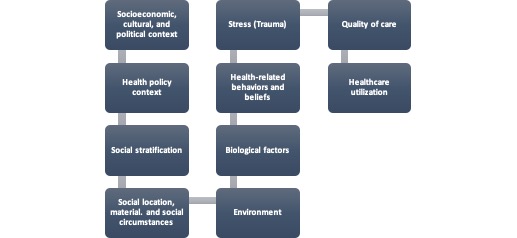
The model was well-intended though had limited substance or strategic action to leverage the intent. This effort was reminiscent of the Quadruple Aim; little data drove the model and obstructed full industry acceptance. By contrast, Dover and Belon’s (2019) Health Equity Measurement Framework (HEMF) is worthy of exploration. Based on the World Health Organization’s Social Determinants of Health model, HEMF vast evaluation areas to measure health equity at macro, meso, and micro levels, as shown in Figure 2. 

Figure 2: HEMF Framework Elements (Dover & Belon, 2019)

Dover, D.C. and Belon, A.P.  (2019. The health equity measurement framework: a comprehensive model to measure social inequities in health. Int J Equity Health 18,36 https://doi.org/10.1186/s12939-019-0935-0

The HEMF model is worthy of a test drive to gauge its true merit. Use of the wide-scope of theoretical and evidence-based industry elements is an asset. Population diversity and complexity are accounted for through power-related and disparity measures. Health beliefs, behaviors, and values are acknowledged with stress factored in; the traumatic-response across circumstances is embedded. My desire to keep this post brief limits further elaboration on the HEMF model. However, know it poses strong value as a robust quality model to address health, behavioral, and racial health disparities across populations exposed to trauma’s diverse lens.  

Have other integrated care quality models that account for wholistic health equity? Add your considerations and comments below!