
Working Around the Words to Ensure Health Equity

Considerable time, effort, and energy is being spent on reframing word use in response to Federal mandates and their ripple-effect across the industry. Shifting words should not negate our professional commitments and obligations to the patients, their families, and the workforce. Our actions must continue to advance the Quintuple Aim and what matters most.

Much has been written lately about reframing word use in response to the latest generation of Executive Orders (EO) and other actions by the Federal Government. Yet, what happens when most of the words at issue are aligned with population health funding priorities as in accessibility, health equity, inclusion, or vulnerable populations? What happens when the words are commonly used in daily language, like advocate, expression, gender, or status? What happens when the words inform competencies for public health professions, as in cultural competence, implicit bias(es), oppression, or social justice? What happens when the words speak to evidence-based interventions that support populations across healthcare settings, such as anti-racism, cultural responsiveness, feminist, social justice, and trauma-informed? What happens when the words align with ethical codes of conduct and standards of practice for healthcare professionals whether discrimination, person-centered care, underserved, and vulnerable? What happens when shifting the words eliminates populations, persons, and their identities as in gender affirming, LGBTQIA, pronouns, Trans, or other terms. What happens when the list is ever-expanding and unpredictable? It is an understatement to say resolution is complicated. 

How many ways are there to say, equitable, accessible, and quality-driven whole person healthcare? It presents there are many ways. Of course, the mantra remains that the more things we call these drivers and influencers of poor health outcomes and the persons who experience these factors the most, the less people will know what they are. These words have specific meanings; using so many different terms can invoke unintended misunderstandings. While the explicit intent of this new macro-focus is “to help Americans lead healthier lives” there is a clear and present worry that all populations may not be included in this mix. 

Managing The Latest Information Flow

The constant attack on words is exhausting and frustrating to already weary professionals, practitioners, and providers, but most definitely patients and populations. This is an equally troublesome effort to those in higher education preparing future generations of the workforce. 

The latest funding and programming shifts have left many reeling, including the March 2025 announcement to cease funding on four critical value-based care models: Primary Care First, End Stage Renal Disease Treatment Choices, the Maryland Total Cost of Care, and highly-anticipated Making Care Primary model. These shifts will impact millions of Medicaid and Chips recipients, plus Medicare beneficiaries with complex, costly chronic illnesses and the primary care practices that care for them.

This week saw Joint Commission reframe their highly coveted Health Equity Resource Center to reflect new verbiage of, The Optimal Delivery of Care for All; yes, the familiar language of “page not found” now appears when you one goes to the original website. History of Joint Commission’s focus in the health equity space is provided with emphasis on the entity’s ability to provide individual consultations to meet the new industry framing. In addition. CMS’s Health Equity Framework has been reframed as CMS’s Framework for Healthy Communities. The five pillars have also been reframed. In edition, their Health Equity Index used for Medicare Advantage Star Ratings has been rebranded as…..wait for it….The Excellent Health Outcomes for All Reward ((EHO4all). There is concern that the coveted 1115 Waivers might be next on the chopping block; time will tell.

Valuable time is being spent daily by colleagues to review, consider, and revamp programming to stop the ongoing rise of National Health Expenditures, expected to hit $5.3 Trillion. Much of my current bandwidth is spent staying current on policy and EO interpretations, but also supporting colleagues through job losses, or their fear of potential job losses. My students are coping with a constant flurry of issues from disappearing funding for their education and work-study programs to general concerns for their chosen career trajectory. 

Here’s the Real Deal

Changing the terminology will not eliminate the wrath of health disparities and inequities experienced by historically minoritized and marginalized populations. Shifting words alone will do little to improve the poor clinical outcomes experienced by some populations more than others. Adjusting how populations are addressed will not decrease healthcare utilization or improve fiscal outcomes. Eliminating some populations from the conversation or funding will not dismiss the persons from those communities who experience worse illness morbidity and increased mortality rates. Reframing new initiatives will not identify the drivers of systemic racism, political determinants of health, and other social influencers of poor health for populations. In fact, each of these actions will further deteriorate the outputs of our current healthcare system. The US will continue its downward spiral of having the highest healthcare utilization and costs, along with the worse outcomes compared to other developed nations.

While we reconcile our fury about having to change longstanding terminology, the work to address the true priority at hand must continue. We must work to implement actionable strategies that heed our ethical obligations as healthcare professionals and providers. We must continue to advocate for ALL patients and their families so they receive access to the highest quality care available. That care must also be delivered to all in a fair and equitable way. 

Strategies to Advance the Health Equity Equation

Emphasis needs to focus on defining, measuring, and incentivizing progress to improve access to quality care. A recent article in Health Affairs Scholar, posed clear direction with examples for each element provided. I encourage all to take a deeper dive into the piece to integrated these steps within your organization or practice:

  1. Define clear measures of equitable access and tracking progress at both organizational and national levels.
  2. Develop and implement equity-focused quality measures and aligned incentives to support progress and create accountability for addressing barriers in access to care (e.g., quality metrics, outcomes data).
  3. Health care leaders should undertake efforts to measure the availability and quality of health care services for people who experience inequitable access to health care and track progress towards addressing barriers to access (e.g. dashboard).
  4. Build and leverage cross-sector partnerships that allow collaboration on investing to address shared patient and community needs.

My daily dialogues with valued colleagues are a reminder to continue prioritizing ourselves and our energy. This will fuel our focus on the critical work at hand. Here are a few of my own strategies to push through this muck!

  • Stay informed through your valued sources of intel but limit the amount of time spent viewing the information each day. While old habits have me check CMS Newsroom Posts weekly, there are other personal favorites: The Commonwealth FundPeterson/KFF System TrackerEpstein Becker Green, and others.
  • Explore what actionable strategies are up your sleeve
  • Don’t silo your efforts: continue to discuss and strategize with colleagues who share your passion. Those relationships and conversations will continue to nurture and motivate your efforts.
  • Try not to get lost in the alphabet soup of verbiage! Yes, it is toxic and traumatizing and will get the best of us if we let it! Instead, focus on actions to advance past the toxic energy around us. This may mean using alternative words or language, as posed in the list provided in the Federal Grant Trigger Words Replacement Workbook (yes, many alternatives were provided by ChatGPT).
  • Stay up to date; the 4/3/25 document published by the EEOC and DOJ, What You Should Know About the Recent DEI-Related Discrimination at Work is a must read. 

In the end, it is our actions that matter most to achieving the industry’s quality north star of the Quintuple Aim: patient- and family-centric care delivered at the right time, for the right cost, delivered by those who embrace the work, and assuring equitable access for all. Shifting words should not negate professional commitments and obligations to our patients, their families, and the workforce.

The DEI Crackdown in Academia Will Further Harm Patients and the Quality of Their Care: No “Could” About it!

There is no “could” about it; the current DEI crackdown in academia will yield negative outcomes for the workforce, but also worsen the quality of care rendered to patients, their families, and the communities we serve. 

A recent article published by MedPage Today and KFF Health News sent my brain into orbit. Entitled, Amid Falling Diversity at Med Schools, a Warning of DEI Crackdown’s Chilling Effectthe sub-title noted, “Education and health experts say this could ultimately harm patient care”. Use of “Could” in light of overwhelming evidence infuriates me. There is no “could” about it; the current DEI crackdown in academia will yield negative outcomes for the workforce, but also worsen the quality of care rendered to patients, their families, and the communities we serve.

The Value of Concordant Care

Concordant care involves aligning treatment with patient values and preferences. It is demonstrated in many ways, from open communication to having providers of the same race, ethnicity, sexual orientation, as well as gender identity, or gender expression. As a result, patients and their families feel psychological safety within a practice setting. Empathy is a vital competency for every healthcare professional that should be demonstrated toward every patient. But the ability to do so does not always assure concordant care. This is especially true when practitioners are employed by larger healthcare systems and organizations.

A patient’s need for health and behavioral health treatment brings them to practitioners for care. Yet, it is a patient’s trust in these practitioners that fosters their engagement in the care process. In addition, a patient’s comfort with providers of the same ethnicity, gender, race, or life experiences promotes their ability to feel safe, seen, heard, valued, and respected in the treatment space. In tandem, the practitioner’s knowledge of a patient’s culture, values, and beliefs inform their awareness of patient health literacy opportunities. This might translate to addressing spiritual and cultural differences in care, such as the need for prescription medications or treatments for chronic illness or even behavioral health. 

Discordant care contributes to medical gaslighting and invalidation. Dismissal of the patient and caregiver voice is the top patient safety issue for 2025, and a frightening fact. Increased numbers of Black primary care physicians are associated with longer life expectancy and lower mortality rates among Blacks. Similarly, when providers can identify with their patients, there are higher degrees of patient engagement, patient satisfaction, and treatment adherence for women, members of the LGBTQIA+ community, and other traditionally marginalized groups.

Healthcare utilization is higher and care costlier for these populations due to a trail of ignored complaints and symptoms and missed diagnoses. Their mortality rates are upwards of double that of numbers for less marginalized groups. These figures will only worsen as the patient voice is reduced, and particularly for traditionally marginalized populations and communities. My prior articles have detailed these abysmal numbers, with an upcoming article on this topic to be published in the May/June issue of Professional Case Management.

Systemic Bias

Countless thought leaders have emphasized the need for attention to treatment bias in healthcare. The Institute of Medicine’s seminal 2003 report, Unequal Treatment noted how African Americans and those in other minority groups receive fewer procedures and poorer-quality medical care than Whites. Stereotypes and stigma have impacted care across every cultural nuance encompassing ethnicity, gender, disability, race, and sexual identity to name just a few. These faulty beliefs have impacted every aspect of care from inaccurate treatment algorithms that fail to account for gender, race, and ethnicity to effective pain and other symptom management. Proper prescription medication dosing and other treatment is also at issue with condition not properly addressed. Patients are unnecessarily blamed for their symptom presentation rather than being fully assessed for individualized care.

The Mandate for Workforce Diversity and DEI Programs

A series of professional reports have identified opportunities to advance diversification of the healthcare workforce. The Council on Social Work Education revealed while 90% of social workers graduating with their MSW were women, opportunities for enhancing diversity continue to present. Only 22% of these same students were Black and 14% were Hispanic or Latino. The National Council of State Boards of Nursing revealed similar numbers with nurses from minority backgrounds representing under 20% of the RN workforce. Composition with respect to racial backgrounds is: 

  • 80.6% Caucasian
  • 6.7% African American 
  • 7.2% Asian
  • 5.6% Hispanic
  • 0.5% American Indian/Alaskan Native
  • 0.4 Native Hawaiian/Pacific Islander 
  • 2.1% two or more races; and 
  • 2.5% other

The Physician workforce also fails to reflect the inclusive nature of patient populations:

  • White: 56.5%
  • Asian: 18.8%
  • Hispanic or Latino: 6.3%
  • Black or African American: 5.2%
  • Multiracial (non-Hispanic): 1.3%
  • Other: 1.1%
  • American Indian or Alaska Native: 0.3%
  • Native Hawaiian or Other Pacific Islander: 0.1%
  • Unknown: 10.4% 

Gender composition notes a greater percentage of those identifying as male vs. female: 60.5% compared to 39.5%. 

There is growing availability of health and behavioral health professionals who provide affirming, accepting, and inclusive care to all patients, yet access remains challenging. Outcare and FOLX health provide directories of LGBTQIA+ friendly providers. Data detailing workforce composition for this community remains limited, though one report notes barely 14% of all medical students identify within the community.

In direct response to the percentages above, professional schools advanced DEI programs. Academia has worked for the better part of the last decade to shift from a curriculum of racial bias and develop antiracist and anti-oppressive programming. New coursework was developed with expansion of learning experiences, practicums, residencies, and specialized learning forums. These approaches prepared clinicians to better understand the patients they treat. Deshazo et al. (2021) identify how “deeply rooted bias is within the infrastructure of American Medicine, based on skin color, religion, immigrant status, gender, and ethnicity are deeply rooted, and taught as scientific racism medical schools from their earliest points in history.” This new societal playbook is a return to those times where fear of segregation and rampant inequities in access to quality care are the norm, along with putting minorities and women “back in their place”.

The UC Davis School of Medicine initiated a “race-neutral, holistic admissions model”, which tripled enrollment of Black, Latino, and Native American students. Assorted other efforts increased funding and entry to healthcare career pathways for students unable to otherwise afford or access them. There are an endless list of merits for the communities served by these new clinicians, including growth of diverse workforce that matches the patients served. 

Communities Take Care of Their Own

I’ve long said that communities take care of their own and this reality can’t be overstated. Practitioners of color are more likely to build their careers in medically underserved areas, from rural communities to lower socioeconomic areas.  The 2024 report by AAMC is clear: a shortage of >40,00 primary care doctors is expected by 2036 unless dramatic changes occur.

One way to assure workforce intercultural effectiveness has been through CEU-requirements for licensure and renewal. Yet even these requirements are now at risk. The Texas Behavioral Health Executive Council voted for removal of language requiring cultural competence as a CEU-requirement for licensed mental health professions with other states working to advance similar actions. This move de-emphasizes cultural context as a critical element of providing and assuring ethical and responsible care and intervention to each person. These shifts will create gaps in the knowledge and skills needed for the workforce to effectively engage with and serve patients from diverse backgrounds, cultures, and genders. Respect for the unique experiences, beliefs, and values that distinguish populations and communities will surely be at risk.

Moving Forward

As my colleagues in this space know, strategic action remains a moving target. We stay informed, yet angry at the daily assault on inclusion. Yet, that anger drives my actions, which are absolute: 

  • I stay committed to the Quintuple Aim: providing patient- and family-inclusive care at the right time, right cost, rendered by those who embrace the work, and ensuring equity and accessibility for all. 
    • I continue to heed my professional ethical obligations to patients, their families, and colleagues. Every day, I define one tangible way to step up in this shifting space to advance diversity, equity, inclusion, accessibility, belonging, and social justice, and through my every action, whether by:
      • Use of my professional voice through teaching, training, or authorship.
      • Supporting the workforce through ethical challenges faced in their workspaces.
      • Mentoring newer practitioners on clear strategies for their own sustainability.
      • Advocacy through my assorted roles across the industry 

How will you step up and into this space today?

The Ongoing Saga of Healthcare’s Ethical, Legal, and Regulatory Dilemmas Due to those Executive Orders

Recent Executive Orders and related actions have brought new ethical, legal, and regulatory challenges for healthcare professionals.

I traditionally avoid posting on social media about anything that might be viewed as “political”. However, my view has changed amid the latest string of Executive Orders and related actions. Each of these EOs seeks to deny the presence of certain populations, restrict equitable care access for historically marginalized and minoritized communities, as well as obstruct educational and professional pathways to career opportunities for all persons.

Colleagues have authored countless articles and blogs on the intent and reach of Executive Orders, impact on DEI efforts, and related themes. The resources are worth a deeper dive for those with interest. My focus for this article is on how the issue puts healthcare professionals directly in ethical, legal, and regulatory crosshairs, and especially my colleagues in case management.

The “Flagged Words” and Existing Regulations and Requirements

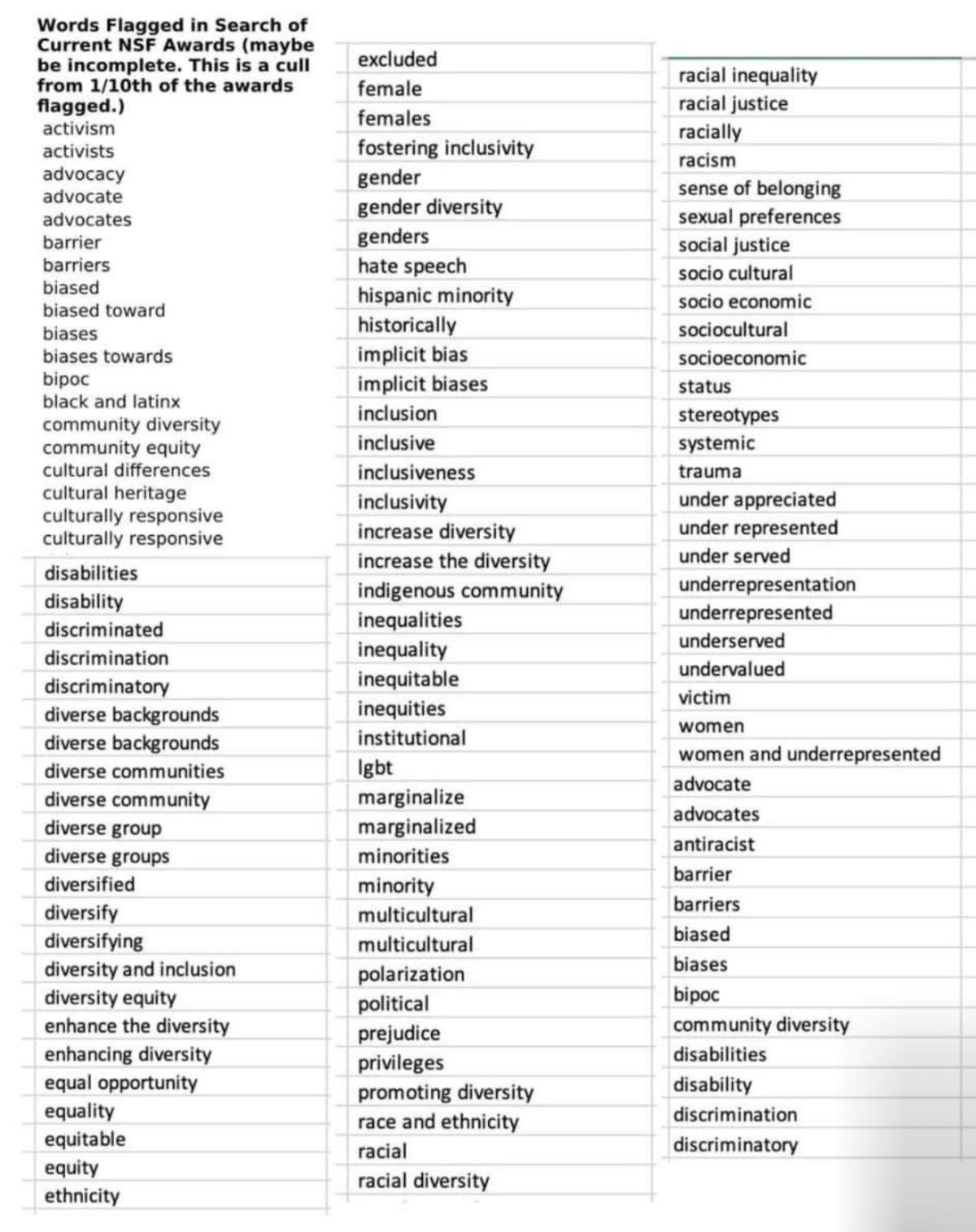
The lengthy and growing list of “flagged words” to avoid in grant requests, professional references, education, and continuing education is concerning. Most of the included terms appear in rigorous CEU-requirements for the healthcare workforce, and across more than half of the U.S: accessibility, anti-oppressive practices (implicit) bias, cultural competency and/or humility, discrimination, diversity, equity, immigration, inclusion, and social justice, to name a few. For CEU-approval, these words are required to appear in presentation and training abstracts or their learning objectives. Among other cautionary words are advocate, female, gender, political, socioeconomic, status, trauma, women, and victim.

Much of the terminology is embedded within our established resources of guidance: regulatory language for licensure practice acts, federal mandates, academic and organizational accreditation, case management and other individual exam-based certifications, ethical codes of conduct, and professional standards of practice. Examples of these include:

Licensure Renewal or Not?

Many of the terms at issue appear across professional practice acts and regulations. I’d cue my colleagues to check their current CEU-requirements for any state(s) of licensure or certification; the language is crystal clear. There are large consequences for persons unable to fulfill their renewal requirements, including fiscal costs by loss of employment. There are also potential sanctions or reprimands should one choose to abandon, refuse, or rescind care (without an alternative provided) to patients in need of emergent treatment and intervention. 

Ethical and Legal Exclusions

It is understood that not every professional shares the same belief system and mores. Yet, caveats have long been written into the established resources of guidance for religious or moral exclusions and other acknowledged beliefs that could bias or obstruct a person from rendering the acceptable standards of care delivery. All professionals are accountable to complete a safe and appropriate transfer of care to minimize the potential for patients to be put at risk of physical or emotional harm. This language, or some similar verbiage, appears across professional standards of practice and ethical codes for all disciplines and advanced specialty practices, including those for my case management colleagues.

It is also understood that some professionals reside in states where certain language has been excluded under federal law. However, our professional and ethical obligations to patients, their families, and other support systems remain paramount.

In a concerning move, the Texas Behavioral Health Executive Council voted to give preliminary approval for removal of language that requires cultural competence as a CEU-requirement for several licensed mental health professions, including counseling, marriage and family therapists, psychologists, and social workers. Prior requirements for renewal were for 24 total hours of CEUs, of which 6 were dedicated to ethics and 3 for cultural diversity or competence. The proposed revision is to “ensure competency when providing services to a distinct population, defined as a group of people who share a common attribute, trait, or defining characteristic of the licensee’s choice.” The term cultural competence has long been challenged due to its implication that every professional should be competent in every culture, which is not possible. However, other terminology has been recommended from intercultural effectiveness to cultural humility. The latter term is focused on practitioner awareness of distinct cultural nuances across populations and communities with a dedicated commitment to ongoing learning that advances their practice.

The action by Texas has prompted considerable pushback with concerns by other states on how the new rule could allow practitioners to bypass cultural diversity training about marginalized communities. This action de-emphasizes the topic’s importance to the workforce, as a critical component of providing and assuring ethical and responsible care and intervention to each person. Further actions of this type will lead to gaps in the knowledge and skills needed by the workforce to effectively engage and serve clients from diverse backgrounds, cultures, and genders. Respect for the unique experiences, beliefs, and values that distinguish populations and communities will surely be at risk.

Our Quality North Star is Under Attack

Excluding words or erasing populations does not dismiss the inequities and injustices faced by those communities. Quality-driven patient-inclusive care is an industry mandate for anyone in healthcare and its associated sectors.Colleagues have even shared how content referencing the Quintuple Aim has come under fire. This construct is the long-respected Quality North Star of our industry: population and patient-inclusive care rendered at the right time, for the right cost, by those who embrace the work, and is accessible by all persons. With National Health Expenditures slated to be at over $5.3 Trillion dollars for 2025 and hit over $7 Trillion by 2031, too much is at stake for any lesser of a quality vision.

Our Enduring Professional Obligations

Advocacy is another “forbidden word”. Yet, that word remains an enduring ethical mandate and legal obligation for all licensed and/or certified healthcare professional and disciplines. All persons deserve to feel safe, seen, heard, valued, and respected. Equally included in this mix is each practitioner, our families, as well as any friends who are patients receiving care. I have no intention of waiving these obligations or shifting my professional focus of the past 42 years.

What about you?

Federal HHS Equity Action Plan Advances Amid New Data on Discrimination by the Health Care Workforce

There’s much to follow on the current health equity radar, from advancement of the HHS’s Equity Action Plan to concerning data validating the high incidence of discrimination by the health workforce toward patients. The onset of stress and vicarious trauma for staff witnessing these events was also identified. Each of these actions will provide pause to even the most seasoned health equity warrior.

The title of this blog article reflects one jam-packed week in our health equity space! There’s much to follow on the health equity radar, from advancement of the Federal Equity Action Plan to concerning data validating the high incidence of discrimination by the health workforce toward patients. The onset of stress and vicarious trauma for staff witnessing these events was also identified. Each of these actions will provide pause to even the most seasoned health equity warrior.

An Equity Action Plan Amplified

The U.S. Department of Health and Human Services (HHS) released a 2023 update to its Federal Equity Action Plan! The plan amplified the commitment of the Biden-Harris Administration to employ its whole-of-government equity agenda that empowers inclusive access to care for all. Many of this blog’s readership are aware of my affinity for wholistic health approaches that encompass physical, behavioral and psychosocial health. Research affirms the validity of these models to ensure successful outcomes for those populations living amid the wholistic health determinants encompassing social determinants of health and mental health, political determinants health, and the systemic racism that perpetuates them.

The HHS Plan outlines five key areas to advance health equity at the macro, meso, and micro practice levels:

  1. Prevent neglect and improve care to help children thrive in their families and communities. 
  2. Promote accessible and welcoming health care for all. 
  3. Improve maternal health outcomes for rural, racial, and ethnic minority communities. 
  4. Prioritize the behavioral health of underserved populations. 
  5. Increase clinical research and trial diversity to support innovation. 

Each of these actions has been the focus of legislation and funding targeting minoritized and marginalized communities. At the Federal level Aligning for Health is a membership association that uses a team of federal and state administration experts to address the mandate for efficient, integrated and coordinated programs that enhance health outcomes for Americans. Their website has an in-time and interactive tracking tool for legislation on health equity and the SDoH. The current 118th Congress is reviewing the following legislation in this space. The current bill count tally is:

  • SDoH Bills; 118
  • Health Equity/Disparity Bills: 36 
  • Maternal and Infant Bills: 0

Since the Equity Action Plan was released in 2022, some progress to address health equity and racial justice has advanced:

  • Proposed rules on language access in all health programs and activities funded by HHS and guidance to states on how to comply with language access and effective communication obligations during and after public health emergencies. 
  • Approved 42 states, DC, and the Virgin Islands to provide 12 months of continuous postpartum coverage through the Centers for Medicare and Medicaid Services (CMS) so that women with low-incomes have stability in coverage.
  • Proposed rules that prohibit discrimination on the basis of disability by updating critical provisions that help persons with disabilities access health and human services under section 504 of the Rehabilitation Act of 1973.
  • Provided practical guidance to HHS offices on identifying actions to ensure opportunity for all.

In addition, The Kaiser Family Foundation (KFF) Medicaid Waiver Tracker shows 63 approved and 37 pending 1115 Waivers in process across the states. For those who haven’t accessed this informative tool, it is a must read. You can also access a current view of the 1115 Waiver landscape by state through the KFF Tracker.

Discrimination by the Workforce: More Norm Than Exception

This action by HHS is especially timely in light of this week’s compelling and concerning research by the Commonwealth Fund on Health Care Workers Observations of Discrimination Against Patients. The report details the perspectives of >3000 members of the interprofessional care team. Discrimination against patients due to race, ethnicity, language and other cultural areas remains widespread, as does the traumatic impact for the workforce itself. Among the most concerning findings include:

Recommendations

Much more work is required to attain the pinnacle of health equity excellence that society deserves. The Commonwealth report lists a series of recommendations to advance actions to mitigate discrimination and ensure psychological and physical safety for patients and the workforce itself:

  • Provide an easy way for patients and health care staff to anonymously report situations involving racism or discrimination. 
  • Examine policies to make sure they result in equitable outcomes
  • Require classes on discrimination at professional schools
  • Create opportunities to listen to patients of color and health care professionals of color
  • Examine treatment of non-English-speaking patients
  • Train health care staff to spot discrimination

I would also add the importance of an ongoing and consistent organizational total quality management approach. This action ensures continuous improvement efforts that are ongoing and sustainable. Addressing health equity, systemic racism, and trauma are NOT one and done.

Professional associations also need to continue their important work to develop advance, and activate strategic health equity deliverables such as implementing revised standards of practice, ethical codes, formal position papers, dedicated tool kits to name a few. 

As I’ve quoted through my health equity and DEIB work on many occasions, “Every patient, their family member, and member of the healthcare workforce should feel safe, seen, heard, and valued.”. The healthcare industry cannot possibly begin to address the health equity equation’s abysmal outcomes without first addressing these levels of oppression, racism, and manifesting trauma faced by for all involved.