Working Around the Words to Ensure Health Equity

Considerable time, effort, and energy is being spent on reframing word use in response to Federal mandates and their ripple-effect across the industry. Shifting words should not negate our professional commitments and obligations to the patients, their families, and the workforce. Our actions must continue to advance the Quintuple Aim and what matters most.

Much has been written lately about reframing word use in response to the latest generation of Executive Orders (EO) and other actions by the Federal Government. Yet, what happens when most of the words at issue are aligned with population health funding priorities as in accessibility, health equity, inclusion, or vulnerable populations? What happens when the words are commonly used in daily language, like advocate, expression, gender, or status? What happens when the words inform competencies for public health professions, as in cultural competence, implicit bias(es), oppression, or social justice? What happens when the words speak to evidence-based interventions that support populations across healthcare settings, such as anti-racism, cultural responsiveness, feminist, social justice, and trauma-informed? What happens when the words align with ethical codes of conduct and standards of practice for healthcare professionals whether discrimination, person-centered care, underserved, and vulnerable? What happens when shifting the words eliminates populations, persons, and their identities as in gender affirming, LGBTQIA, pronouns, Trans, or other terms. What happens when the list is ever-expanding and unpredictable? It is an understatement to say resolution is complicated. 

How many ways are there to say, equitable, accessible, and quality-driven whole person healthcare? It presents there are many ways. Of course, the mantra remains that the more things we call these drivers and influencers of poor health outcomes and the persons who experience these factors the most, the less people will know what they are. These words have specific meanings; using so many different terms can invoke unintended misunderstandings. While the explicit intent of this new macro-focus is “to help Americans lead healthier lives” there is a clear and present worry that all populations may not be included in this mix. 

Managing The Latest Information Flow

The constant attack on words is exhausting and frustrating to already weary professionals, practitioners, and providers, but most definitely patients and populations. This is an equally troublesome effort to those in higher education preparing future generations of the workforce. 

The latest funding and programming shifts have left many reeling, including the March 2025 announcement to cease funding on four critical value-based care models: Primary Care First, End Stage Renal Disease Treatment Choices, the Maryland Total Cost of Care, and highly-anticipated Making Care Primary model. These shifts will impact millions of Medicaid and Chips recipients, plus Medicare beneficiaries with complex, costly chronic illnesses and the primary care practices that care for them.

This week saw Joint Commission reframe their highly coveted Health Equity Resource Center to reflect new verbiage of, The Optimal Delivery of Care for All; yes, the familiar language of “page not found” now appears when you one goes to the original website. History of Joint Commission’s focus in the health equity space is provided with emphasis on the entity’s ability to provide individual consultations to meet the new industry framing. In addition. CMS’s Health Equity Framework has been reframed as CMS’s Framework for Healthy Communities. The five pillars have also been reframed. In edition, their Health Equity Index used for Medicare Advantage Star Ratings has been rebranded as…..wait for it….The Excellent Health Outcomes for All Reward ((EHO4all). There is concern that the coveted 1115 Waivers might be next on the chopping block; time will tell.

Valuable time is being spent daily by colleagues to review, consider, and revamp programming to stop the ongoing rise of National Health Expenditures, expected to hit $5.3 Trillion. Much of my current bandwidth is spent staying current on policy and EO interpretations, but also supporting colleagues through job losses, or their fear of potential job losses. My students are coping with a constant flurry of issues from disappearing funding for their education and work-study programs to general concerns for their chosen career trajectory. 

Here’s the Real Deal

Changing the terminology will not eliminate the wrath of health disparities and inequities experienced by historically minoritized and marginalized populations. Shifting words alone will do little to improve the poor clinical outcomes experienced by some populations more than others. Adjusting how populations are addressed will not decrease healthcare utilization or improve fiscal outcomes. Eliminating some populations from the conversation or funding will not dismiss the persons from those communities who experience worse illness morbidity and increased mortality rates. Reframing new initiatives will not identify the drivers of systemic racism, political determinants of health, and other social influencers of poor health for populations. In fact, each of these actions will further deteriorate the outputs of our current healthcare system. The US will continue its downward spiral of having the highest healthcare utilization and costs, along with the worse outcomes compared to other developed nations.

While we reconcile our fury about having to change longstanding terminology, the work to address the true priority at hand must continue. We must work to implement actionable strategies that heed our ethical obligations as healthcare professionals and providers. We must continue to advocate for ALL patients and their families so they receive access to the highest quality care available. That care must also be delivered to all in a fair and equitable way. 

Strategies to Advance the Health Equity Equation

Emphasis needs to focus on defining, measuring, and incentivizing progress to improve access to quality care. A recent article in Health Affairs Scholar, posed clear direction with examples for each element provided. I encourage all to take a deeper dive into the piece to integrated these steps within your organization or practice:

  1. Define clear measures of equitable access and tracking progress at both organizational and national levels.
  2. Develop and implement equity-focused quality measures and aligned incentives to support progress and create accountability for addressing barriers in access to care (e.g., quality metrics, outcomes data).
  3. Health care leaders should undertake efforts to measure the availability and quality of health care services for people who experience inequitable access to health care and track progress towards addressing barriers to access (e.g. dashboard).
  4. Build and leverage cross-sector partnerships that allow collaboration on investing to address shared patient and community needs.

My daily dialogues with valued colleagues are a reminder to continue prioritizing ourselves and our energy. This will fuel our focus on the critical work at hand. Here are a few of my own strategies to push through this muck!

  • Stay informed through your valued sources of intel but limit the amount of time spent viewing the information each day. While old habits have me check CMS Newsroom Posts weekly, there are other personal favorites: The Commonwealth FundPeterson/KFF System TrackerEpstein Becker Green, and others.
  • Explore what actionable strategies are up your sleeve
  • Don’t silo your efforts: continue to discuss and strategize with colleagues who share your passion. Those relationships and conversations will continue to nurture and motivate your efforts.
  • Try not to get lost in the alphabet soup of verbiage! Yes, it is toxic and traumatizing and will get the best of us if we let it! Instead, focus on actions to advance past the toxic energy around us. This may mean using alternative words or language, as posed in the list provided in the Federal Grant Trigger Words Replacement Workbook (yes, many alternatives were provided by ChatGPT).
  • Stay up to date; the 4/3/25 document published by the EEOC and DOJ, What You Should Know About the Recent DEI-Related Discrimination at Work is a must read. 

In the end, it is our actions that matter most to achieving the industry’s quality north star of the Quintuple Aim: patient- and family-centric care delivered at the right time, for the right cost, delivered by those who embrace the work, and assuring equitable access for all. Shifting words should not negate professional commitments and obligations to our patients, their families, and the workforce.

Tackling Workplace Bullying and Promoting Psychological Safety

October is National Workplace Bullying Awareness Month. The incidence of bullying within healthcare continues to rise, and with dangerous consequences for patients, as well as the workforce itself. Identify workplace bullying’s newest dimensions and learn how to promote your psychological safety.

October is National Bullying Awareness Month. Every year I hope for improvement in the landscape of this fierce disruptor, and especially for my colleagues within healthcare. Yet, the incidence of incivility keeps rising. The post-pandemic disruption continues with workforce shortages, attrition and retention challenges, staff burnout, and a slew of occupational hazards. What began decades ago with a few posturing practitioners and nurses who ate their young remains an interprofessional sport that every discipline plays, and nobody gets to sit out.

Psychological Safety and Workplace Bullying

Bullies take chronic hits at your psychological safety. Their goal is to make you feel inefficient, ineffective, and incapable of performing your role. They mess with your perception of whether it is safe to take interpersonal risks within your appointed role at work, such as in taking initiative to advocated for patient care and treatment. They sabotage your sense of self and thus confidence so that you may fail to follow through on critical communications with team members. Ultimately, the quality of your workplace performance is questioned along with your mental health.

Bullies are ever-present across sectors and can invade your volunteer experiences, such as roles for a professional association or other efforts. An activity you engaged in for sheer enjoyment, becomes as arduous to engage in as any professional role. Ultimately your occupational health, mental health, and safety are all compromised. Every member of healthcare’s valued interprofessional workforce is impacted:

Bullying and incivility incidence have ramped up from DEIB’s lens, and impacting:

Negative outcomes are plaguing quality improvement and risk management specialists across practice settings. Incivility by practitioners leads to medical errors >75% of the time, and resulting in death >30% of the time. The workforce is also at elevated risk of trauma, and especially suicide from repeated psychological assaults:

  • Suicidal ideation: >30% of victims (of bullying) 
  • Suicide: Victims 2X as likely to take their own life compared to those not exposed

Bullying’s Advancing Dimensions

Bullying is a consistent pattern of repeated, health-harming mistreatment of one or more members of the workforce, marked by abusive conduct that is threatening, humiliating, or intimidating. Work is delayed, sabotaged, and obstructed. These are impediments that NO professional can afford in the fast-paced industry. We’re not talking about random episodes when someone feels crispy around the edges or has a bad day, but rather a chronic and recurrent pattern of behaviors that somehow devalues others.

Gaslighting, Mobbing, and Remote Bullying, OH MY!

Bullying has morphed into assorted dimensions. Gaslighting occurs when a colleague ignites the gas by tossing out an inflammatory implication that forces you or others to question your actions or ability to do the job. The bully fans the fire by ongoing attacks; they may challenge your memory of events, such as implying that you ‘forgot’ to follow up on dialogues with a patient’s family or member of the care team. There may be comments to other colleagues about your bouts of ‘memory loss’. Imagine, being approached by staff or patient families to verify if you completed documentation that you clearly recall doing. Even you start to question the quality of your work performance, especially as your reputation and job performance are at issue. Six types of gaslighting are:

  • Countering: Challenging someone’s memory 
  • Denial: Refusal to take responsibility for actions
  • Diverting: Changing a discussion focus by questioning someone else’s credibility 
  • Stereotyping: Generalizing through negative or discriminatory views of a person’s race, ethnicity, sexuality, nationality, or other cultural nuance. 
  • Trivializing: Disregarding when someone feels minimized by what is said and devaluing the impact
  • Withholding: A bully pretends to not understand a conversation and refuses to listen to another person’s view. That person ends up doubting themself. 

Mobbing is bullying on steroids and occurs when multiple staff target one or more personnel. Almost 50% all bullying incidents involve mobbing with 54% of primary care professionals exposed to this type of incivility on at least one occasion. Perhaps, a new director of Case Management at an MCO changes the job description to require all new hires to possess case management certification; current employees must be certified by the end of that calendar year. Staff view this requirement as an undue hardship and become frustrated. The rumor mill ensues: ‘The quality of the work isn’t important, only if we can pass a test.’; ‘she doesn’t care about us.’ The mob works to discredit the boss and push her out the door. Staff may view a new colleague as not fitting in, whether because of being in a different age group, professional discipline, as well as race, ethnicity, gender, sexual orientation or other cultural nuance. As a result the staff member does not feel safe, seen, heard, or valued.

Remote bullying has risen amid the increase of virtual roles. Some 43% of employees were exposed to remote bullying experiences:

  • 50% of incidents during virtual meetings
  • 10% via email interactions, and 
  • 6% during group emails and chats. 

What YOU Can Do to Promote Psychological Safety!
Bullies are insidious and invasive in their efforts. BUT, here’s their dirty secret and biggest misstep! BULLIES target the most ethical, hard-working, and high-performing individuals in an organization. If you’ve been bullied, it means you’re more powerful than you’ve ever imagined, as you’re a threat to the bully and their ineptitude.

Tackling bullying involves strategy:

  • Intervene early: Don’t let a precedent be set and address the behavior directly
  • Don’t react to the bully: ‘Take 10’ to breathe, consider, and define an approach
  • Document each incident: Date, time, witnesses, and who you discussed it with.
  • Don’t let the bully isolate you: Keep engaged with peers and those who trust your savvy.
  • Set limits on negative behaviors you will allow: We may let small things go, but stay vigilant.
  • Don’t share lots of personal details at work: This info will be used against you
  • Take time to recharge from incidents: Mental health days or vaca help restore your resilience
  • Seek Support: Peer support and mental health support are MUSTS; one may potentially need independent legal support!
  • Put your best professional self forward: Bullies thrive on the weakness of others, so keep showing that best version of yourself  
  • Approach bullying as a work project: Being methodical keeps you in control. Assess  financial costs of staff departures related to bullying, and the ROI of psychological safety and other workforce retention strategies

Those steps and other ways to advance each above strategy live in Chapters 3 and 6 of The Ethical Case Manager: Tools and Tactics. The book’s content:

  1. Defines terms associated with workplace bullying
  2. Discusses how workplace bullying impacts physical and mental health 
  3. Aligns workplace bullying, quality of care, and patient safety 
  4. Recognizes the “Bullying Recipe” within organizations
  5. Examines how the practice culture of professional education impacts incidence
  6. Explores the incidence across the DEIB landscape 
  7. Identifies types of organizational culture that contradict workplace bullying
  8. Discusses leadership styles to impact workplace bullying in organizations
  9. Identifies legislation and professional initiatives to combat workplace bullying
  10. Explores how bullying impedes the ethical performance of case managers 
  11. Offers quality monitoring tools to address unprofessional behaviors
  12. Informs you how to calculate costs of workplace bullying for your organization 

REMEMBER

Keep Ellen’s Ethical Mantras close by:

  • We deserve respect.
  • We deserve to feel safe. 
  • We deserve not to feel trapped in a toxic workplace.
  • We deserve to have our knowledge and expertise valued.
  • We deserve to have confidence that all are accountable for their actions.
  • We deserve to be able to confront workplace bullying without fear of retribution.

October is National Bullying Awareness Month. Every year I hope for improvement in the landscape of this fierce disruptor, and especially for my colleagues within healthcare. Yet, the incidence of incivility keeps rising. The post-pandemic disruption continues with workforce shortages, attrition and retention challenges, staff burnout, and a slew of occupational hazards. What began decades ago with a few posturing practitioners and nurses who ate their young remains an interprofessional sport that every discipline plays, and nobody gets to sit out.

Psychological Safety and Workplace Bullying

Bullies take chronic hits at your psychological safety. Their goal is to make you feel inefficient, ineffective, and incapable of performing your role. They mess with your perception of whether it is safe to take interpersonal risks within your appointed role at work, such as in taking initiative to advocated for patient care and treatment. They sabotage your sense of self and thus confidence so that you may fail to follow through on critical communications with team members. Ultimately, the quality of your workplace performance is questioned along with your mental health.

Bullies are ever-present across sectors and can invade your volunteer experiences, such as roles for a professional association or other efforts. An activity you engaged in for sheer enjoyment, becomes as arduous to engage in as any professional role. Ultimately your occupational health, mental health, and safety are all compromised. Every member of healthcare’s valued interprofessional workforce is impacted:

Bullying and incivility incidence have ramped up from DEIB’s lens, and impacting:

Negative outcomes are plaguing quality improvement and risk management specialists across practice settings. Incivility by practitioners leads to medical errors >75% of the time, and resulting in death >30% of the time. The workforce is also at elevated risk of trauma, and especially suicide from repeated psychological assaults:

  • Suicidal ideation: >30% of victims (of bullying) 
  • Suicide: Victims 2X as likely to take their own life compared to those not exposed

Bullying’s Advancing Dimensions

Bullying is a consistent pattern of repeated, health-harming mistreatment of one or more members of the workforce, marked by abusive conduct that is threatening, humiliating, or intimidating. Work is delayed, sabotaged, and obstructed. These are impediments that NO professional can afford in the fast-paced industry. We’re not talking about random episodes when someone feels crispy around the edges or has a bad day, but rather a chronic and recurrent pattern of behaviors that somehow devalues others.

Gaslighting, Mobbing, and Remote Bullying, OH MY!

Bullying has morphed into assorted dimensions. Gaslighting occurs when a colleague ignites the gas by tossing out an inflammatory implication that forces you or others to question your actions or ability to do the job. The bully fans the fire by ongoing attacks; they may challenge your memory of events, such as implying that you ‘forgot’ to follow up on dialogues with a patient’s family or member of the care team. There may be comments to other colleagues about your bouts of ‘memory loss’. Imagine, being approached by staff or patient families to verify if you completed documentation that you clearly recall doing. Even you start to question the quality of your work performance, especially as your reputation and job performance are at issue. Six types of gaslighting are:

  • Countering: Challenging someone’s memory 
  • Denial: Refusal to take responsibility for actions
  • Diverting: Changing a discussion focus by questioning someone else’s credibility 
  • Stereotyping: Generalizing through negative or discriminatory views of a person’s race, ethnicity, sexuality, nationality, or other cultural nuance. 
  • Trivializing: Disregarding when someone feels minimized by what is said and devaluing the impact
  • Withholding: A bully pretends to not understand a conversation and refuses to listen to another person’s view. That person ends up doubting themself. 

Mobbing is bullying on steroids and occurs when multiple staff target one or more personnel. Almost 50% all bullying incidents involve mobbing with 54% of primary care professionals exposed to this type of incivility on at least one occasion. Perhaps, a new director of Case Management at an MCO changes the job description to require all new hires to possess case management certification; current employees must be certified by the end of that calendar year. Staff view this requirement as an undue hardship and become frustrated. The rumor mill ensues: ‘The quality of the work isn’t important, only if we can pass a test.’; ‘she doesn’t care about us.’ The mob works to discredit the boss and push her out the door. Staff may view a new colleague as not fitting in, whether because of being in a different age group, professional discipline, as well as race, ethnicity, gender, sexual orientation or other cultural nuance. As a result the staff member does not feel safe, seen, heard, or valued.

Remote bullying has risen amid the increase of virtual roles. Some 43% of employees were exposed to remote bullying experiences:

  • 50% of incidents during virtual meetings
  • 10% via email interactions, and 
  • 6% during group emails and chats. 

What YOU Can Do to Promote Psychological Safety!
Bullies are insidious and invasive in their efforts. BUT, here’s their dirty secret and biggest misstep! BULLIES target the most ethical, hard-working, and high-performing individuals in an organization. If you’ve been bullied, it means you’re more powerful than you’ve ever imagined, as you’re a threat to the bully and their ineptitude.

Tackling bullying involves strategy:

  • Intervene early: Don’t let a precedent be set and address the behavior directly
  • Don’t react to the bully: ‘Take 10’ to breathe, consider, and define an approach
  • Document each incident: Date, time, witnesses, and who you discussed it with.
  • Don’t let the bully isolate you: Keep engaged with peers and those who trust your savvy.
  • Set limits on negative behaviors you will allow: We may let small things go, but stay vigilant.
  • Don’t share lots of personal details at work: This info will be used against you
  • Take time to recharge from incidents: Mental health days or vaca help restore your resilience
  • Seek Support: Peer support and mental health support are MUSTS; one may potentially need independent legal support!
  • Put your best professional self forward: Bullies thrive on the weakness of others, so keep showing that best version of yourself  
  • Approach bullying as a work project: Being methodical keeps you in control. Assess  financial costs of staff departures related to bullying, and the ROI of psychological safety and other workforce retention strategies

Those steps and other ways to advance each above strategy live in Chapters 3 and 6 of The Ethical Case Manager: Tools and Tactics. The book’s content:

  1. Defines terms associated with workplace bullying
  2. Discusses how workplace bullying impacts physical and mental health 
  3. Aligns workplace bullying, quality of care, and patient safety 
  4. Recognizes the “Bullying Recipe” within organizations
  5. Examines how the practice culture of professional education impacts incidence
  6. Explores the incidence across the DEIB landscape 
  7. Identifies types of organizational culture that contradict workplace bullying
  8. Discusses leadership styles to impact workplace bullying in organizations
  9. Identifies legislation and professional initiatives to combat workplace bullying
  10. Explores how bullying impedes the ethical performance of case managers 
  11. Offers quality monitoring tools to address unprofessional behaviors
  12. Informs you how to calculate costs of workplace bullying for your organization 

REMEMBER

Keep Ellen’s Ethical Mantras close by:

  • We deserve respect.
  • We deserve to feel safe. 
  • We deserve not to feel trapped in a toxic workplace.
  • We deserve to have our knowledge and expertise valued.
  • We deserve to have confidence that all are accountable for their actions.
  • We deserve to be able to confront workplace bullying without fear of retribution.

Mental Health of LGBTQ+ Youth and The Trevor Project’s 6th National Survey 

The Trevor Project’s 6th National Survey on Mental Health of LGTBQ+ Young People is a must read for all health and behavioral health professionals. The mandate is clear: sustainable programming and intervention must be developed and expanded to ensure psychologically safe and concordant care is readily accessible for all youth who want it, as well as for their family members, and other allies.

The Trevor Project recently published its  6th National Survey on the Mental Health of LGBTQ+ Young People. The annual report is a must read at any point in time, and particularly for those engaged in the health and well-being of pediatric patients and their families. However, it holds special significance during Mental Health Awareness Month. In the spirit of patient-inclusive care, every person deserves to feel safe, seen, heard, and valued.

The experiences of over 18,000 LGBTQ+ young people (ages 13 -24) across the US are detailed in this seminal report. There is one big disclaimer: caring human beings will be overwhelmed by the current level of mental health risk for youth who identify within this community. 

Key Themes

This year’s report reflects several key themes, including profound levels of trauma, victimization, and a disproportionately high risk of suicide for those surveyed. It is challenging enough for youth to acknowledge and present their authentic self to others, let alone identify as part of the LGBTQIA++ community. The intersectionality of minoritized and vulnerable identities (e.g., racial, ethnic, socioeconomic, ableist) easily prompts discrimination and oppression. The layering of these marginalities only exacerbates a person’s exclusion from social connection, resources, and opportunities to engage in mainstream society; fear of stigma, rejection, and abandonment by family, peers, teachers, and other individuals is a reality for far too many individuals.

high volume of LGBTQIA+ youth are unable to access the mental health care they need, and when they need it most. The widening gaps in treatment accessibility and availability trouble me greatly. I had a strong visceral reaction to this data during my initial read, especially as a fierce ally of the community, a behavioral health professional, and one who cares deeply about the human condition. Preliminary conversations with colleagues and friends yielded equally powerful reactions. Here are the data high points for your own reflection and consideration:

Access to care:

  • 84% of all respondents wanted mental health care
  • 50% were unable to access it

For youth who wanted mental health intervention but were unable to access it: 

  • 42%: Scared to discuss their mental health concerns with others
  • 40%: Unable to afford it
  • 37%: Unable to obtain parental or caregiver’s permission
  • 34%: Worried they would not be taken seriously
  • 31%: Fearful of being hospitalized involuntarily
  • 24%: Not yet out and worried being outed 
  • 22%: Concerned that treatment providers would not understand their sexual orientation or gender identity
  • 20%: Had a prior negative experience with a clinician

Suicidality:

  • 46% of ages 13-17 considered suicide in the past year, while 16% attempted.
  • 33% of ages 18-24 considered suicide, while 8 % attempted

For all youth who considered suicide:

  • 52%: Transgender Men
  • 47%: Transgender Women
  • 43%: Nonbinary/Genderqueer
  • 42%: Questioning
  • 31%: Cisgender Women
  • 27%: Cisgender Men

LGBTQ+ Youth of Color reported increased suicidal attempts vs. Whites:

  • 24% :Native American/Indigenous youth
  • 16%: Multiracial youth
  • 14%: Black/African American youth
  • 14%: Middle Eastern/North African youth
  • 13%: Hispanic/Latinx youth
  • 10%: Asian American/Pacific Islander youth

Mental Health and Well-being:

  • 90%: Well-being was negatively impacted by recent politics.
  • 45% of transgender/nonbinary young people: Reported their family considered moving to a different state due to anti-LGBTQ+-related politics and laws.
  • 49%: Experienced bullying in the past year
    • Those who reported being bullied had significantly higher rates of attempting suicide in the past year vs. those who did not experience bullying.


Gender-affirming treatment

  • 62% of youth on Gender-affirming hormones were concerned they would lose access to this care.

Bullying and At Risk of Physical Harm

  • 23%: Were physically threatened or harmed due to sexual orientation or gender identity
  • 28% of transgender and nonbinary young people: Were physically threatened or harmed in the past year due to their gender identity

The concerns intensify when this data point is broken down by sexual orientation, racial, and ethnic status. Prevalence increases by up to 20% when looking at gender identity by group:

  • 40%: Asian Americans
  • 36%: Blacks
  • 44%: Latinx
  • 43%: Middle Eastern
  • 55%: Native American
  • 48%: Whites

Ten Actions for Peers and Allies to Show Support

The Trevor Project identifies how to support youth, including through providing psychological safety and a sense of belonging by : 

  • Ensuring availability of gender-affirming spaces 
  • Providing access to gender-affirming clothing, gender-neutral bathrooms at school, and respect of pronouns by those they live with 
  • Having at least one adult in their school or academic setting who is supportive and affirming of their authentic self
  • Have an affirming space at home, school, work, place or worship, community, and/or social media (online)

In addition, respondents were queried on their 10 top priorities for how peers and allies can actively convey support:

  1. Trust the person knows who they are (88%)
  2. Stand up for the person (81%)
  3. Not support politicians who advocate for anti-LGBTQIA+ legislation (77%)
  4. Look up things about LGBTQ+ identities on their own to better understand (62%)
  5. Respect pronouns (59%)
  6. Show support for how the person expresses their gender (57%)
  7. Ask questions about LGBTQ+ identities to better understand (56%)
  8. Accept their partner (55%)
  9. Show support on social media (44%)
  10. Have or display pride flags (43%)

Resources to support LGBTQIA+ Youth

Prior blogs have addressed these valued resources: 

  • GLADD provides a clearinghouse of population-specific resources for advocacy, legal, and other general information. 
  • The Human Rights Campaign  advocates and promotes equity for all persons within the movement. Their massive resource database empowers allies and other community stakeholders how to support individuals with coming out, maneuvering college, elections, hate crimes, health and aging, parenting, religion and faith, and workplace support. 
  • Outcare Health offers concordant care directories with a 50-state community resource directory for LGBTQIA++ affirming practitioners, primary care, mental health, youth groups, shelters, support groups, and STI testing. They also provide an interactive map on U.S. legislation targeting LGBTQIA++ rights across the states.
  • SMYAL offers locale-based housing programs that ensure safe, LGBTQ-affirming support through tiered residential options: transitional housing, extended transitional housing, and rapid re-housing. 
  • The Trevor Project provides 24/7 information, support, and resource connection for LGBTQIA++ Youth around the globe. There is immediate access to trained counselors via call, text, or chat, and linkage to an international community for LGBTQ young people
  • LGBTQ+ Healthcare Directory provides a listing of LGBTQ+ informed and welcoming health, mental health and other providers and practitioners across the U.S. and Canada.

Readers of this blog are encouraged to add resources in the comments area below.

Data Must Yield Actionable Solutions

I echo the sentiment of my colleagues in that the industry has substantial data to validate the severity of this mental health crisis. Actionable and sustainable programming and intervention must be developed and expanded to ensure psychologically safe and concordant care is readily accessible for all youth who want it, as well as for their family members, and other allies. The risks and consequences for youth unable to access needed mental health support and intervention are far too great to ignore.

Advocacy Amid Anguish for the Frontline Workforce

The Surgeon General’s advisory is landmark action whose priority is only emphasized by the latest horrific mass shootings, now at 213 and counting. We are way beyond burnout with advocacy amid the anguish mandated, and through an interprofessional effort.

My initial intent was to dedicate this week’s blog post to the Surgeon General’s Advisory. The document highlights the industry mandate for stakeholders to be accountable for action that mitigates workforce burnout: 

  • healthcare organizations 
  • insurers 
  • health technology companies 
  • policymakers
  • academic institutions 
  • researchers
  • communities

However, we are way beyond burnout! The battle cry by industry advocates is fierce. Workforce retention, turnover, and patient quality are beyond their tipping points; “more must be done or there will be nobody left to render care”. The Surgeon General’s advisory is landmark action whose priority is only emphasized by the latest horrific mass shootings, now at 213 and counting for 2022 alone.

Intensifying Collective Occupational Trauma

Society witnessed the worst of humanity: the death of 19 innocent children and two teachers in Uvalde, TX, followed so closely to the intentional murder of 13 persons in Buffalo, NY. Both events serve as added evidence of the severe collective occupational trauma inflicted on every practitioner and provider of care. My colleagues and I face these issues as human beings, as well as professionals, which is a felt in the most intimate and unique ways. 

Front-line practitioners and first-responders face unparalleled pressures in caring for victims or being forced to announce their deaths. Conveying that intimate information to loved ones carries an overbearing responsibility. Underneath a provider’s, often stoic, presentation lives interminable grief, pain, and loss, as they struggle to accept their inability to save the victim. The honor of caring for these fatalities bring an intense level of responsibility. Behavioral health professionals face a similar burden in rendering emergency and continuing mental health intervention to providers, witnesses, family, and community members. Recurrent workforce retruamatization has an especially fierce impact. The anguish contributes to rapidly escalating incidence of PTSD, suicidal ideation, and action across the workforce. Rates were high enough pre-pandemic, and continue to rise. The fusion of mental and physical health engulfs the body yielding escalation and exacerbation of chronic illness, auto-immune disorders, and other ailments; the workforce is being decimated.

Debriefing and Activating Advocacy

I’ve spent the better part of these past few weeks debriefing with past and present students, clinical social workers whom I supervise and mentor, experienced colleagues. Everyone is hurting in a unique way. Some need solace, while others require cues to stop doomscrolling. All demand action; workforce resource support and gun safety reform legislation are at the top of the list. 

Our emotions empower advocacy to heed the ethical tenets of autonomy, beneficence, fidelity, justice, and nonmalfeasance. Prioritizing these tenets ensures quality intervention for every patient and population, but also all health and behavioral health professions. Activating these principles looks different for each discipline. Yet, while each one shares distinct priorities, there is shared recognition of how interprofessional collaboration and advocacy will yield change including:

The industry must do better; our entire interprofessional workforce deserves far more. We must advocate amid the anguish, yet be ensured appropriate mental health support. How will you advocate for change? Feel free to add your comments about this blog post below, as well as other valuable resources. 

The Impact of Trauma and Systemic Racism on Wholistic Health Equity

Abundant data on wholistic health disparities mandates intentional, sustainable quality improvement action. Will the next generation of metrics account for this reality?

There is an industry priority to right the societal wrongs associated with historical trauma and systematic racism. These long-standing realities are key drivers of wholistic health disparities: physical, behavioral, and psychosocial health.. A fluid stream of outcomes mandate concordant approaches to racial, ethnic, and other cultural contexts of treatment (e.g., disability, familial choice, gender orientation, regional influences). Yet, despite research to validate data wholistic health outcomes, reflective quality metrics have not been developed.

What Are We Talking About?

            Abundant data assesses the impact of historical, racial, and other types of trauma on health and behavioral health outcomes. Increased healthcare utilization has been identified for survivors of physical and sexual trauma, primarily minority women. Campbell et al. (2002) studied 2,355 females, 21-25 years old, enrolled in a large health maintenance organization (HMO). Patients who experienced intimate partner violence had a far higher prevalence (>50%-70%) of gynecological and central nervous system complaints (e.g., back and pelvic pain, fainting, headaches, seizures), plus other stress-related health issues (e.g., hypertension, insomnia, susceptibility to viral/bacterial infections). Purkey et al. (2020)identified trauma survivors as frequent users of primary, urgent, and emergency care for acute and chronic symptoms. Clarke et al., (2019) discussed the presence of vague somatic complaints by patients who endured traumatic experiences (e.g., ACEs, bulling, pressures to excel in school and career). Costly emergency department visits and ambulatory diagnostic tests are frequently used to identify etiology for chronic and diffuse pain, digestive problems, headaches accompanied chronic illness exacerbation, yet to no avail.    

Another vital dyad for attention involves chronic pain management and stigma experienced by patients from marginalized communities. Wallace et al. (2021) completed a recent study; participants were trauma survivors (e.g., historical, racial, sexual) and members of indigenous, LGBTQIA+, or refugee communities. The results were telling. When physical and emotional pain were expressed to providers, they was minimized or dismissed. If acknowledged by providers, short-term prescriptions were given versus referrals to behavioral health and other specialists.

What Does it Imply?

Data mandates the need for intentional, sustainable quality improvement in this arena. Will the next generation of metrics account for this reality? Racism remains a major factor to drive racial and ethnic inequities in health and mental health, though fails to be addressed in healthcare’s quality proposition. Of the articles reviewed for this blog post, trauma-informed quality analysis of care remained elusive. 2021 saw a fresh generation of industry health equity measures, yet few addressed integrated care, let alone assesses wholistic health equity. Existing metrics continue to silo health or behavioral health. Insufficient focus has been on industry-vetted quality models addressing population-focused, concordant, trauma and equity-focused interventions. 

Where Will Health Equity’s Quality Compass Point?

This author is developing a Quintile Aim for consideration, which adds the pivotal domain of Wholistic Health Equity to the industry’s seminal quality compass. NCQA continues to push this agenda in evolving new metrics. Public comment is open (until 3/11/22) for new HEDIS measures targeting the SDoH. Wyatt et al. (2016) posed a 5-step quality model for organizations to advance health equity delivery to the communities they served, addressed in Figure 1. 

Figure 1: A Framework for Healthcare Organizations to Achieve Health Equity (Wyatt et al., 2016) 

Wyatt R, Laderman M, Botwinick L, Mate K, Whittington J (2016). Achieving Health Equity: A Guide for Health Care Organizations. IHI White Paper: Institute for Healthcare Improvement 

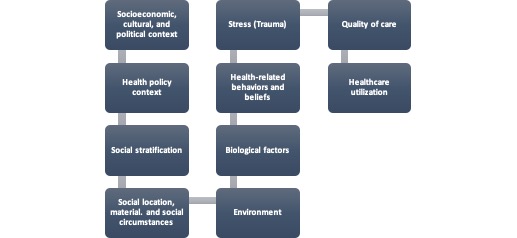
The model was well-intended though had limited substance or strategic action to leverage the intent. This effort was reminiscent of the Quadruple Aim; little data drove the model and obstructed full industry acceptance. By contrast, Dover and Belon’s (2019) Health Equity Measurement Framework (HEMF) is worthy of exploration. Based on the World Health Organization’s Social Determinants of Health model, HEMF vast evaluation areas to measure health equity at macro, meso, and micro levels, as shown in Figure 2. 

Figure 2: HEMF Framework Elements (Dover & Belon, 2019)

Dover, D.C. and Belon, A.P.  (2019. The health equity measurement framework: a comprehensive model to measure social inequities in health. Int J Equity Health 18,36 https://doi.org/10.1186/s12939-019-0935-0

The HEMF model is worthy of a test drive to gauge its true merit. Use of the wide-scope of theoretical and evidence-based industry elements is an asset. Population diversity and complexity are accounted for through power-related and disparity measures. Health beliefs, behaviors, and values are acknowledged with stress factored in; the traumatic-response across circumstances is embedded. My desire to keep this post brief limits further elaboration on the HEMF model. However, know it poses strong value as a robust quality model to address health, behavioral, and racial health disparities across populations exposed to trauma’s diverse lens.  

Have other integrated care quality models that account for wholistic health equity? Add your considerations and comments below!

Trauma-Informed Leadership: The Antidote for Collective Occupational Trauma

Workforce sustainability, retention, and quality of care are among the adverse side effects of the current interprofessional emergency

The healthcare workforce is amid a unique epidemic, coping with the ravages of collective occupational trauma. Physicians and nurses have been heavily impacted, but also an endless list of behavioral health professionals (behavioral analysts, counselors, social workers, psychologists), case managers, community health workers, medical assistants, nutritionists, pharmacists, phlebotomists, public health workers, rehabilitation professionals, respiratory therapists, not to mention those professionals employed in other sectors (e.g., school and occupational health nurses). Workforce sustainability, retention, and quality of care are among the adverse side effects of this interprofessional emergency.


An Emotional Plea

A recent article by the Hastings Center posed an emotional plea; “the pandemic has laid bare the significant shortcomings of a health system rooted in an unsustainable financial model that exploits the physical and emotional labor of its nurses”. A Time Magazine cover story, was equally riveting with a focus on physician suicide that brought me tears; the respected workforce is concerned for its ability to “emotionally, physically, and mentally face the tsunami of patients” who need care. Data out of Canada reveals prevalence of physician burnout, upwards of 68%. Succinctly stated, the healthcare workforce is under attack with unparalleled rates of mental health, substance use, and post-traumatic stress disorder. The daily deluge of data is overwhelming with the severity of workforce trauma evident; the recent report out of the CDC focused on public health workers and was my breaking point: high incidence of depression, anxiety, PTSD, and suicidal ideation all detailed. The research is validating and valued, though yields a chilling reality: organizations and employers must implement trauma-informed leadership (TIL) models to bolster their staff, before they have none left.

Collective Occupational Trauma in High Gear

We are past the point of no return, 80% of healthcare professionals are ready to exit the industry. Practitioner burnout from vicarious trauma is a long-standing dynamic that has only intensified amid the pandemic. Earlier this year, I published a blog post, 10 Ways to Tackle Collective Occupational Trauma and Restore Resilience. I remain alarmed about the ongoing pandemic pressures and their impact on the workforce. A fierce dynamic is in motion, the Cycle of Collective  Occupational Trauma (the graphic viewable on the original blog post, click the embedded URL above). Intense levels of collective induced stress are experienced by the population and passed to involved practitioners as collective infused trauma. In addition, these personnel are exposed to a wide range of all-encompassing professional and personal stressors. Collective occupational trauma results, and ultimately leads to PTSD if not addressed: acute and chronic sleep disruptions (e.g., nightmares, insomnia), diet challenges (e.g., gastrointestinal upset), physical health issues (e.g., headaches, back or joint pain, psychophysiologic disorders), and behavioral health symptoms (e.g., brain fog, motivation, depression, anxiety, substance use, suicidal ideation and action). Academic, occupational, and social activities of daily living become impaired and imperiled.

Trauma-Informed Leadership as Antidote for Collective Occupational Trauma

I’m confident most readers of this blog know the value and success of Trauma-informed care (TIC). For those less familiar, five principles are intentionally woven into each interaction, bolstering intervention with individuals who have experienced or perceived trauma, whether single event or ongoing experiences: safety, choice, collaboration, trustworthiness, and empowerment. The intervention can be implemented in any setting with patients, their support systems, as well as those persons rendering their care.

TIC also serves as an antidote to mitigate collective occupational trauma, and can be aligned through Trauma-informed leadership (TIL). This unique approach expands on Servant, Transformational, and other leadership models that encourage managers “step-up and in” to support staff. TIL shifts the long-held “process and roll” culture of healthcare organizations. Instead, a new atmosphere is created where leadership and staff relationships are nurtured with actionable efforts: partnering toward meaningful, reciprocal interactions that empower (staff) resilience. TIL strategies include, but are not limited to these 10 tactics:

  • Encouraging staff to “Take 10”, whether:
    • 10 seconds to breathe
    • 10 minutes for fresh air, grounding, or use of the Calm App
    • 10 hours, or a mental health day to restore resilience
    • 10 days, yup, it’s vacation time
    • 10 weeks or 10 months means a whole different conversation, and potentially a job change
  • Providing attention to staff health, mental health, and well-being:
    • Monitor for signs and levels of stress: from agitation, sadness, frustration, to more profound forgetfulness, chronic illness exacerbation, depression, or anxiety.
    • Decrease behavioral health stigma through discussion & referrals for intervention, as needed
    • Support and model self-care
  • Engaging in 2-way communication:
    • Don’t just tell staff what to do, but also why
  • Staying visible and accessible to staff
  • Recognizing not only staff limits and vulnerability, but acknowledging those as the leader
  • Building team camaraderie vs. opposing fronts of leadership and staff, or among staff
  • Providing encouragement when, and where possible
  • Establishing and addressing the root cause of retention issues
  • For virtual roles, ensuring visual interactions where leaders “see” staff several times during the week; cameras and webcams on!
  • Recognizing culture shifts are not achieved by a “one and done” approach; stay consistent for the long-term win.

Let these times inspire your opportunity to rebuild, fortify, and sustain the workforce. TIL is a solid means to accomplish this endeavor. Feel free to reach out to me with questions at efssupervision@me.com.

This blog post originally appeared on PACEsConnection

Workforce Trauma, Shortages, and Retention are Interprofessional Challenges: Resolution Tactics

Disregard for the health, mental health, and well-being of all members of the workforce is a grave concern. What tactics can be implemented?

The full scope of professionals must be recognized for their sacrifices and dedication to patient wellness; anything less is unacceptable.

 One year ago, I wrote how the pandemic, and other societal narratives prompted a new dimension of collective occupational trauma; an already worn workforce was forced to wrestle with constant and intense levels of suffering. As we enter 2022, and year 3 of COVID’s wrath, this trauma remains unrelenting. Pervasive burnout, retention issues, and staff shortages are ravaging disciplines and settings, cumulative costs into the billions. These realities put quality patient care at severe risk.

     Global data emphasizes the impact of chronic and recurrent COVID-waves for front-line physicians and nurses; no doubt these disciplines have endured, and continue to take a powerful hit; >80% ready to leave the industry. The ‘Great Resignation’ is decimating healthcare, the sector experiencing the largest job transition rates and among the highest number of job openings. Concern exists whether there will be enough practitioners to render care. However, what of other disciplines? Disregard for the health, mental health, and well-being of all members of the workforce is a grave concern.

The Entire Workforce Mandates Attention

     The health and behavioral health workforce is vast and comprises many professional disciplines: behavioral health professionals (behavioral analysts, counselors, social workers, psychologists), case managers, community health workers, medical assistants, nutritionists, pharmacists, phlebotomists, psychiatrists, public health workers, rehabilitation professionals, and respiratory therapists, etc. Valued personnel are also employed by other sectors (e.g., schools, businesses, prisons), such as teachers, occupational health, and school nurses, to name a few. Each of these groups have suffered more than their share of deaths, illness, and long-haul syndrome disability; the mental and emotional toll of their work yielding intense emotional trauma across:

Despite these graphic realities, too many personnel are excluded from industry/employer recognition for their contributions to the pandemic, whether awards or merit raises. Even media focus on these individuals is limited. A recent article discussing, hazard pay, focused on nurses and doctors alone; why are others not deserving?

     A vicious cycle unfolds where stressed, underappreciated team members experience a higher incidence of negative mood, emotional exhaustion, and thus, increased medical errors. More than 250,000 medical errors and 100,000 deaths annually were attributed to workforce frustration pre-pandemic; poor team member communication and fragmented care ensued with a ripple effect of order entry mistakes, medication, and treatment missteps, among other occurrences. Considering all the disciplines to interact with patients, at what point does the risk to patient care become too great?

Professional Advocacy is a Mandate

     There must be greater advocacy and action to acknowledge the vital interprofessional contributions rendered by entire workforce. Professional associations, their leadership, and those in positions to do so, must assert influence to promote the value of their requisite members. Language promoting self-care and professional advocacy has started to appear in standards of practice and ethical codes. However, these efforts must continue to amplify. Many colleagues actively use their social media presence to write articles, blogs, and other messaging to lead this charge; more must join the discussion and advocate for action through employers, and the industry overall. Media attention to this cause must be swift, fierce, and consistent.

There must be collective accountability across the professional landscape to acknowledge, and reconcile this issue, spanning academia, credentialing and regulatory entities, professional associations, and of course, employers. Workforce sustainability directly impacts quality health and behavioral healthcare, ultimately saving lives and dollars. Reaching this goal takes the expertise and contribution of each interprofessional team member.

How this goal is accomplished varies across each setting and far from a cookie-cutter approach, spanning:

  • tangible acknowledgements and recognition (e.g., free staff meals, merit raises or other benefit enhancements, staff appreciation awards, weekly formal and informal “shout-outs” of workforce contributions)
  • investment in staff professional development, as in payment for professional association dues, credentialing, continuing education
  • implementation of on-site mental health programming
  • scheduling teamwork celebrations
  • flexible scheduling as possible
  • plan departmental/organizational townhall meetings with actionable items and follow-up on deliverables
  • ensure staff mentoring and support programs
  • have informal staff-check ins
  • effective communication by leadership with staff (include the why of each action)
  • provide a culture where all persons, and their input are valued and respected
  • deliver and demonstrate consistent verbal appreciation
  • ensure professional regulations, credentialing entities, and associations highlight professional self-care and advocacy in all standards, and hold requisite workforce members and employers accountable to uphold the language
  • set a tone of mutual respect in academia and education programs through collaborative programs, events, and classroom activities (e.g., co-teaching across disciplines and programs) that empower interprofessional learning
  • implementation of Trauma-informed Leadership models and strategies (PS: my last blog post will jump-start this action)
  • Have other ideas? Add them below in the comments section

The full scope of professionals must be recognized for their sacrifices and dedication to patient wellness; anything less is unacceptable.

This blog post originally appeared on PACEsConnection

Bio: Ellen Fink-Samnick is an award-winning industry subject matter expert on interprofessional ethics, wholistic health equity, trauma-informed leadership, and supervision. She is an esteemed professional speaker, author, and knowledge developer with academic appointments at George Mason University and the University of Buffalo. Ellen is a clinical supervision trainer for NASW of Virginia, and serves in national leadership and consultant roles. She is also a Doctoral in Behavioral Health Candidate at Cummings Graduate Institute of Behavioral Health Studies. Further information is available on her LinkedIn Bio and website